29 Balayage Over 50 Ideas That Grow Out Softly
Balayage over 50 works best when the color is painted to grow out, not to cover up. A root line that shows two weeks after every appointment is the problem most women over 50 know too well, and balayage was made to solve it. The color is hand-painted in soft ribbons, so the roots blend into the lengths and the grow-out stays gentle for three to four months. Gray regrowth turns into part of the design instead of a line to hide.
Pick a look by three things: how much gray you have, how much upkeep you want, and where you want the light. Heavy gray suits silver and ash blends that fold the gray in. Lighter gray suits caramel and honey ribbons that warm the face. Face-framing pieces brighten the eyes without lightening the whole head. A root melt keeps the base dark and the grow-out invisible.
This list gathers 29 balayage looks for women over 50, from soft caramel and honey to ash, silver and copper. Each idea notes the upkeep, the hair it suits, and how long the color lasts between appointments. Most need a salon visit only three or four times a year.
At a glance
• Best gray blend: Ashy Silver Balayage, silver folds gray in.
• Lowest upkeep: Cocoa Root Melt, no hard root line.
• Fastest lift: Honey Face Framing, brightness around the face.
• Best for thin hair: Fine Babylight Balayage, fine pieces add depth.
Soft Caramel Balayage
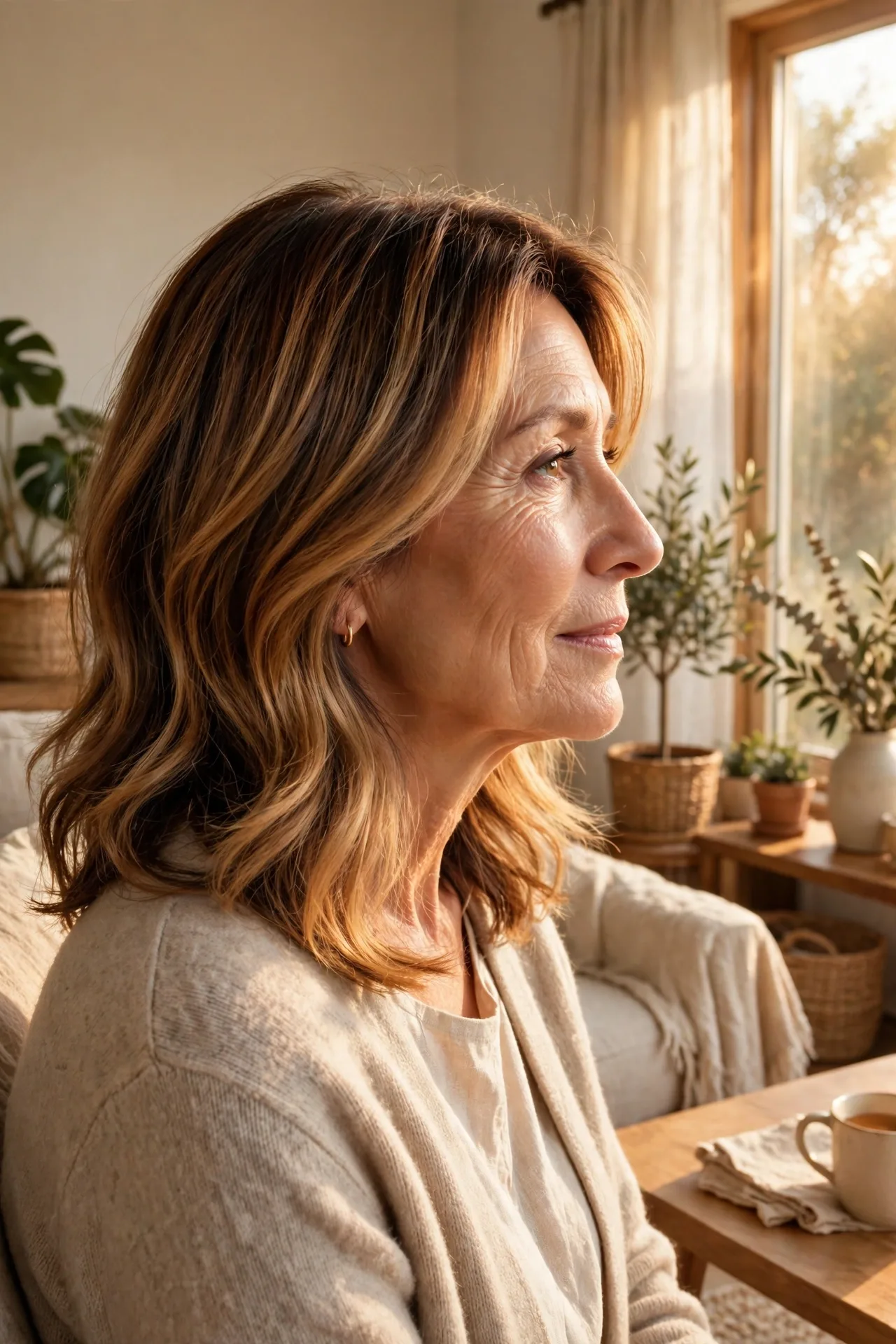
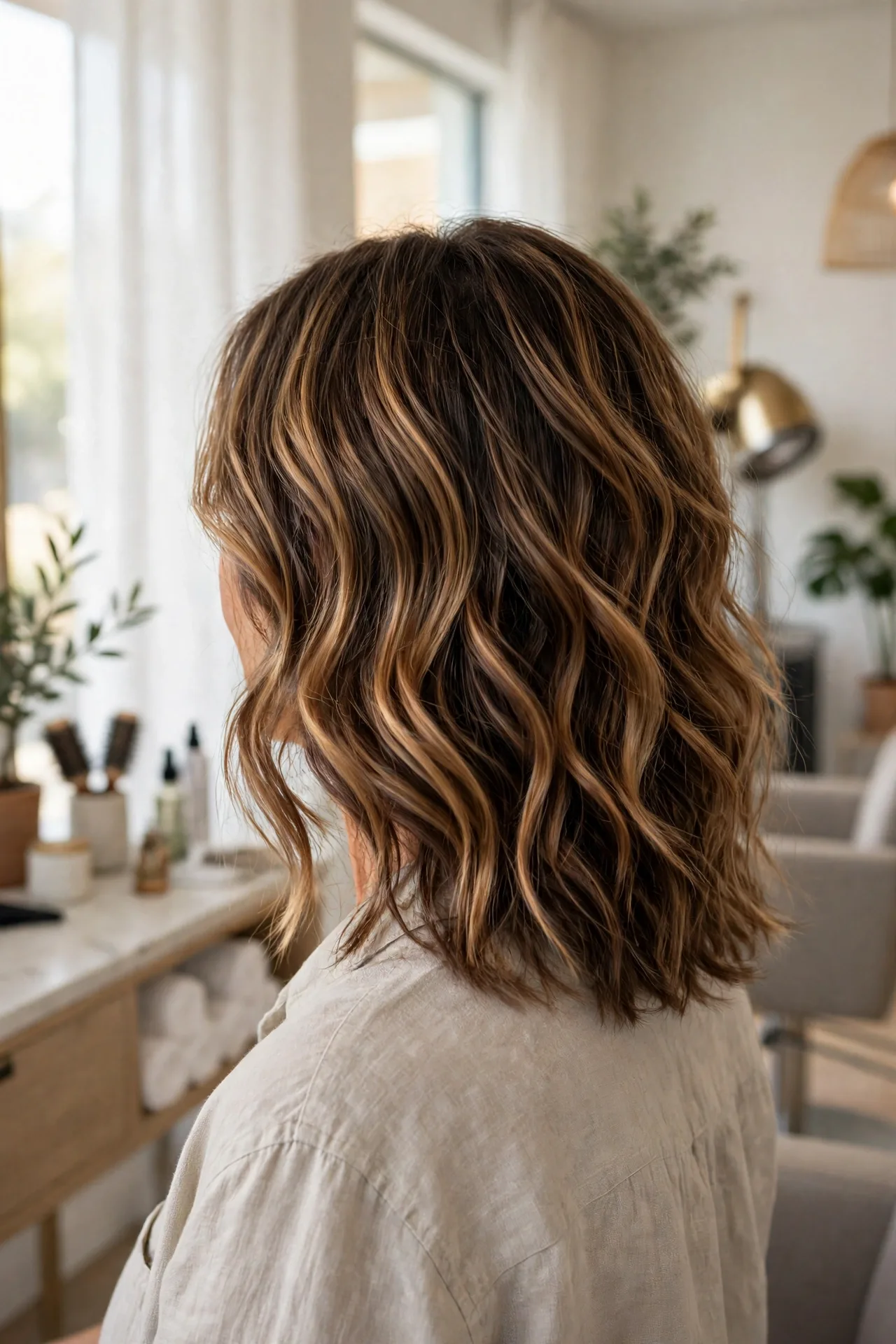
A soft caramel balayage is the gentlest way to warm up brown hair after 50. The caramel is painted in ribbons through the mid-lengths and ends, so the color deepens the hair without a line at the roots. It suits women who want visible warmth but no monthly upkeep, and it flatters warm skin tones best.
The principle is low contrast. Caramel sits close to natural brown, so the regrowth blends in instead of standing out. That is why the grow-out stays soft for months. The Hair Color Matcher helps you check whether caramel or honey suits your skin tone before you book, so you walk in with a clear picture.
Ask for ribbons that start below the cheekbones and stay two shades lighter than your base. A gloss at the end keeps the caramel from turning brassy. Straight and wavy hair carry it best, and shoulder-length cuts hold the shape longest.
Best for
Warm skin, dark brown hair
Upkeep
Salon visit every 3 to 4 months
Grow-out
Soft, no hard line
Honey Face Framing
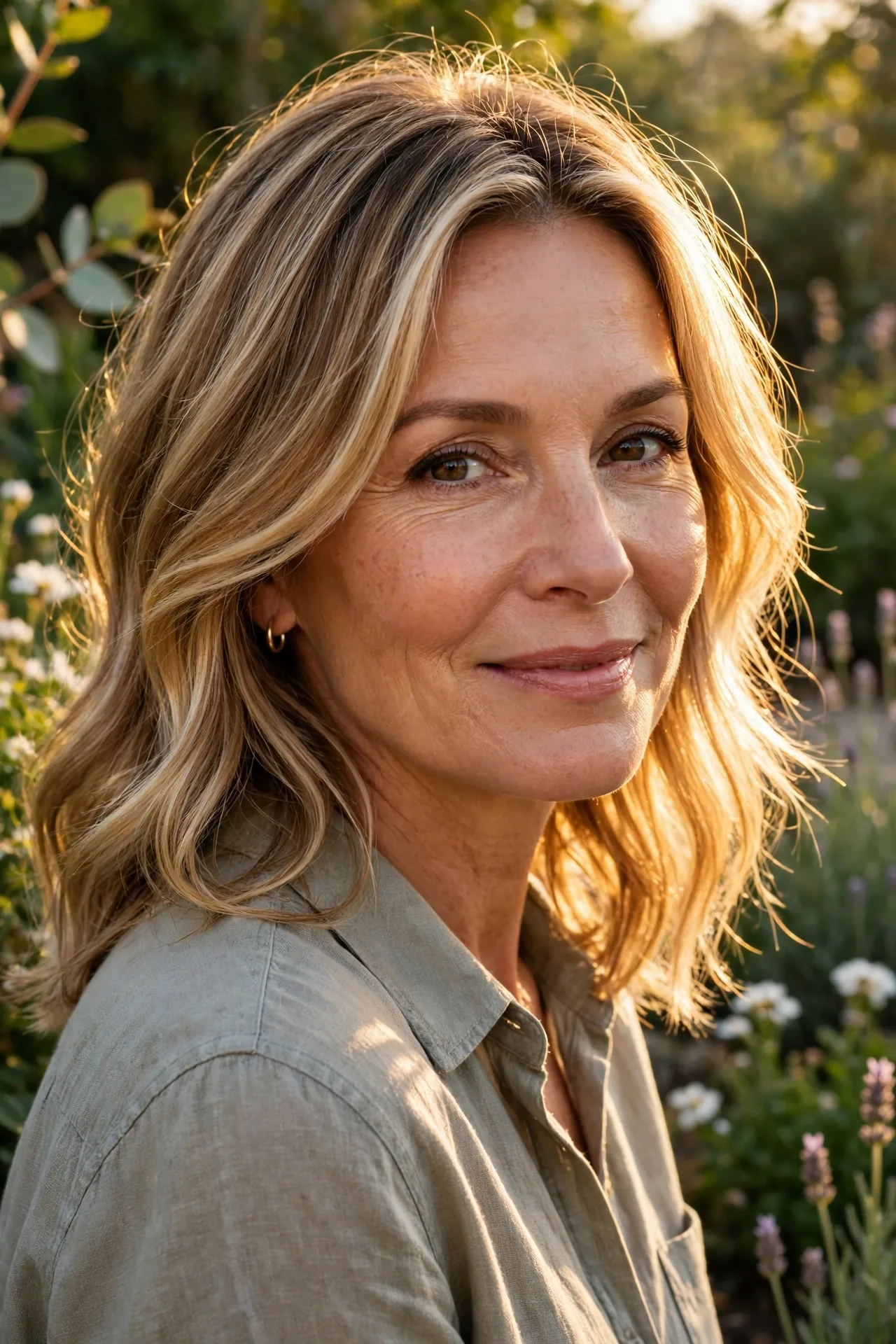
Honey face framing puts the lightest pieces exactly where they matter: around the face. Two or three honey ribbons on each side brighten the eyes and warm the skin, while the rest of the hair stays its natural depth. It is the fastest way to look brighter without lightening the whole head. The effect is like sunlight on the face, and it needs no full-head color to achieve it.
- Keep the lightest pieces at the front hairline, not through the whole head.
- Ask for honey, not platinum, so the pieces stay warm against mature skin.
- A root shadow at the part keeps the grow-out invisible for months.
This suits women who want a visible change with the least upkeep. The face frame grows out so gently that you can go four months between appointments, and a purple shampoo once a week keeps the honey from turning yellow. Straight, wavy and curly hair all carry it well, from a bob to long layers.
Checklist
✓ Honey ribbons at the front hairline
✓ Root shadow at the part
✓ Purple shampoo once a week
✓ Gloss every ten weeks
Ashy Silver Balayage
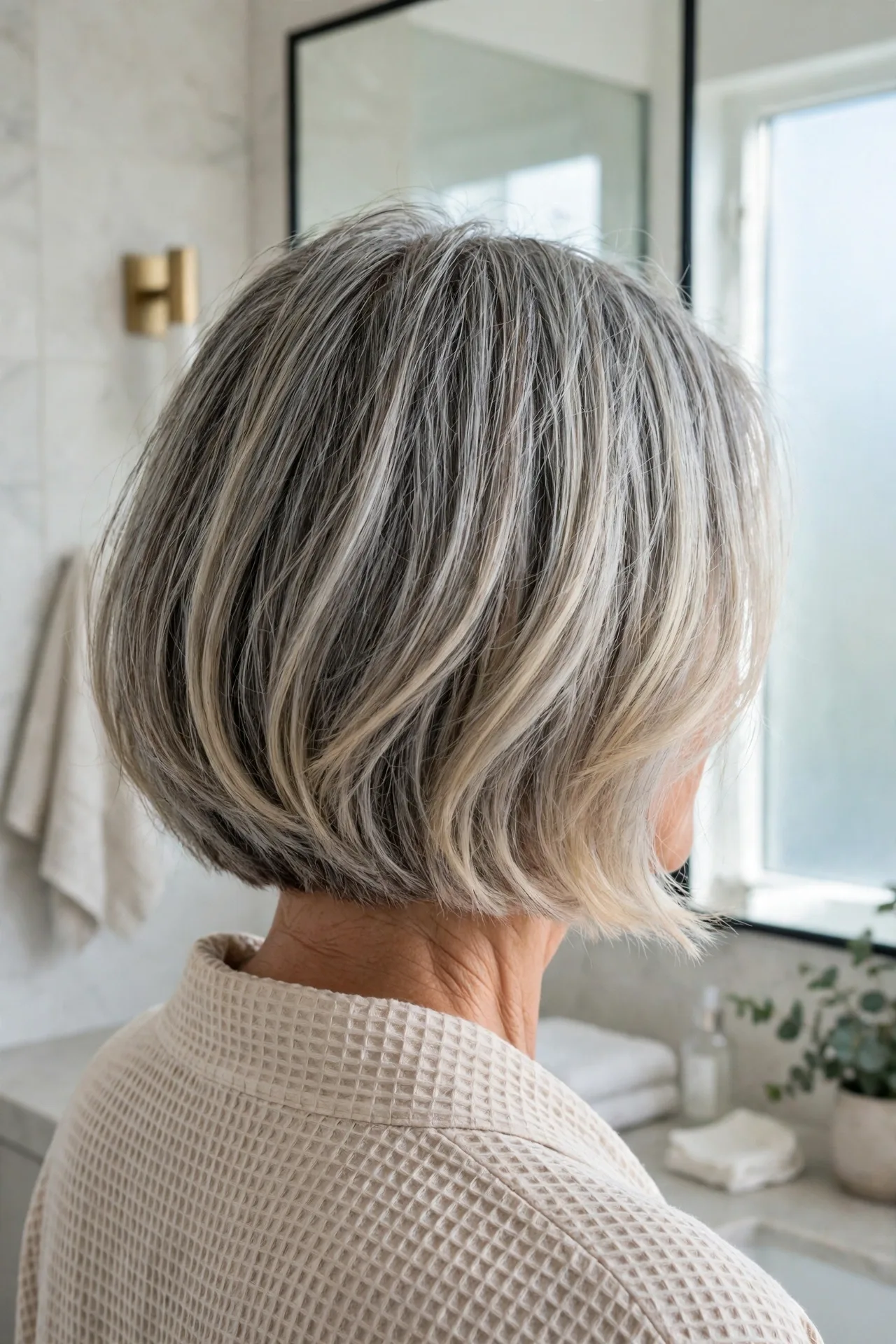
An ashy silver balayage turns gray into the design instead of hiding it. Silver ribbons are painted through the gray at the roots and blended down into ash blonde ends, so the regrowth reads as part of the color. It suits women with more than half gray who want to stop fighting it.
Quick Tip: Ask for a silver gloss after the balayage. The gloss cools the silver and keeps it from turning yellow between appointments.
The principle is matching, not covering. Gray hair is already silver, so a silver balayage works with it instead of against it. Warm caramel tones can clash with gray, while ash and silver sit in the same cool family. If warm tones suit your skin better, caramel balayage looks for warm skin tones show how caramel can still work with gray at the edges.
This one needs a purple shampoo once a week and a gloss every eight weeks to stay cool. Bobs and lobs show it best, on straight or wavy hair.
Ask for: silver ribbons through the gray at the roots, blended into ash blonde ends, finished with a silver gloss.
Fine Babylight Balayage
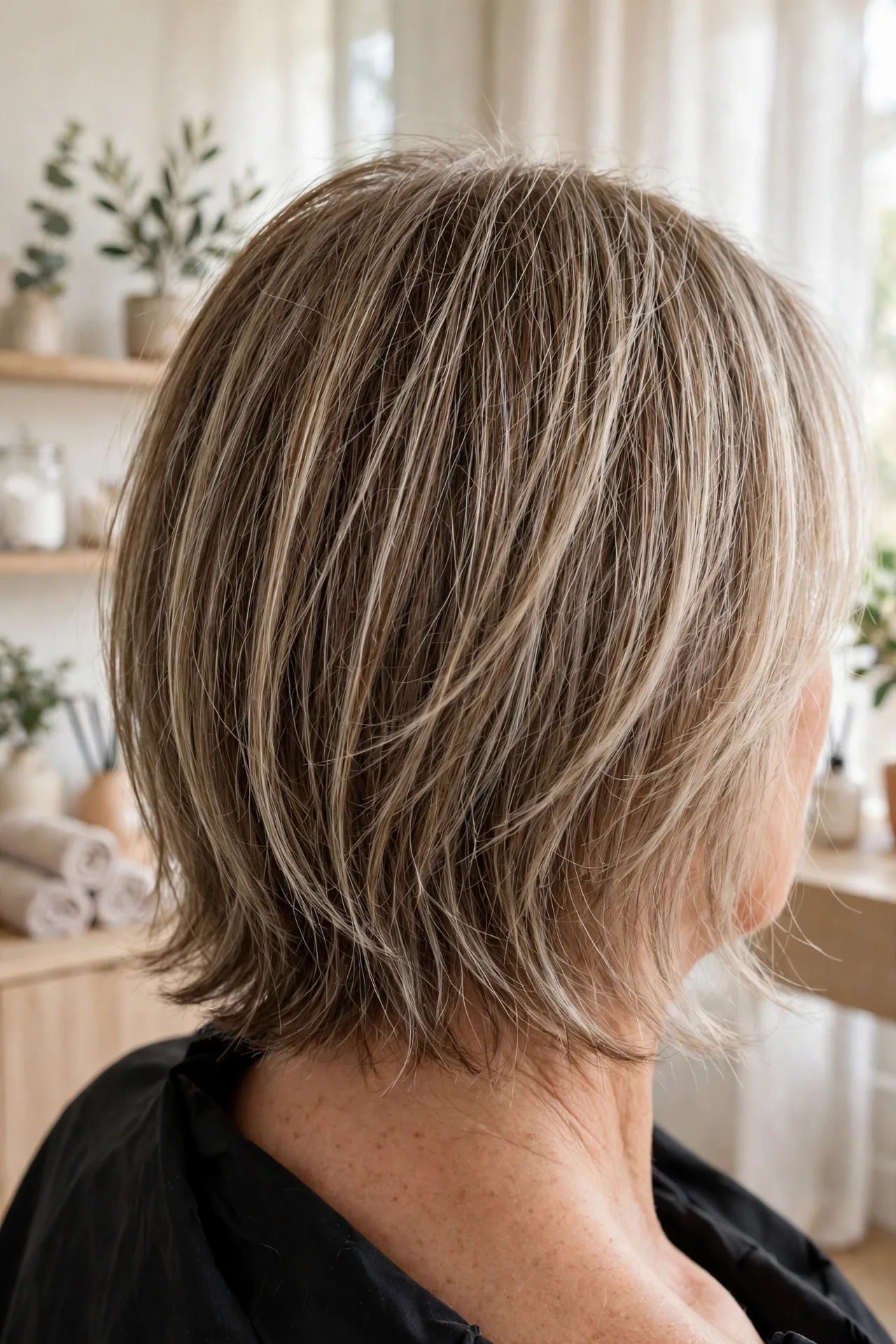
Fine babylight balayage is the answer for thinner hair after 50. Ultra-fine painted pieces, thinner than a pencil line, are scattered through the hair so the color creates depth without stripes. The eye reads the variation as thickness, and the hair looks fuller from every angle.
Before: Flat, one-tone hair that shows the scalp at the part.
After: Fine ribbons of light that break up the flat color and make the hair read thicker.
In my experience, the trick is keeping the pieces fine and the contrast low. Chunky highlights expose thin hair, while babylights hide it. Ask for pieces no wider than a few hairs, painted close to the scalp at the crown and sparser at the ends. A root shadow keeps the grow-out soft.
Bobs, lobs and shoulder-length cuts carry it best on straight and fine wavy hair. Plan a gloss every ten weeks and a color visit every three to four months.
Before
Flat, one-tone hair that shows the scalp at the part.
After
Fine ribbons of light that break up the flat color and make the hair read thicker.
Cocoa Root Melt
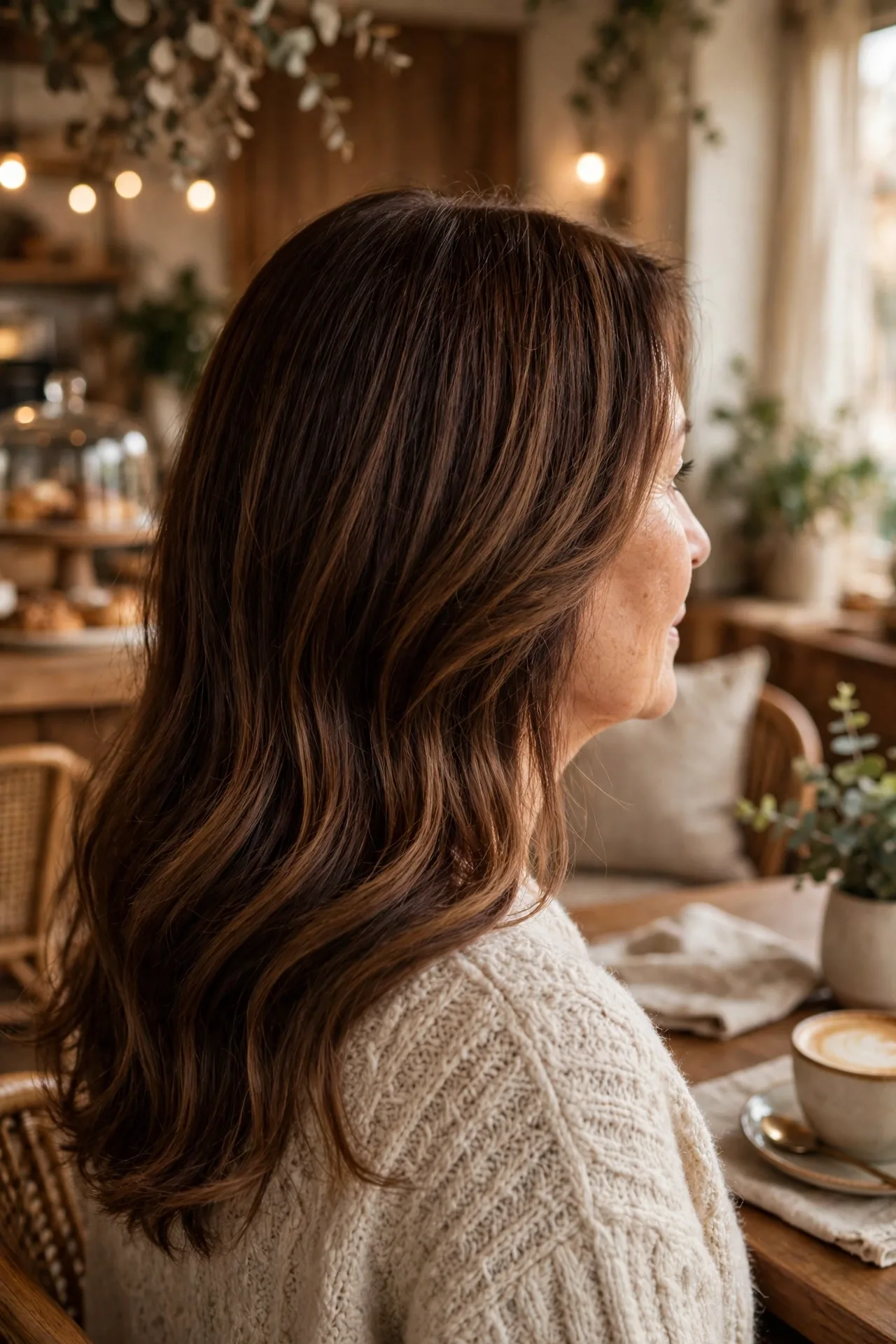
A cocoa root melt erases the root line completely. The colorist melts a deep cocoa shade from the roots into the lengths, so the dark base fades into warm brown with no line at all. It is the lowest-upkeep balayage here, and it suits women who want rich color with almost no salon visits.
- Ask for a cocoa base that matches your natural root color.
- Have the melt start at the roots and fade by the cheekbones.
- Add a few caramel ribbons at the ends for movement.
- Finish with a gloss to keep the cocoa rich and shiny.
The principle is a gradient, not a line. A melt has no edge to grow out, so the color looks good for four months or longer. Ask for the melt to be painted, not foiled, so the fade stays soft. Dark brown and black hair take it best, on straight, wavy or curly hair. The only upkeep is a gloss when the cocoa starts to fade.
Tip
Painted, not foiled: a hand-painted melt fades with no edge, while foils leave a line that shows as it grows out.
Warm Honey Balayage
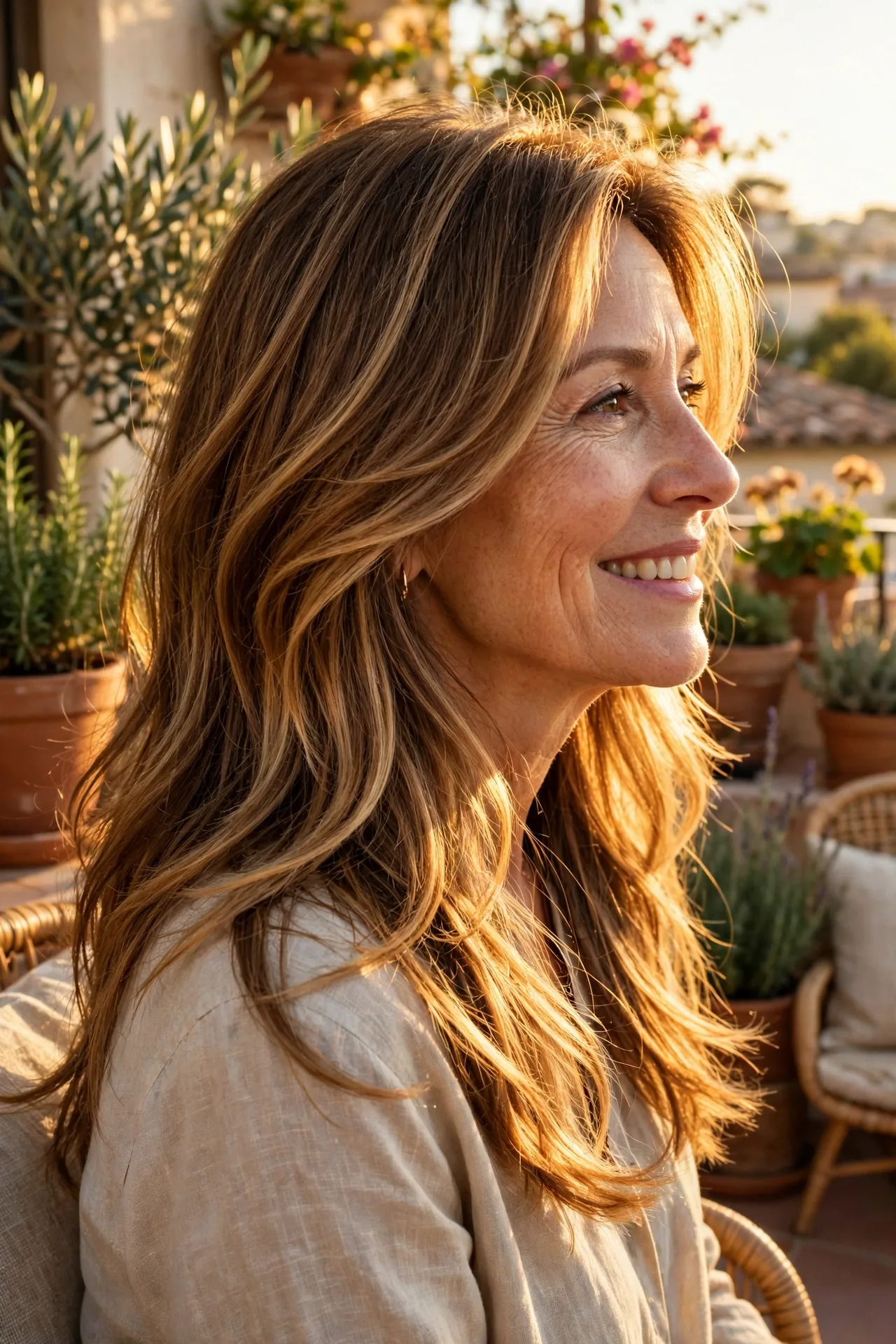
Warm honey balayage suits women whose skin has golden undertones. The honey is painted in wide ribbons through the lengths, so the warmth reads as sunshine rather than brass. It flatters olive and warm skin best, and it pairs well with brown eyes.
Do: Keep the honey two shades lighter than your base for a soft glow.
Do: Add a gloss to lock in the warmth and stop brassiness.
Don’t: Go platinum blonde at the ends, or the contrast will wash out mature skin.
Don’t: Skip the toner, or the honey can turn orange in the sun.
The principle is warmth matching warmth. Honey has golden undertones, and warm skin has them too, so the two sit in the same family. Cool ash on warm skin can look gray and tired, while honey looks lit from within. A gloss every eight weeks keeps it warm, with purple shampoo only if the honey starts to yellow.
Best for
Olive and warm skin
Upkeep
Gloss every 8 weeks
Risk
Brassiness without toner
Cool Ash Balayage
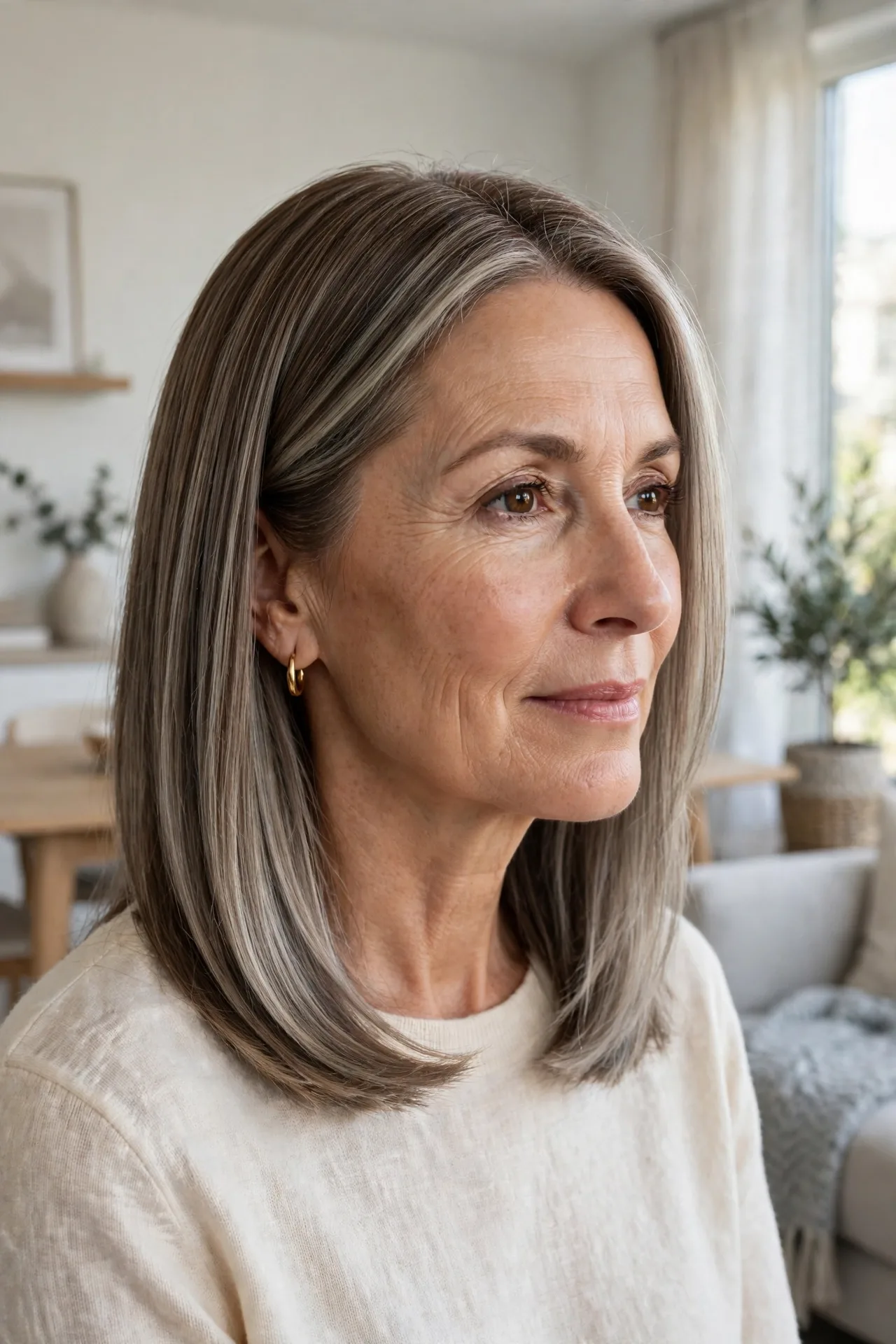
Cool ash balayage suits women whose skin has pink or neutral undertones. The ash is painted in cool ribbons that cancel the warmth in brown hair, so the result reads smoky and refined instead of brassy. It suits women who want a modern, muted finish.
Best for: Cool or neutral skin, dark brown hair.
Upkeep: Gloss every eight weeks, purple shampoo once a week.
Grow-out: Soft for three to four months.
Avoid if: Your skin is very warm, since ash can look gray against it.
The principle is canceling warmth. Ash tones sit opposite orange on the color wheel, so they neutralize the brass that brown hair shows as it lightens. That is why ash works so well on dark hair that turns orange with sun. Lobs and shoulder-length cuts show the ash best, on straight or wavy hair. A blue shampoo once a week keeps the ash cool between glosses.
Good to know
• Ash cancels orange and brass in brown hair.
• Blue shampoo keeps it cool between glosses.
• Best on cool or neutral skin tones.
• Avoid if your skin is very warm.
Golden Caramel Ribbons
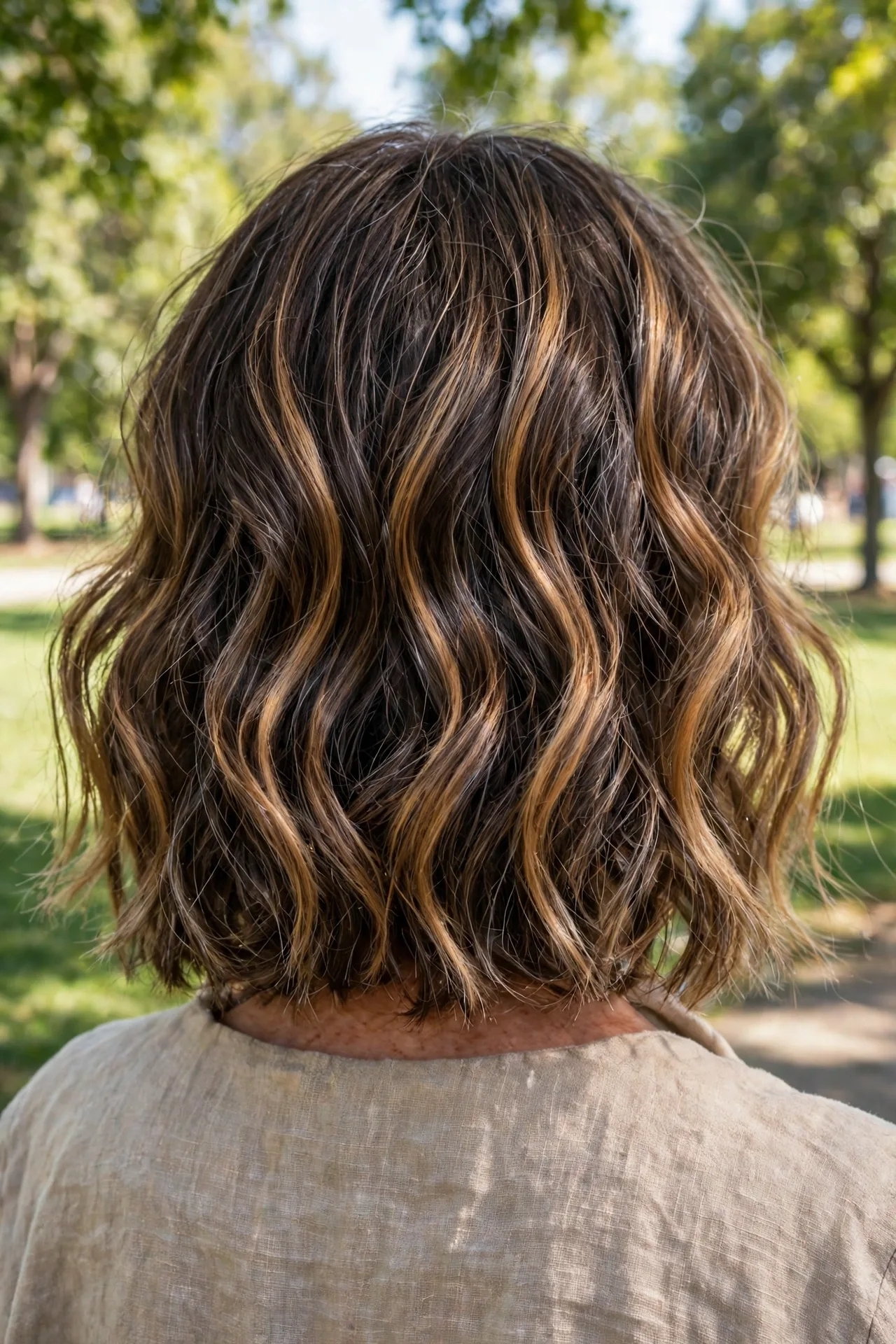
Golden caramel ribbons are the sunniest balayage in this list. Thin golden ribbons are woven through chocolate brown hair, so the color catches the light every time you move. It suits women who want brightness without going blonde, and it flatters warm and neutral skin.
The principle is ribbon placement. Thin ribbons spread through the hair read as sunshine, while wide blocks read as stripes. The colorist paints the ribbons finer at the roots and wider at the ends, so the light gathers where the hair moves most. That is why the grow-out stays soft: the ribbons were never solid at the root.
Ask for ribbons in two golden tones, one lighter and one deeper, so the color has depth. Wavy and curly hair show the ribbons best, since the waves catch them from every angle. The upkeep is a gloss every ten weeks and a color visit every three to four months.
Best for
Wavy and curly hair
Upkeep
Gloss every 10 weeks
Placement
Fine at roots, wider at ends
Silver Gray Blend
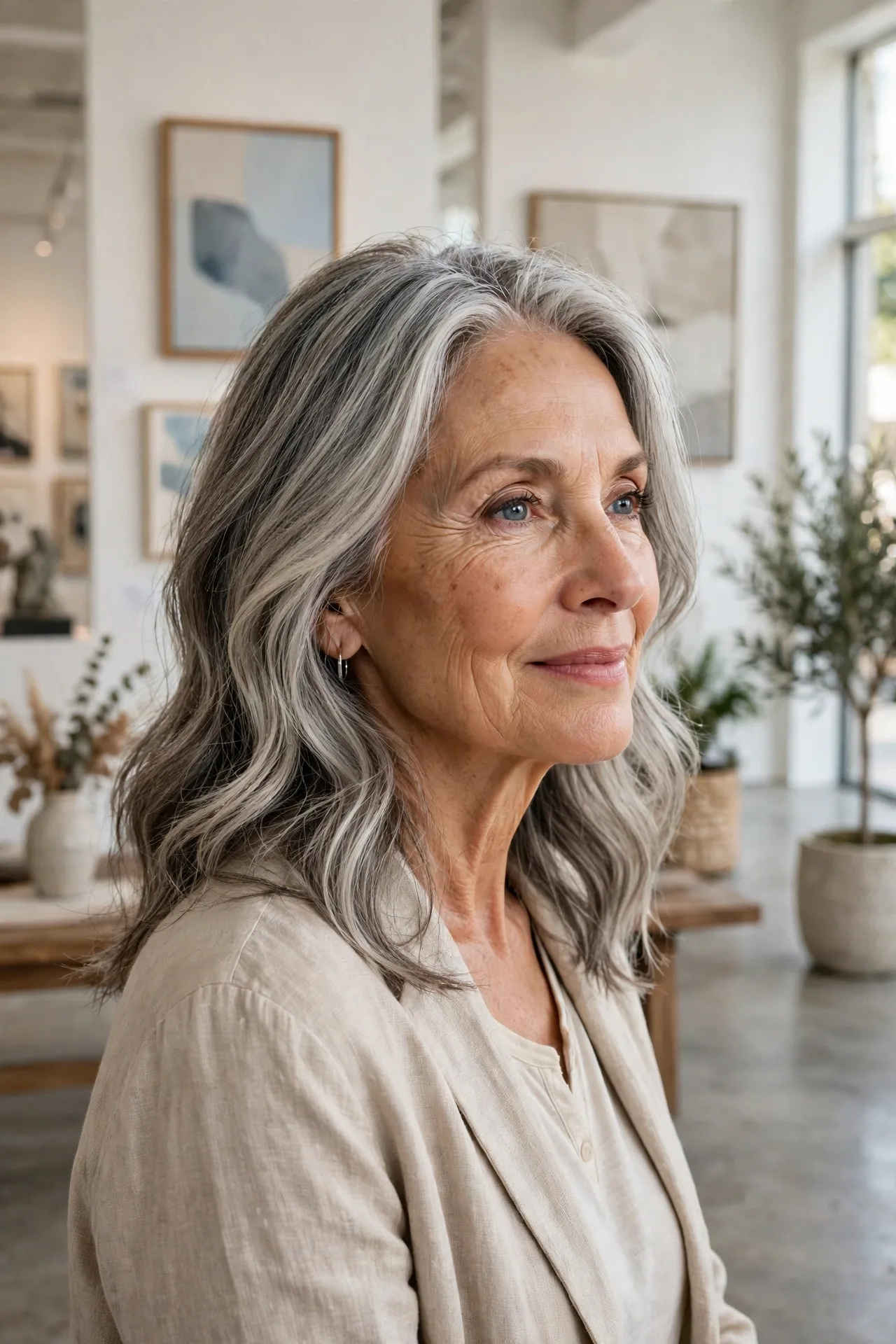
A silver gray blend is for women whose gray has taken over more than half the hair. Instead of covering the gray, the colorist weaves silver and soft white ribbons through it, so the gray becomes the lightest part of the design. The result reads silver on purpose, not silver by accident.
- Blend the silver at the roots into ash blonde at the ends.
- Keep the contrast low so the gray and the silver read as one color.
- A silver gloss keeps the tone cool and the hair shiny.
This suits women who are ready to own their gray and want it to look styled, not grown out. The upkeep is the lightest in this list: a purple shampoo once a week and a gloss every two months, with no root color at all. Short to medium cuts show the silver best, on straight, wavy or curly hair. A good cut matters as much as the color here, since silver shows every line of the shape.
Checklist
✓ Silver ribbons woven through natural gray
✓ Low contrast so gray and silver read as one
✓ Purple shampoo once a week
✓ No root color needed
Copper Glow Balayage
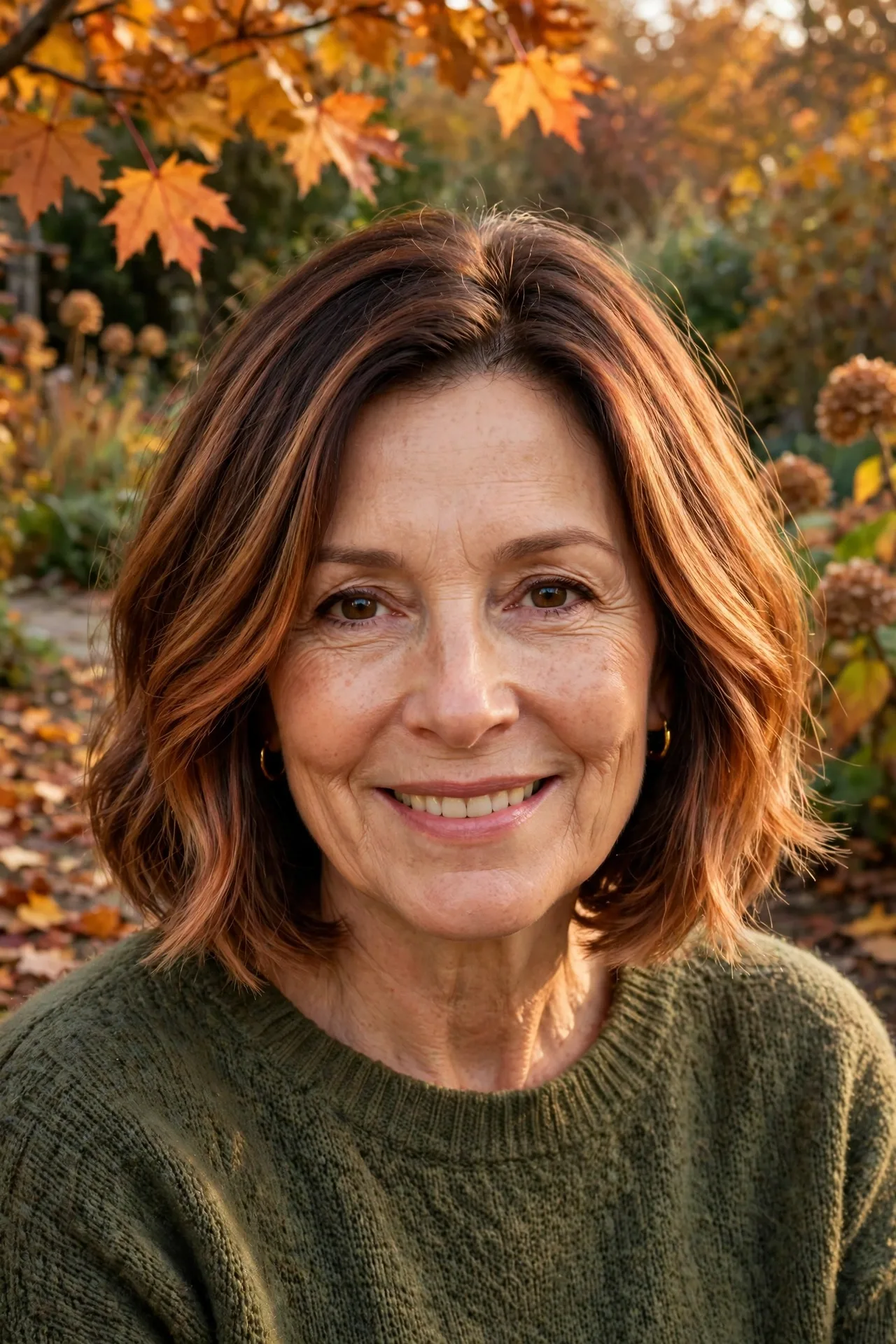
Copper glow balayage adds warmth that lights up mature skin. Copper ribbons are painted through dark brown hair, so the color reflects light back toward the face and counteracts the flatness that can come with cooler skin. It suits women with warm undertones and green or hazel eyes best.
Quick Tip: Ask for copper, not orange. A true copper has red and gold in balance, while an orange copper can clash with mature skin.
The principle is reflected light. Warm copper bounces light onto the face, which softens lines and adds life to the skin. That is why copper is often the most flattering warm color after 50. It needs a color-safe shampoo and a gloss every six weeks, since copper fades faster than brown or blonde.
Medium lengths show the copper best in motion, on straight or wavy hair. Keep the ribbons fine at the roots and wider at the ends for a soft grow-out.
Ask for: copper ribbons through dark brown hair, fine at the roots and wider at the ends, finished with a color-safe gloss.
Champagne Blonde Balayage
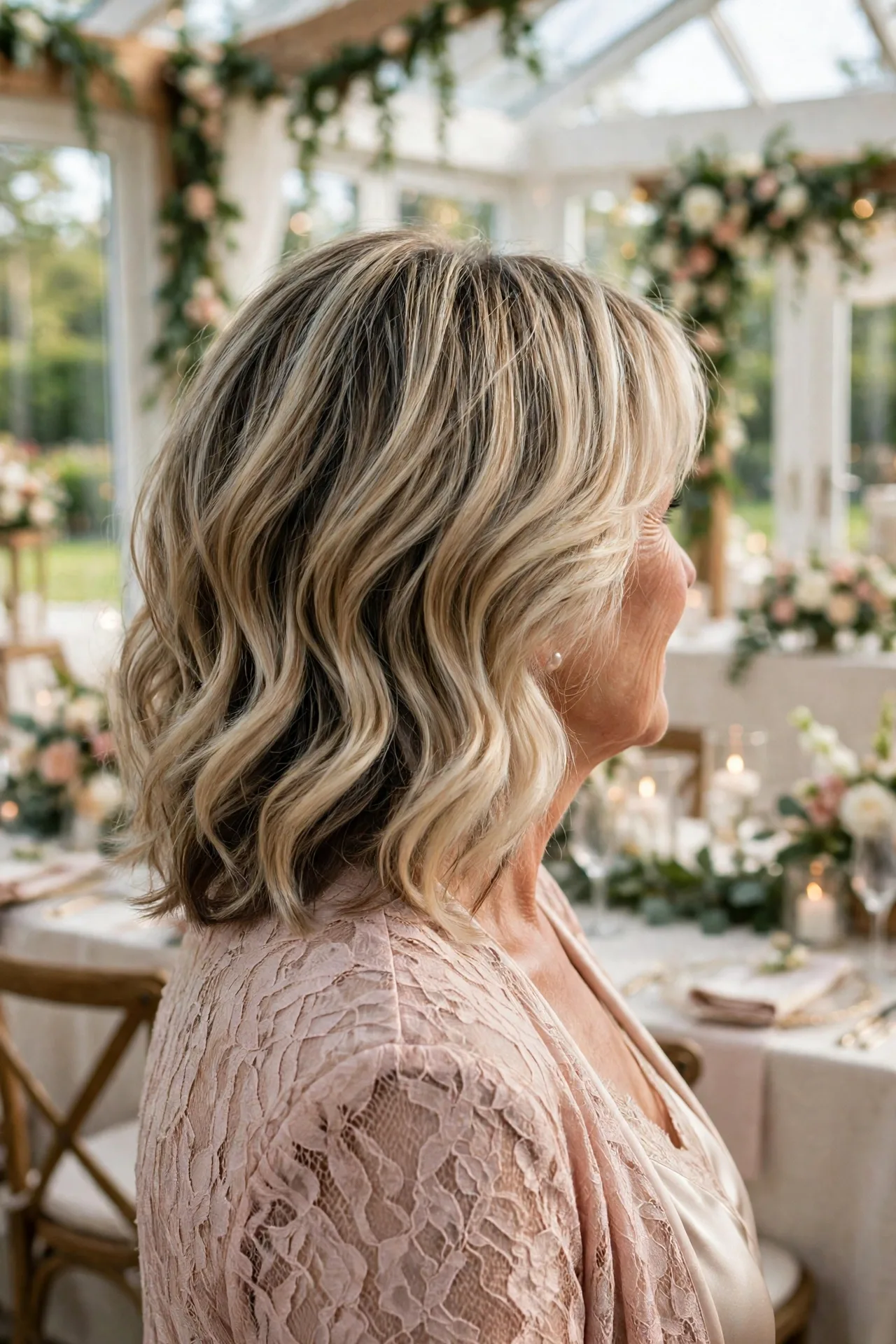
Champagne blonde balayage is the most elegant blonde in this list. Pale champagne ribbons are painted through dark blonde hair, so the color reads soft and expensive rather than bright. It suits women who want blonde without the upkeep of full bleach, and it flatters fair and neutral skin.
Before: Dark blonde hair that looks flat and dull in indoor light.
After: Champagne ribbons that catch the light and make the hair glow.
The principle is softness over brightness. Champagne sits between blonde and beige, so it lightens the hair without the harsh contrast of platinum. That is why it suits mature skin: the color lifts the face without washing it out. It works beautifully for weddings and formal days, and the mother of the bride hairstyles over 50 pair well with this shade for a polished occasion look.
This one needs a purple shampoo once a week and a gloss every eight weeks. Lobs and shoulder-length cuts carry it best, on straight or wavy hair.
Before
Dark blonde hair that looks flat and dull in indoor light.
After
Champagne ribbons that catch the light and make the hair glow.
Mocha Dimension Balayage
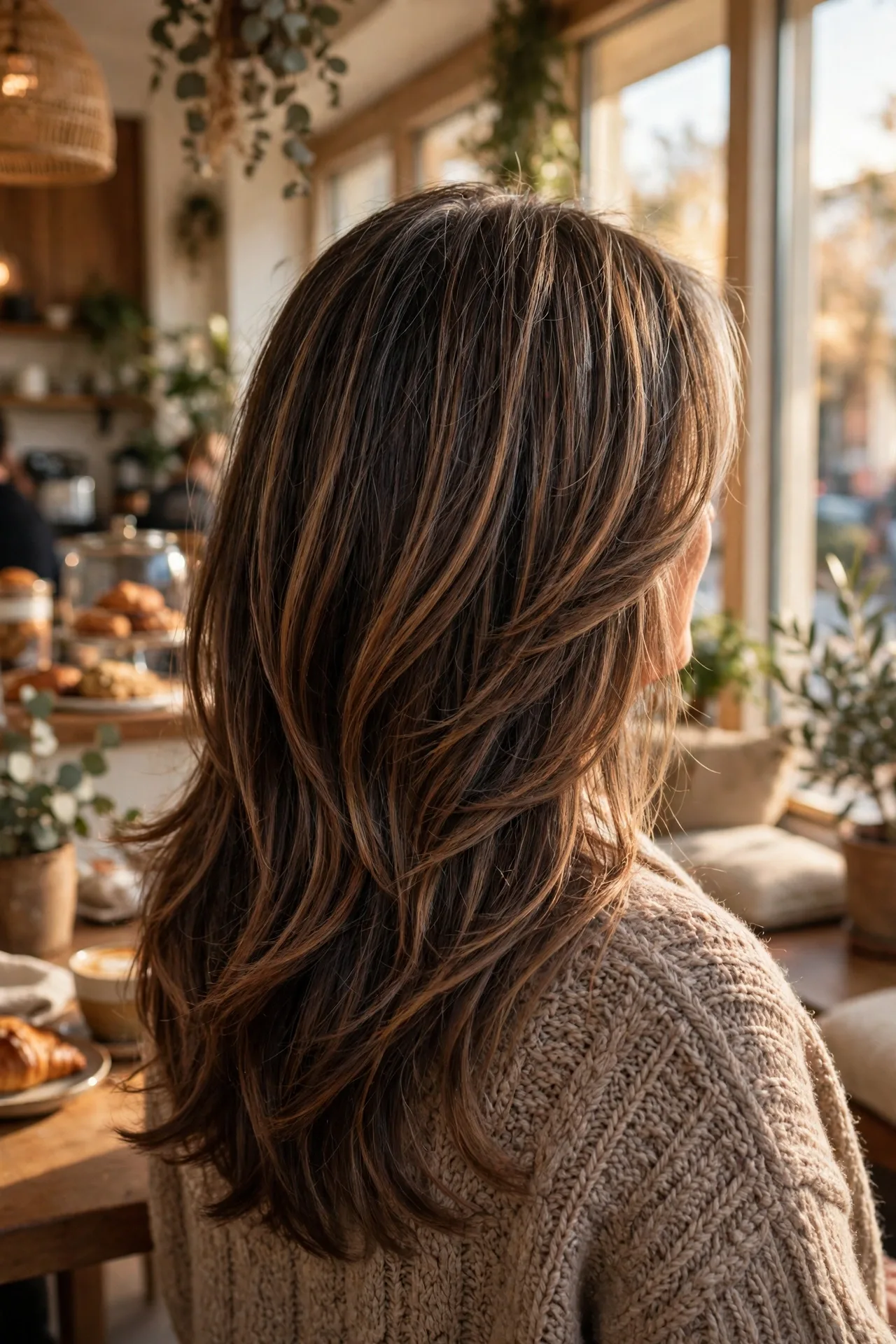
Mocha dimension balayage adds depth to dark hair without lightening it much. Mocha ribbons in two tones, one lighter and one deeper than the base, are painted through the hair so the color reads rich and layered. It suits women who want dimension but want to stay dark.
- Ask for two mocha tones, one lighter and one deeper than your base.
- Have the lighter ribbons painted at the mid-lengths, not the roots.
- Keep the ends soft with a gloss, not a solid color.
- Book the next gloss in ten weeks, not a full color.
The principle is depth through variation. Dark hair can look flat when it is one solid shade, and two mocha tones break it up without a visible pattern. The grow-out stays invisible because the ribbons start below the roots. Every length takes it well, from a bob to long layers, on straight, wavy or curly hair.
Tip
Two mocha tones, not one: a lighter and a deeper ribbon together read as depth, while a single tone reads as a stripe.
Soft Brunette Balayage
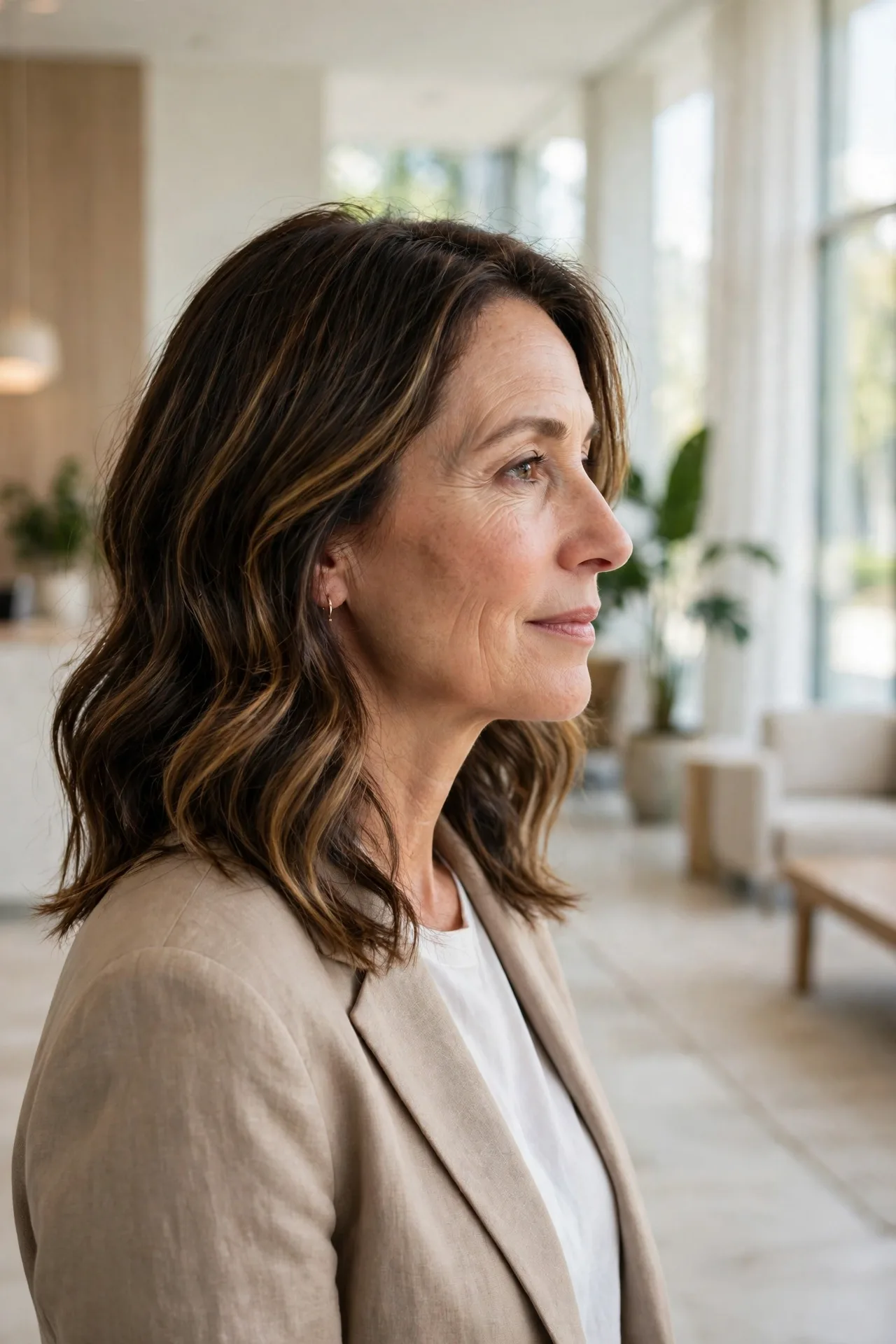
Soft brunette balayage is the quietest color in this list, and that is its strength. Subtle caramel and cocoa pieces are painted through dark brown hair, so the color adds movement without announcing itself. It suits women who want a change only they notice, and it flatters every skin tone.
Do: Keep the pieces one or two shades lighter than your base.
Do: Ask for a gloss to keep the brunette rich and shiny.
Don’t: Add blonde pieces, or the soft brunette turns into a blonde balayage.
Don’t: Paint the pieces too close to the roots, or the grow-out will show.
The principle is restraint. A small change in tone reads as healthy, glossy hair rather than as color. That is why soft brunette suits women who color at home or who want the lowest possible upkeep. A gloss every ten weeks and a color visit every four months is all it needs, on straight, wavy or curly hair.
Best for
Every skin tone
Upkeep
Gloss every 10 weeks
Change
Subtle, only you notice
Rosy Gold Balayage
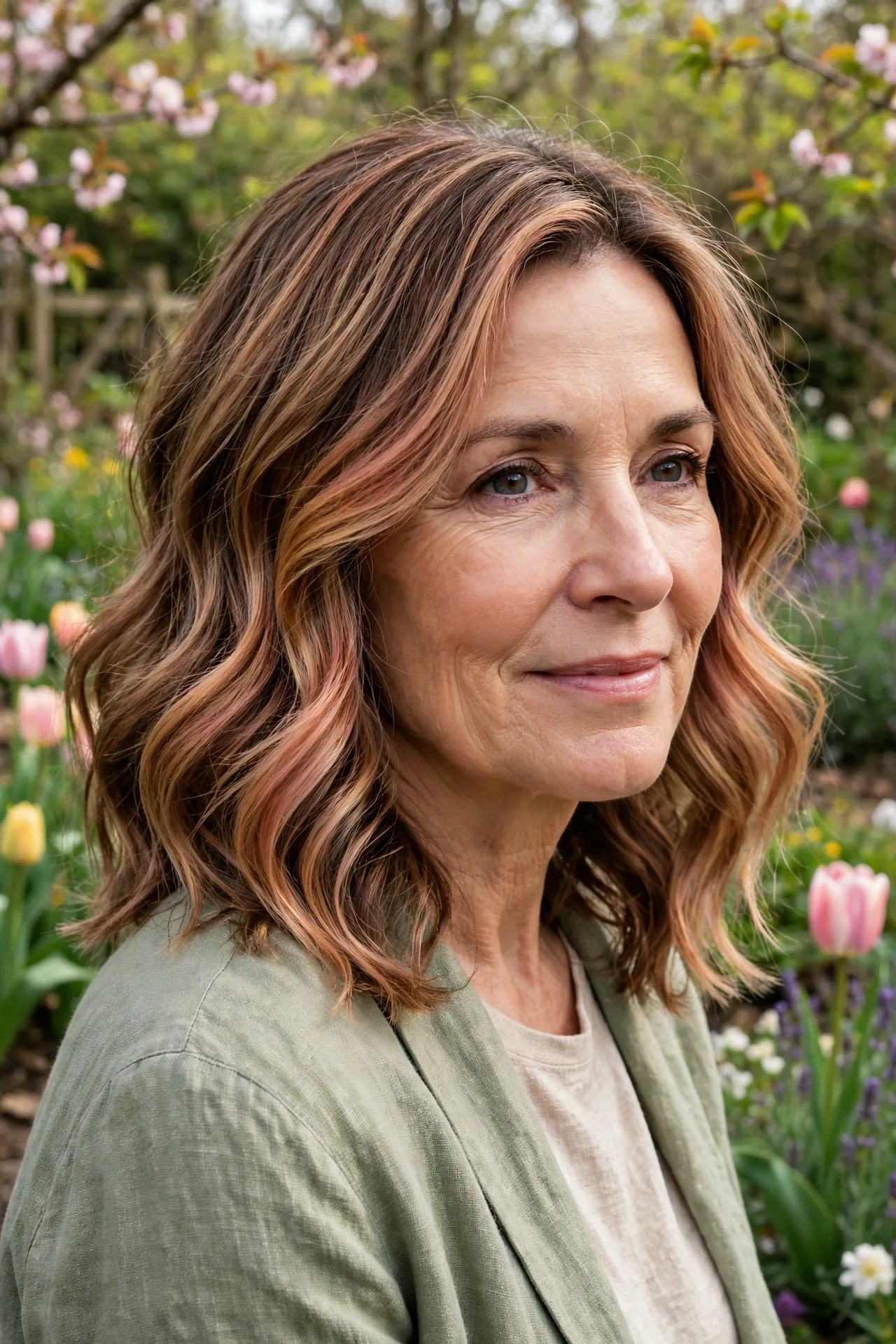
Rosy gold balayage adds a blush of rose to warm blonde and light brown hair. Rose-gold ribbons are painted through the lengths, so the color reads warm and rosy in the sun and soft indoors. It suits women with warm or neutral skin who want something a little different from plain blonde.
Best for: Warm or neutral skin, light brown to dark blonde hair.
Upkeep: Gloss every six weeks, since rose tones fade fast.
Grow-out: Soft for three months, then the rose fades to gold.
Avoid if: Your skin is very cool, since rose can look pink against it.
The principle is a tint, not a color. Rose gold is a sheer wash over blonde, so it changes the tone without changing the depth. That is why it fades gracefully: as the rose washes out, the gold underneath stays. Medium lengths show the rose best in the light, on wavy or straight hair.
Good to know
• Rose gold is a sheer wash, not a solid color.
• It fades to gold, so the grow-out stays soft.
• Gloss every six weeks keeps the rose alive.
• Best on warm or neutral skin.
Toffee Ribbon Balayage
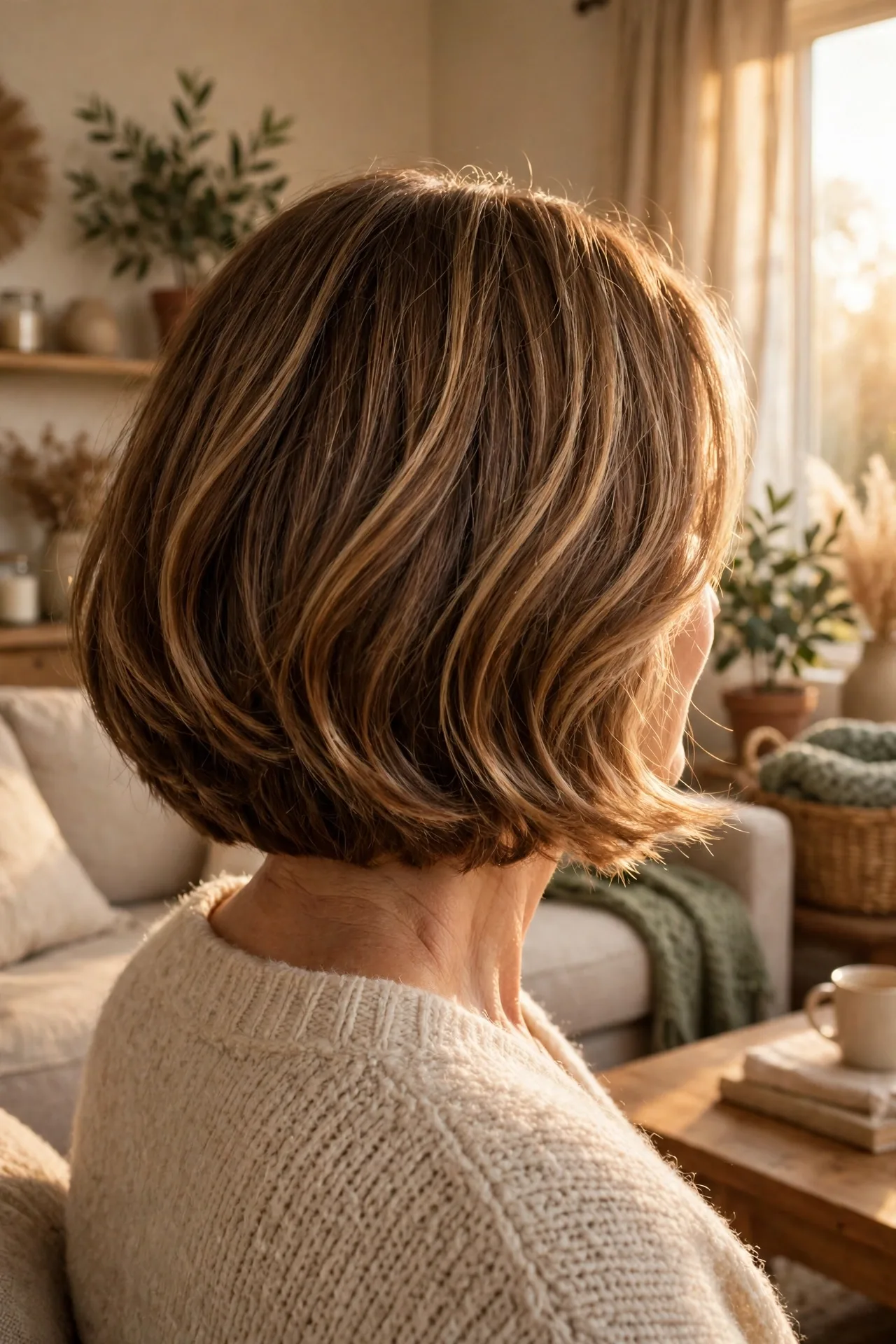
Toffee ribbon balayage is caramel with more depth. Toffee ribbons are painted through medium brown hair, so the color reads rich and golden without going blonde. It suits women who want warmth with weight, and it flatters warm and olive skin best.
The principle is depth before brightness. Toffee sits deeper than honey, so it adds richness instead of light. That matters after 50, when hair can lose its natural depth and look flat. I’ve noticed that toffee works especially well on thick hair, where the ribbons show in layers as the hair moves.
Ask for the ribbons to start at the cheekbones and widen toward the ends. A gloss keeps the toffee from turning dull, and a color visit every three to four months is enough. Shoulder-length cuts hold the shape best, on wavy or curly hair. The toffee also pairs well with a root shadow in your natural brown, so the grow-out stays invisible even longer.
Best for
Warm and olive skin
Upkeep
Color every 3 to 4 months
Hair
Thick, wavy or curly
Pearly Blonde Balayage
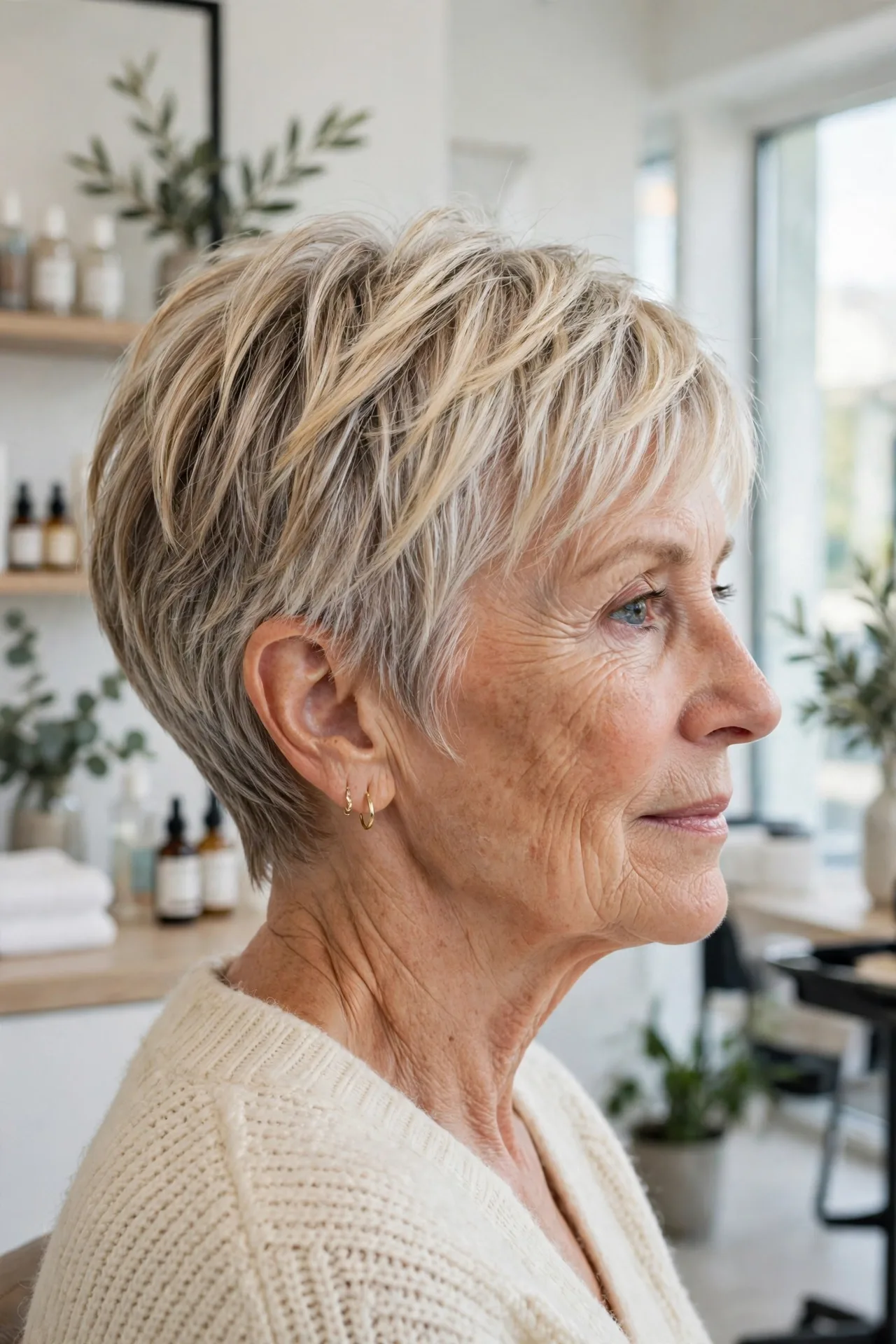
Pearly blonde balayage is the lightest blonde in this list, and it suits women whose hair is already mostly gray or white. Pearly ribbons are painted through silver hair, so the color reads as a soft blonde rather than as plain gray. It suits women who want to keep their lightness but want it to look styled and finished.
- Keep the pearly pieces at the ends, not the roots, so the gray blends in.
- Ask for a pearl gloss to keep the blonde cool and luminous.
- A short cut shows pearly blonde best, since the light hits every strand.
This suits women with short hair who want their gray to read as blonde. The upkeep is a purple shampoo once a week and a gloss every eight weeks, with no root color at all. Pixies and short bobs catch the pearly light best, on straight or wavy hair.
Checklist
✓ Pearly pieces at the ends, not the roots
✓ Pearl gloss to keep it cool
✓ Purple shampoo once a week
✓ No root color needed
Warm Chestnut Balayage
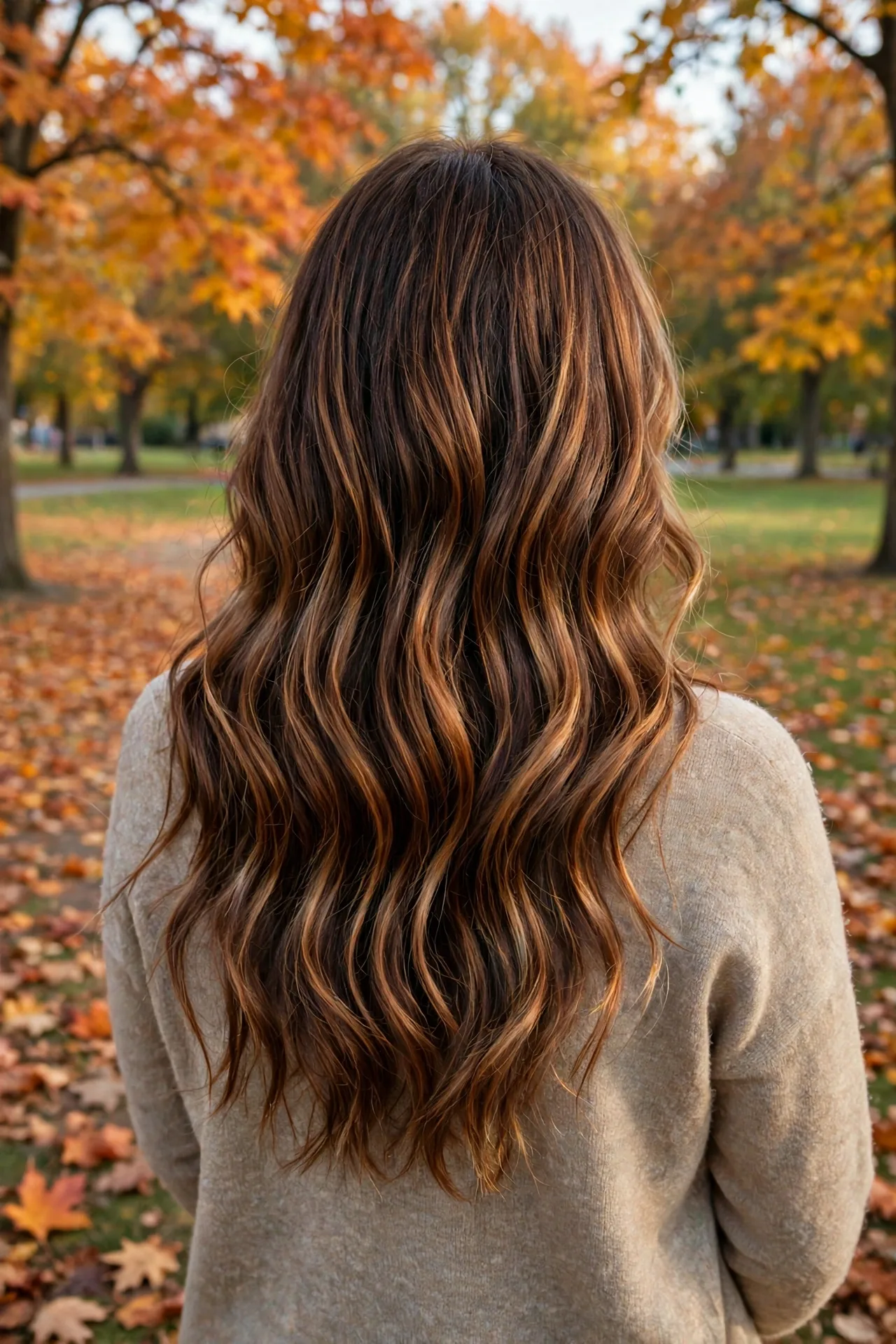
Warm chestnut balayage is the richest brown in this list. Chestnut ribbons are painted through dark brown hair, so the color reads warm and glossy without any blonde at all. It suits women who want depth and shine but want to stay dark, and it flatters warm and olive skin.
Quick Tip: Ask for chestnut, not mahogany. Chestnut has warm brown depth, while mahogany can read red against mature skin.
The principle is shine through warmth. Chestnut reflects warm light, so the hair looks glossier than a flat dark brown. That is why it suits women whose hair has gone dull with age: the warmth brings back the shine. It needs only a gloss every ten weeks and a color visit every four months.
This one suits straight, wavy and curly hair, and it fits every length from a bob to long layers. Paint the ribbons fine near the scalp and broader toward the tips for a gentle grow-out.
Ask for: chestnut ribbons through dark brown hair, fine at the roots and wider at the ends, finished with a warm gloss.
Frosted Silver Balayage
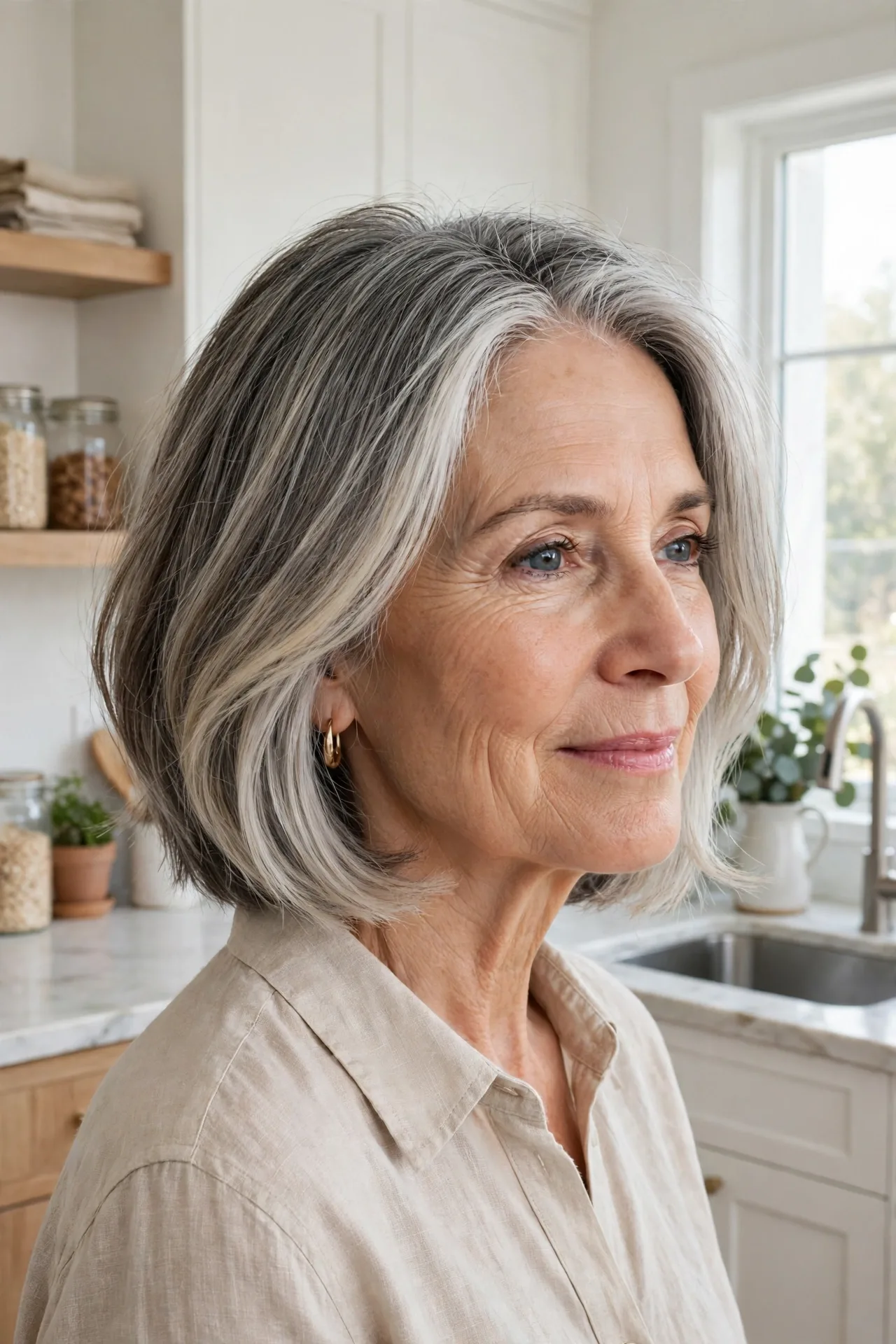
Frosted silver balayage is silver with a cooler edge. Frosted ribbons are painted through gray and white hair, so the color reads icy and crisp rather than warm. It suits women with cool skin who want their silver to look sharp and modern.
Before: Gray hair that looks dull and yellowed in warm light.
After: Frosted silver that reads crisp, cool and styled.
The principle is cooling the yellow out. Gray hair yellows with sun and heat, and a frosted silver tone cancels that yellow. A silver gloss after the balayage locks in the cool tone, and a purple shampoo once a week keeps it from warming up again.
This one needs a gloss every eight weeks to stay frosted. Bobs and lobs show the silver best, on straight or wavy hair. A blue shampoo once a week adds extra cooling between glosses, and a trim every six weeks keeps the frosted ends sharp.
Before
Gray hair that looks dull and yellowed in warm light.
After
Frosted silver that reads crisp, cool and styled.
Honey Brown Balayage
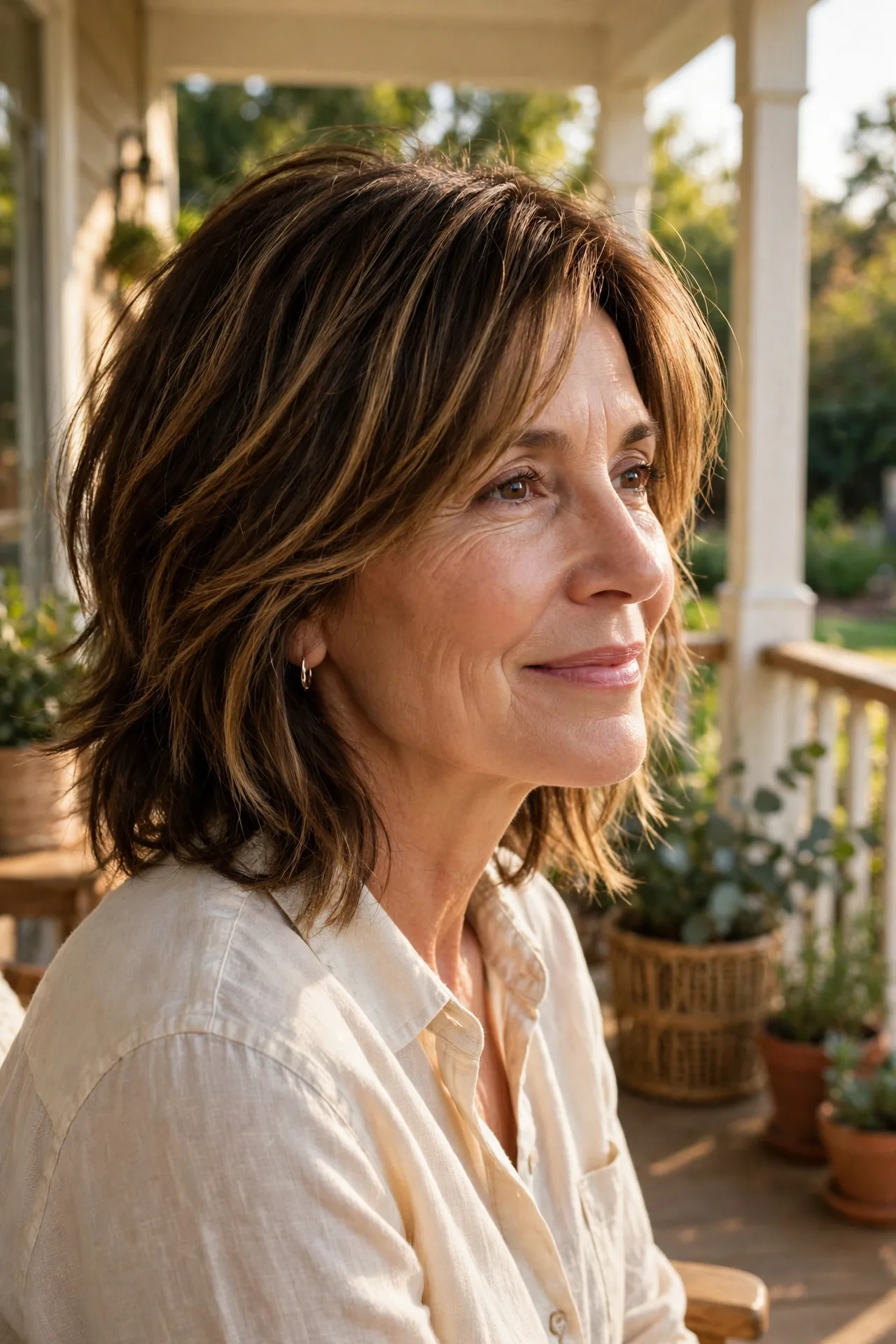
Honey brown balayage sits between brown and blonde. Honey brown ribbons are painted through medium brown hair, so the color reads warm and light without ever looking blonde. It suits women who want a visible lift but want to keep their brown base.
- Ask for honey brown ribbons two shades lighter than your base.
- Have them painted from the cheekbones down, not at the roots.
- Add a gloss to keep the honey warm and the brown rich.
- Book the next visit in three to four months, not sooner.
The principle is a middle ground. Honey brown lightens the hair enough to show, but it never crosses into blonde, so the grow-out stays gentle. That is why it suits women who are nervous about going too light. Straight, wavy and curly hair all take it well, and it flatters warm, neutral and olive skin. Ask for a gloss at the end to lock in the warmth, and plan a color visit every three to four months.
Tip
Honey brown is the safest first step into lighter hair: it lifts the color enough to show, but it never crosses into blonde.
Subtle Copper Balayage
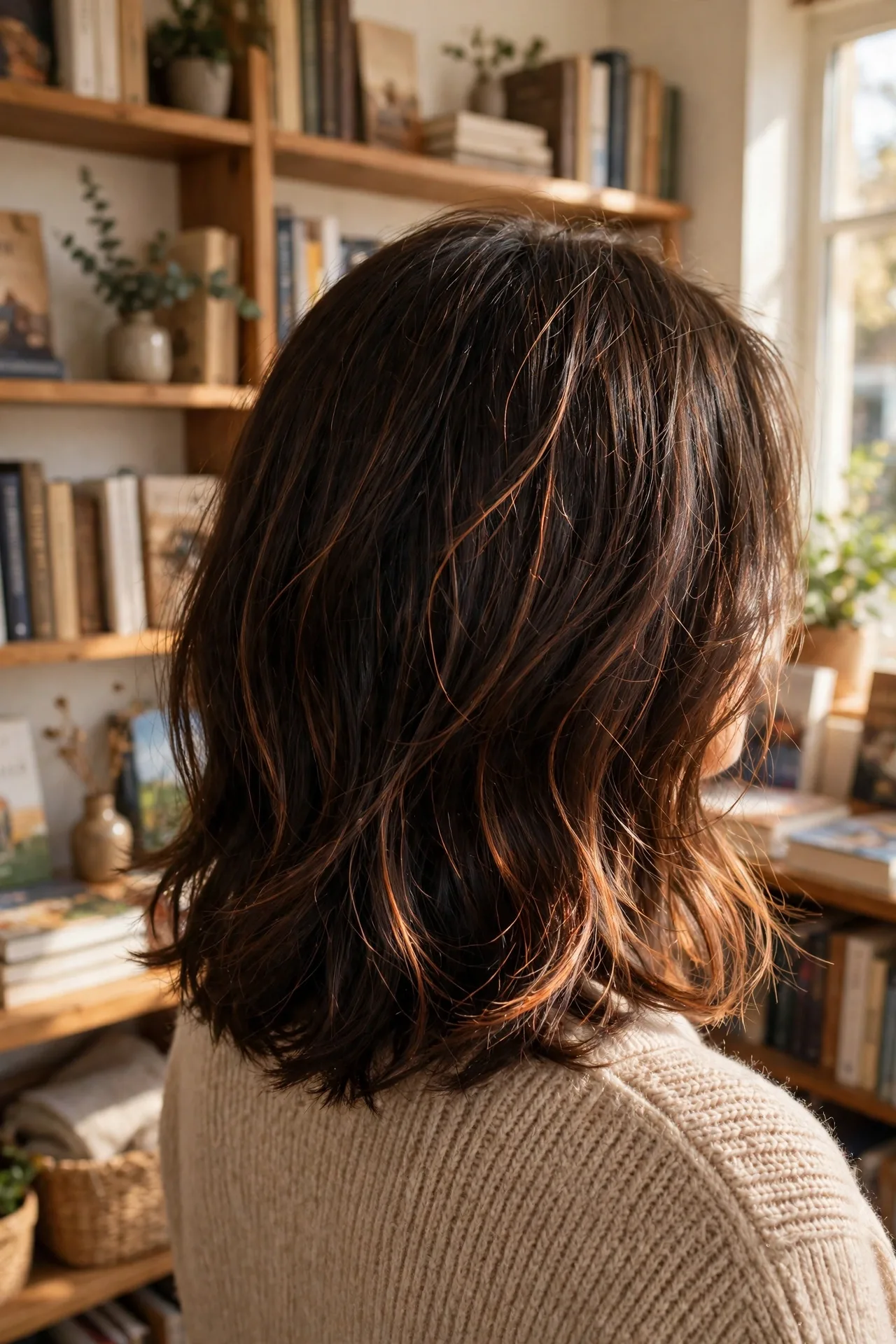
Subtle copper balayage is copper turned down to a whisper. Faint copper ribbons are painted through dark brown hair, so the warmth shows only when the light catches it. It suits women who want copper without the commitment of a full red, and it flatters warm skin and brown eyes.
Do: Keep the copper faint, so it reads as warmth, not as red.
Do: Ask for a gloss to keep the copper from fading to orange.
Don’t: Paint wide copper ribbons, or the subtle effect is lost.
Don’t: Skip the color-safe shampoo, since copper fades fastest.
The principle is suggestion, not statement. A faint copper ribbon hints at warmth, and the eye fills in the rest. That is why it suits women who want a change that feels safe: the color is there, but it never shouts. A gloss every six weeks and a color visit every three to four months keeps it glowing.
Best for
Warm skin, brown eyes
Upkeep
Gloss every 6 weeks
Effect
Warmth that shows in light
Buttery Blonde Balayage
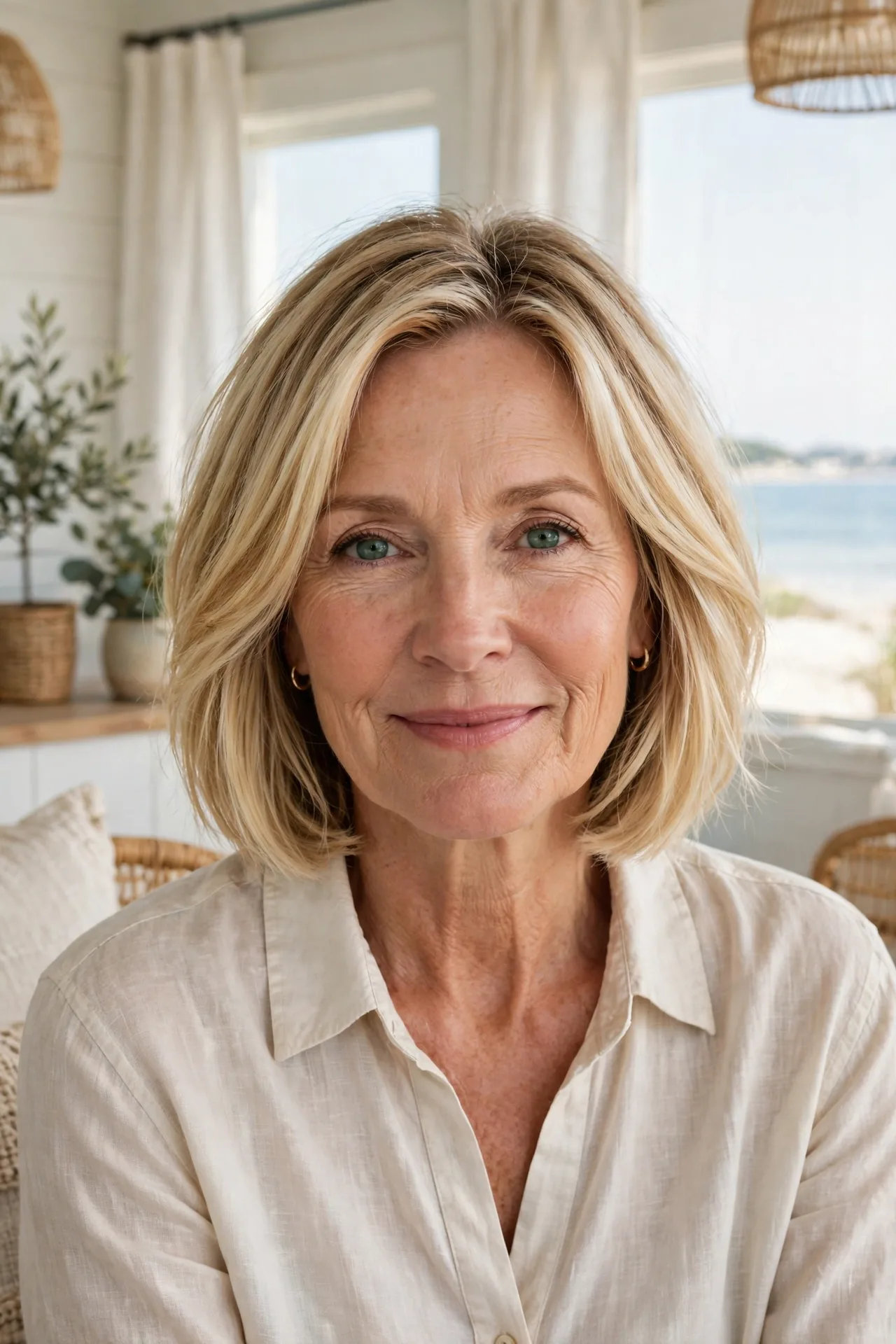
Buttery blonde balayage is blonde at its softest and creamiest. Buttery ribbons are painted through medium blonde hair, so the color reads creamy and smooth rather than bright. It suits women who want blonde without the brassiness of gold or the chill of ash, and it flatters warm and neutral skin.
Best for: Warm or neutral skin, medium blonde hair.
Upkeep: A gloss every eight weeks, with purple shampoo once a week.
Grow-out: Gentle for three to four months, with no hard line.
Avoid if: Your hair is very dark, since buttery blonde needs a lot of lifting.
The principle is cream over shine. Buttery blonde has a soft, matte finish, so it reads as natural rather than done. That is why it suits mature hair: the color looks like it grew that way. Lobs and shoulder-length cuts show the buttery ribbons best in the movement, on straight or wavy hair.
Good to know
• Buttery blonde reads creamy, not bright.
• It suits warm and neutral skin best.
• Gloss every eight weeks keeps it soft.
• Avoid if your hair is very dark.
Dark Chocolate Balayage
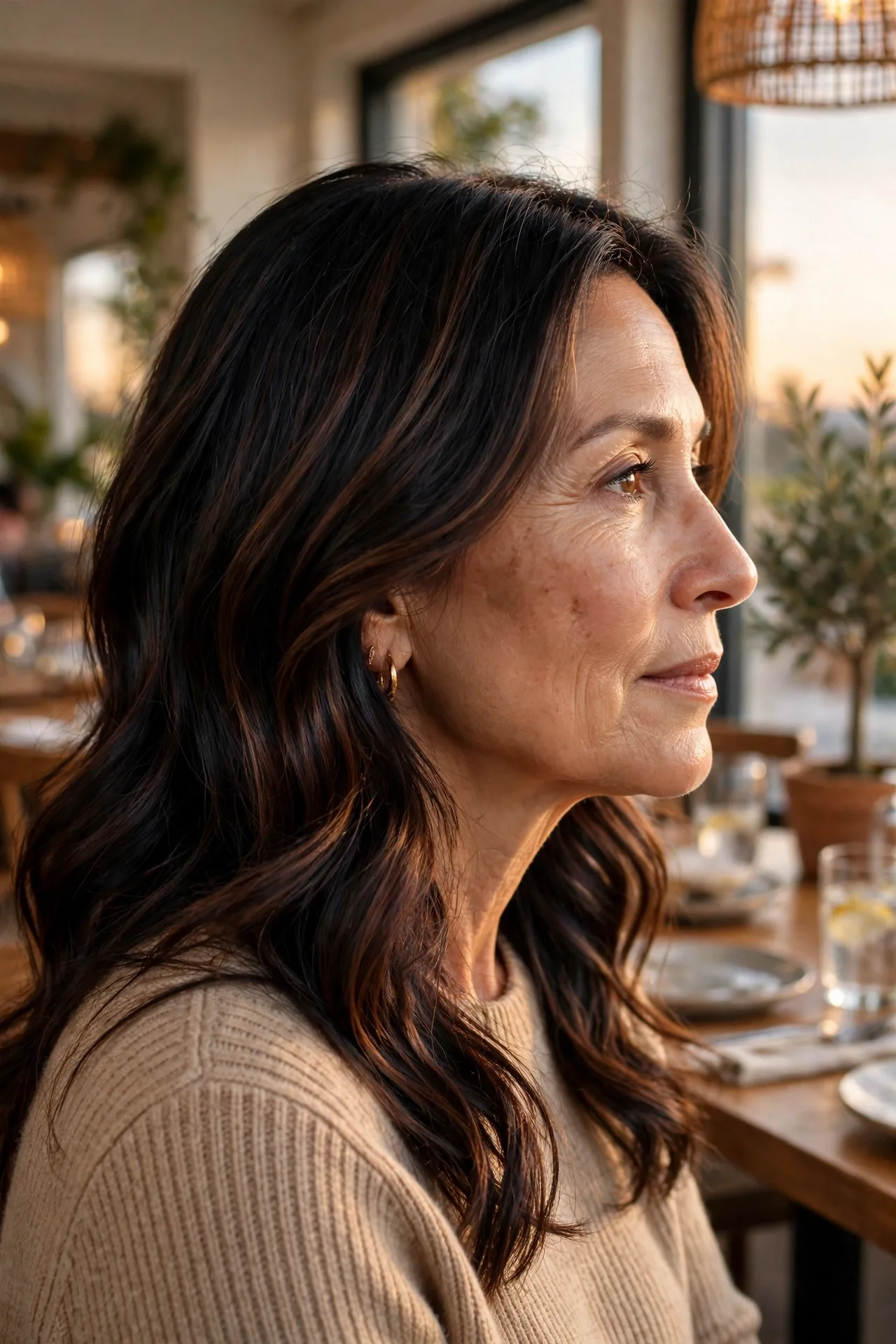
Dark chocolate balayage adds gloss to near-black hair. Deep chocolate ribbons are painted through dark hair, so the color reads rich and shiny without lightening it much. It suits women who want depth and shine but want to stay dark, and it flatters cool and neutral skin.
The principle is shine, not light. Dark chocolate reflects light, so the hair looks glossier than a flat black. That matters after 50, when hair can lose its shine and look dull. The ribbons are painted fine at the roots and wider at the ends, so the grow-out stays invisible for months.
Ask for a gloss to keep the chocolate rich, and a color visit every four months is enough. It is the lowest-maintenance dark color in this list, since the chocolate sits so close to the natural base. This one suits straight, wavy and curly hair, and it flatters every length from a bob to long layers.
Best for
Cool and neutral skin
Upkeep
Color every 4 months
Effect
Gloss and depth, no lightening
Smoky Ash Balayage
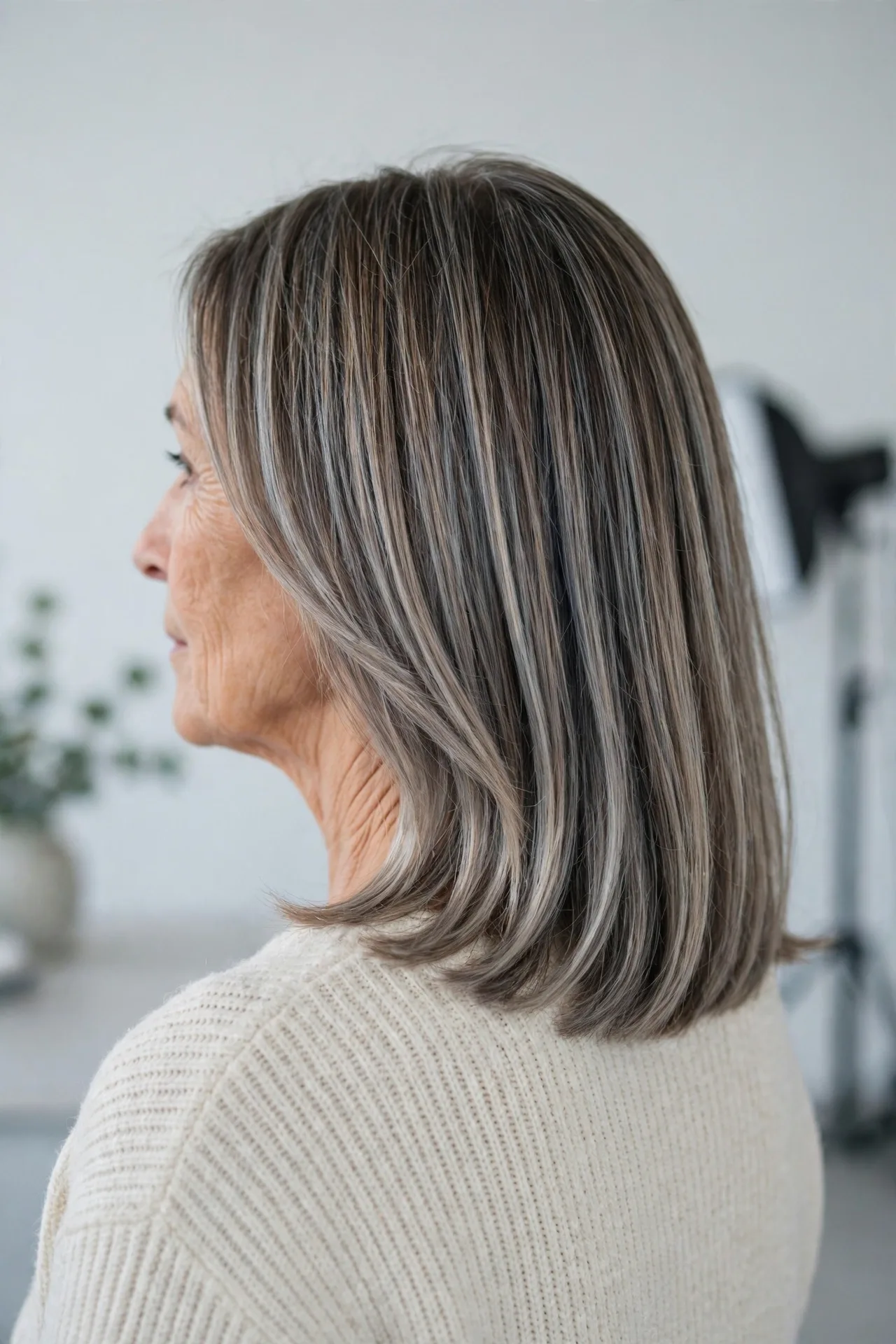
Smoky ash balayage mutes warm brown hair into a cool, smoky finish. Ash ribbons are painted through medium brown hair, so the color reads muted and modern instead of warm. It suits women who want a cool finish without going silver, and it flatters cool and neutral skin.
- Keep the ash ribbons fine, so the smoke reads as a tone, not a color.
- Ask for a blue shampoo to keep the ash cool between glosses.
- A root shadow keeps the grow-out soft for three to four months.
This suits women whose brown hair turns brassy in the sun and who want to stop fighting it. The upkeep is a gloss every eight weeks and a blue shampoo once a week. Lobs and shoulder-length cuts show the smoky tone best, on straight or wavy hair. The smoky finish also flatters women with gray at the temples, since the ash blends the gray into the color.
Checklist
✓ Fine ash ribbons, not wide blocks
✓ Blue shampoo once a week
✓ Root shadow for a soft grow-out
✓ Gloss every eight weeks
Golden Hour Balayage
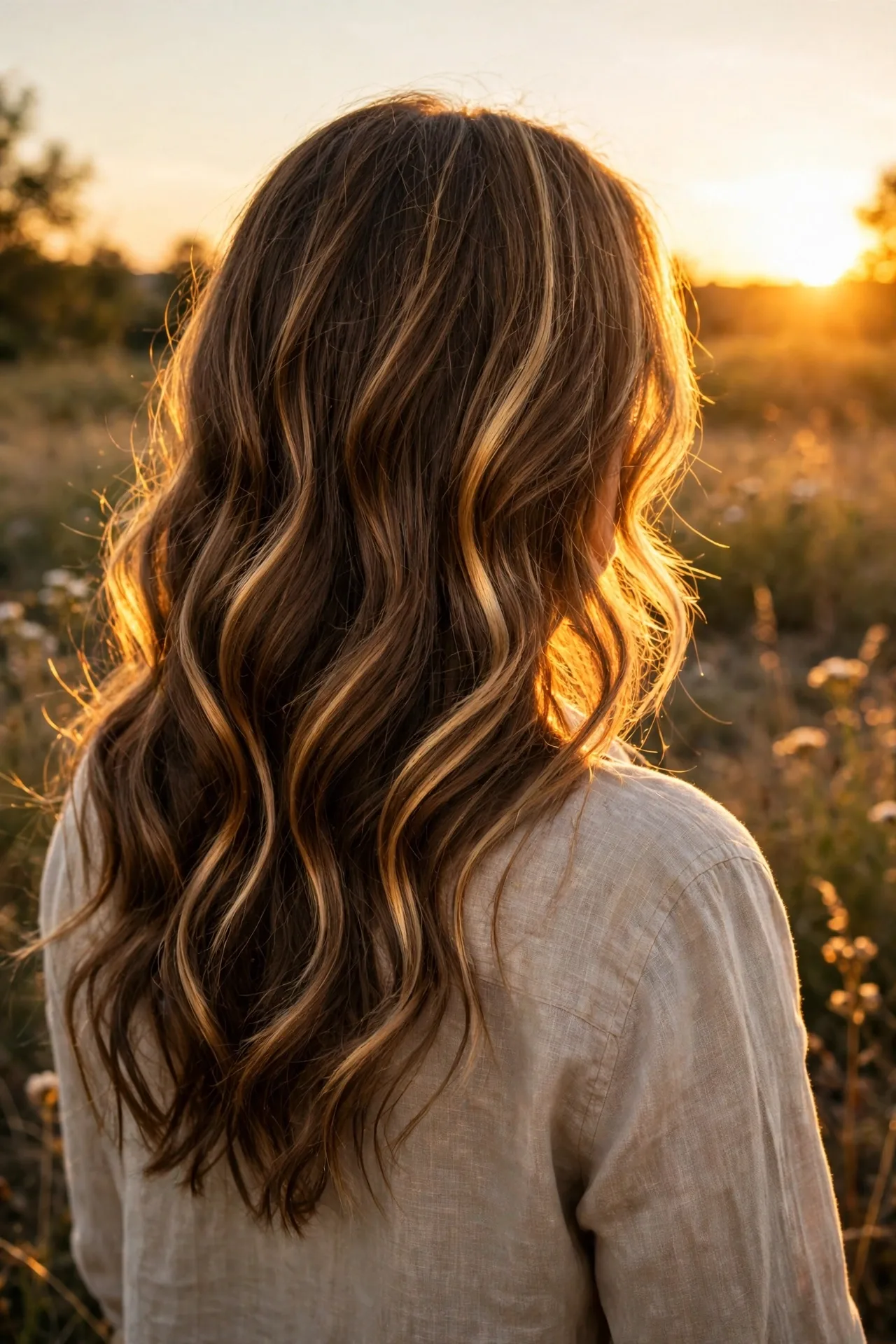
Golden hour balayage is named for the light it mimics. Golden ribbons are painted through wavy brown hair, so the color catches the light the way hair does at sunset. It suits women who want warmth with a glow, and it flatters warm and olive skin best.
Quick Tip: Ask for the gold at the ends, not the roots. Gold at the roots looks brassy, while gold at the ends reads as sunlight.
The principle is light placement. Gold gathers at the ends because that is where the sun hits the hair, so the color looks natural even when it is bright. I’ve seen this work best on wavy hair, where the waves catch the gold from every angle and the color seems to move. It needs a gloss every eight weeks to keep the gold from turning yellow.
Medium to long lengths carry it best, on wavy or curly hair. A color visit every three to four months is enough, and a purple shampoo once a week keeps the gold clean.
Ask for: golden ribbons at the ends, not the roots, painted through wavy brown hair and finished with a gloss.
Soft Auburn Balayage
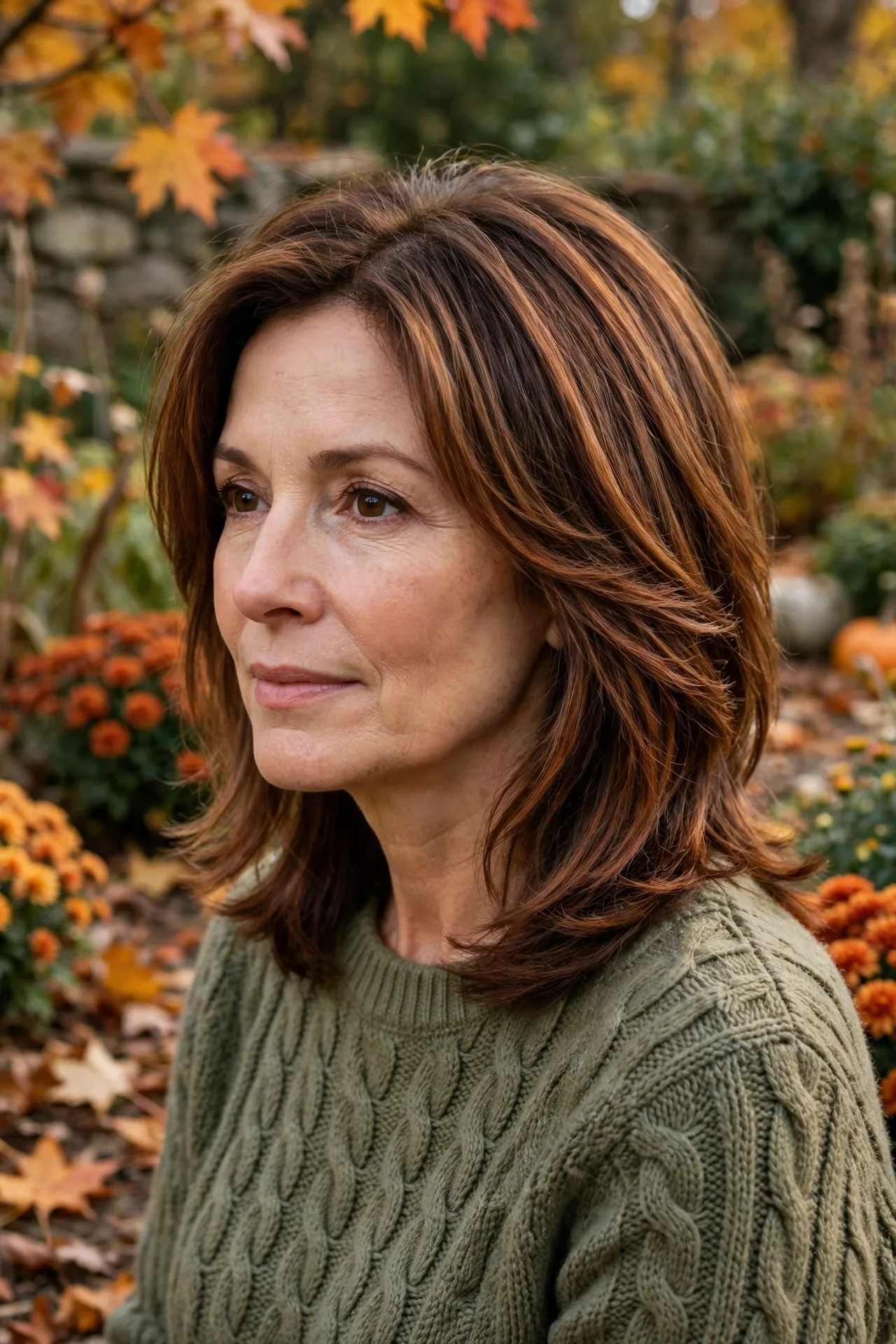
Soft auburn balayage adds a gentle red warmth to brown hair. Auburn ribbons are painted through medium brown hair, so the color reads warm and rich without ever looking red. It suits women with warm skin and brown or hazel eyes who want warmth without the commitment of a full red.
Before: Brown hair that looks flat and cool in indoor light.
After: Auburn ribbons that warm the hair and light up the face.
The principle is warmth in balance. Auburn sits between brown and red, so it adds warmth without the fade risk of a true red. That is why it suits women who want red tones but want lower upkeep: auburn fades to a warm brown, not to orange. It needs a color-safe shampoo and a gloss every eight weeks.
Medium lengths show the auburn best in motion, on straight or wavy hair. Start the ribbons fine at the roots and let them widen toward the ends.
Before
Brown hair that looks flat and cool in indoor light.
After
Auburn ribbons that warm the hair and light up the face.
Vanilla Cream Balayage
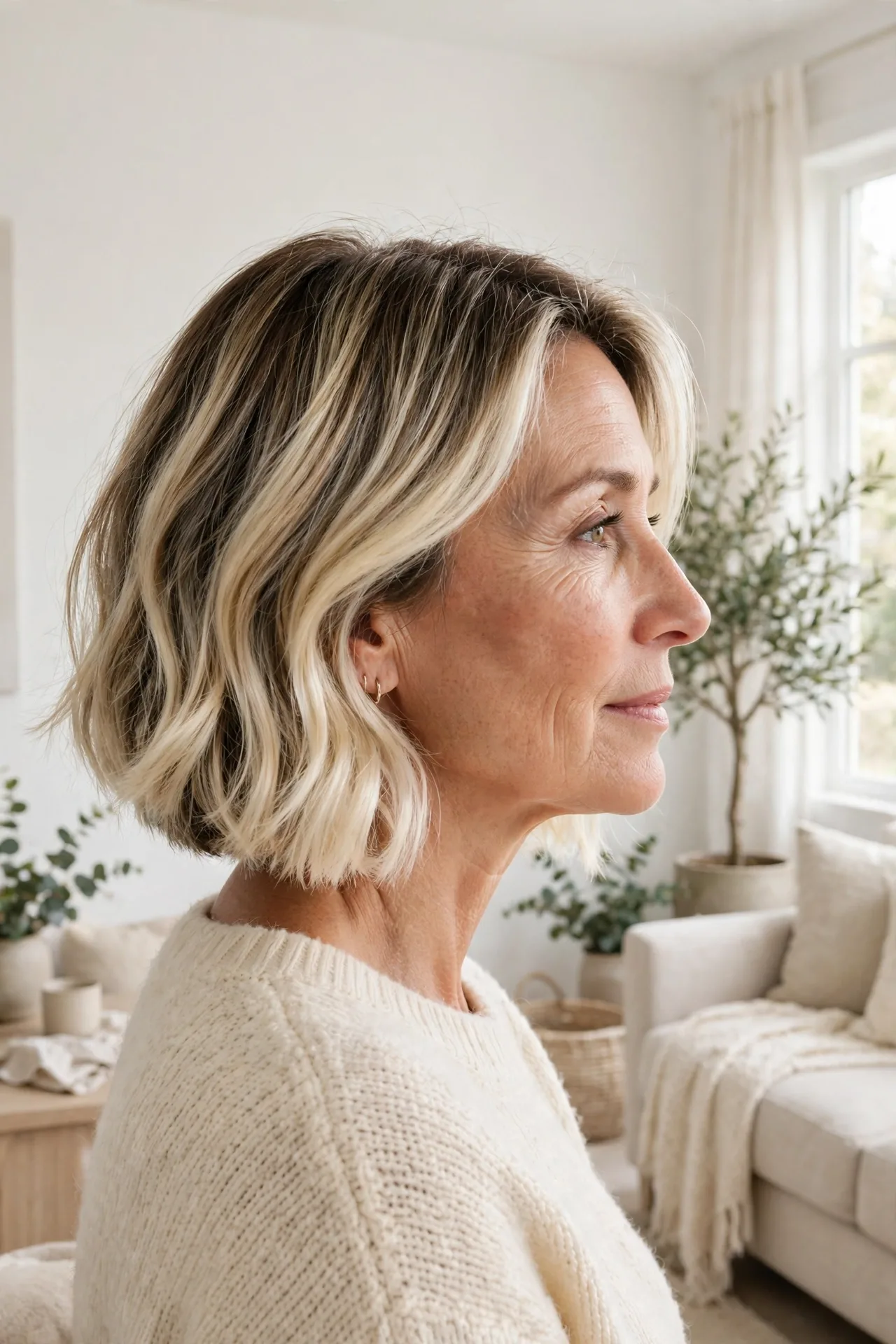
Vanilla cream balayage is blonde at its softest and creamiest. Vanilla ribbons are painted through dark blonde hair, so the color reads soft and creamy rather than bright or ashy or flat. It suits women who want a light blonde that still looks warm, and it flatters fair and neutral skin.
- Ask for vanilla ribbons two shades lighter than your base.
- Have them painted from the mid-lengths down, not at the roots.
- Add a cream gloss to keep the vanilla soft and luminous.
- Book the next gloss in eight weeks, not a full color.
The principle is cream over contrast. Vanilla sits between gold and ash, so it lightens the hair without going yellow or gray. That is why it suits mature skin: the cream softens the face without washing it out. Bobs and lobs show the vanilla best in the movement, on straight or wavy hair.
Tip
Vanilla sits between gold and ash, so it lightens without going yellow or gray. A cream gloss keeps it soft.
Espresso Balayage
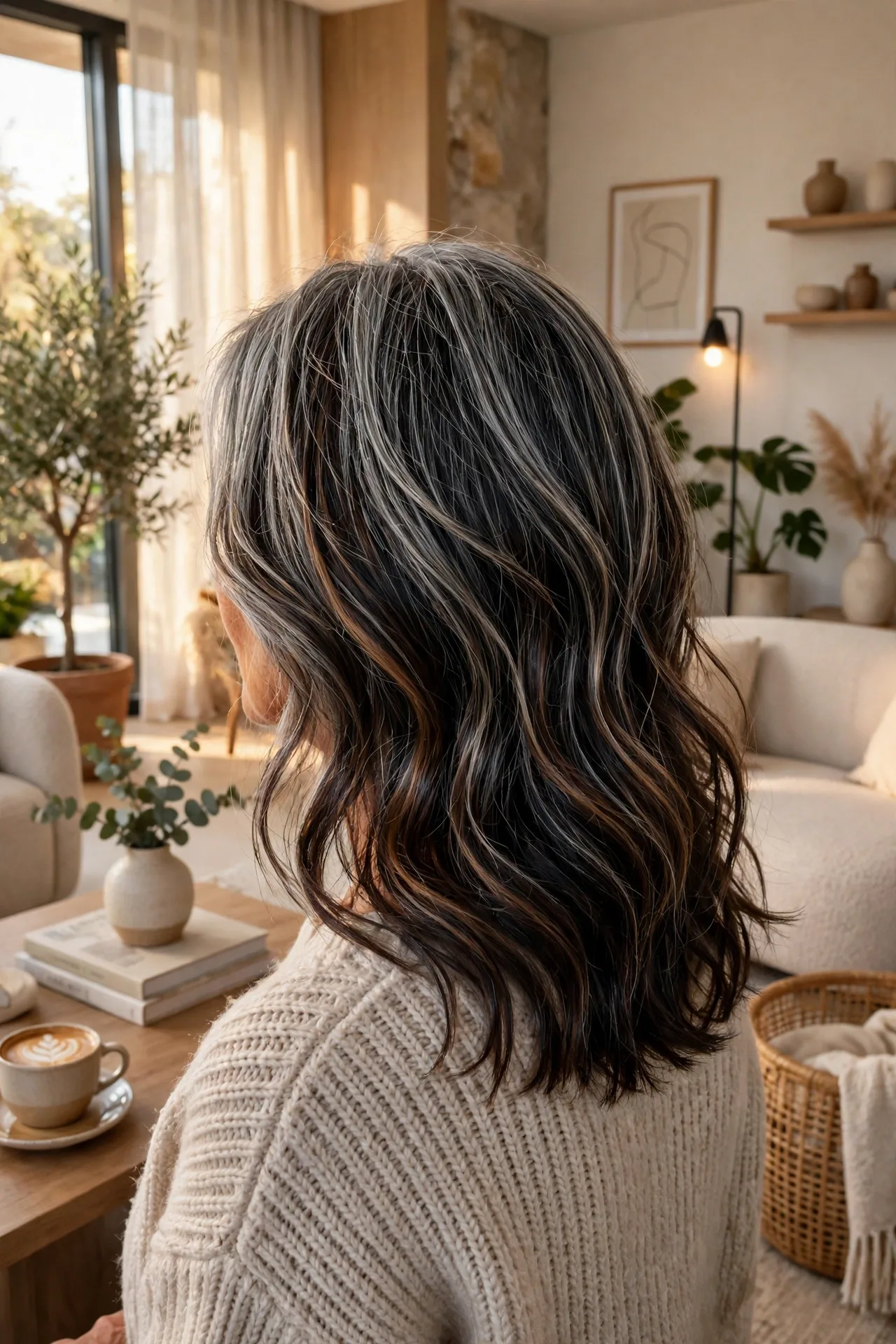
Espresso balayage adds depth to dark hair with gray. Deep espresso ribbons are painted through silver-streaked dark hair, so the color reads rich and glossy while the gray shows through as silver threads. It suits women who want to stay dark but want their gray to read as dimension.
Do: Keep the espresso close to your natural base for a seamless blend.
Do: Ask for a gloss to keep the espresso rich and the silver bright.
Don’t: Cover the gray completely, or the dimension is lost.
Don’t: Add blonde ribbons, or the espresso turns into a brown balayage.
The principle is letting the gray work. Gray threads through dark hair read as natural highlights when the base is espresso, so the color looks dimensional without any lightening. That is why it suits women with scattered gray who do not want to cover it. A gloss every ten weeks and a color visit every four months is all it needs.
Best for
Dark hair with scattered gray
Upkeep
Gloss every 10 weeks
Lightening
None, gray does the work
Blonde Gray Blend
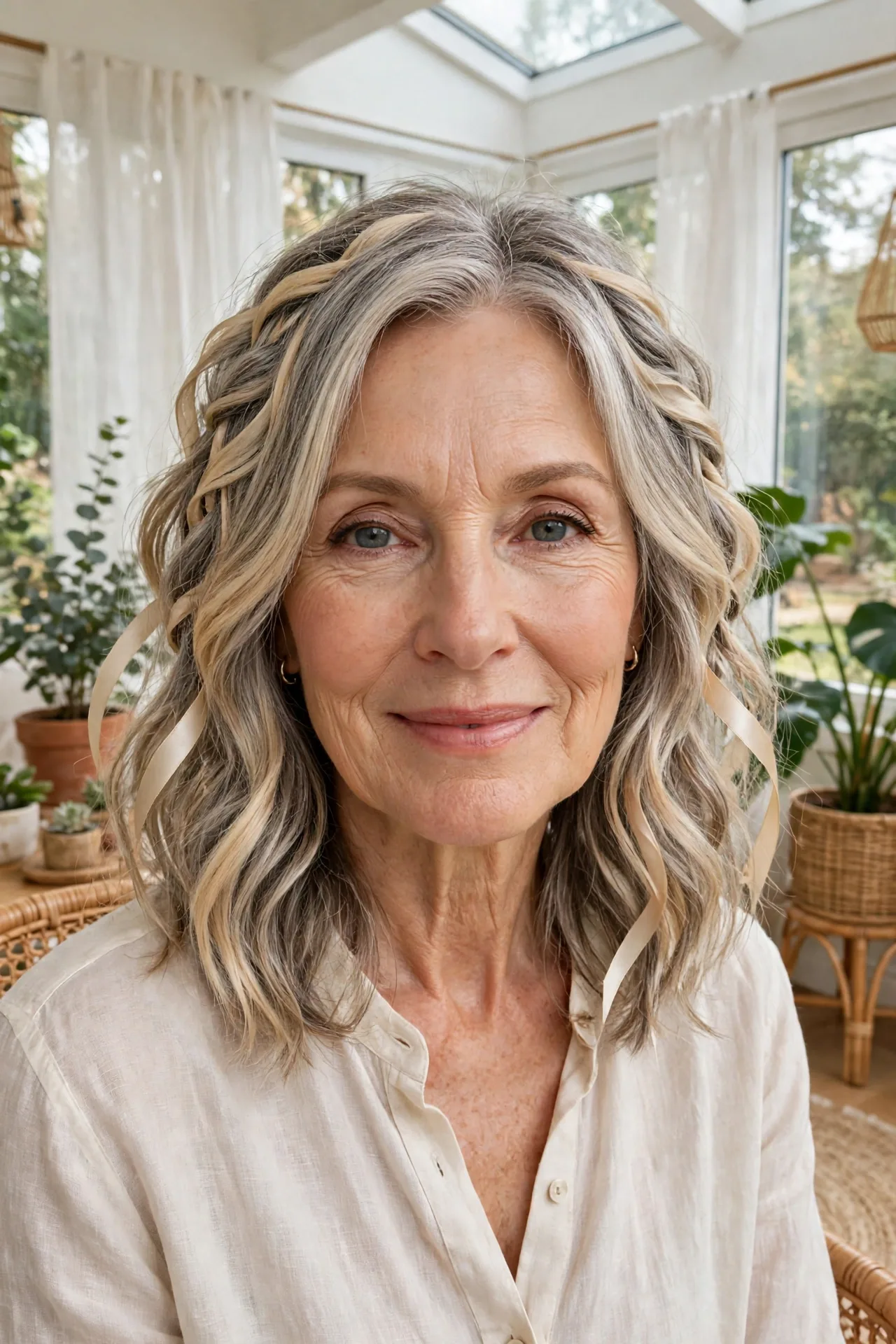
A blonde gray blend turns natural gray into a blonde look. Blonde ribbons are woven through gray hair, so the gray becomes the palest part of a blonde design. It suits women whose gray has taken over and who want it to read as blonde, not as gray.
Best for: Mostly gray hair, fair to medium skin.
Upkeep: Purple shampoo once a week, gloss every eight weeks.
Grow-out: No root line at all, since gray is the base.
Avoid if: Your hair is still mostly dark, since blonde needs a lot of lifting.
The principle is using what is already there. Gray hair is already light, so blonde ribbons need little lifting and the color lasts longer. That is why this blend has the softest grow-out in the list: there is no dark root to show. Short to medium cuts weave the blonde and gray together best, on straight, wavy or curly hair.
Good to know
• Gray hair is already light, so blonde needs little lifting.
• No dark root means no root line at all.
• Purple shampoo once a week keeps it cool.
• Best on short to medium cuts.
Sunset Copper Balayage
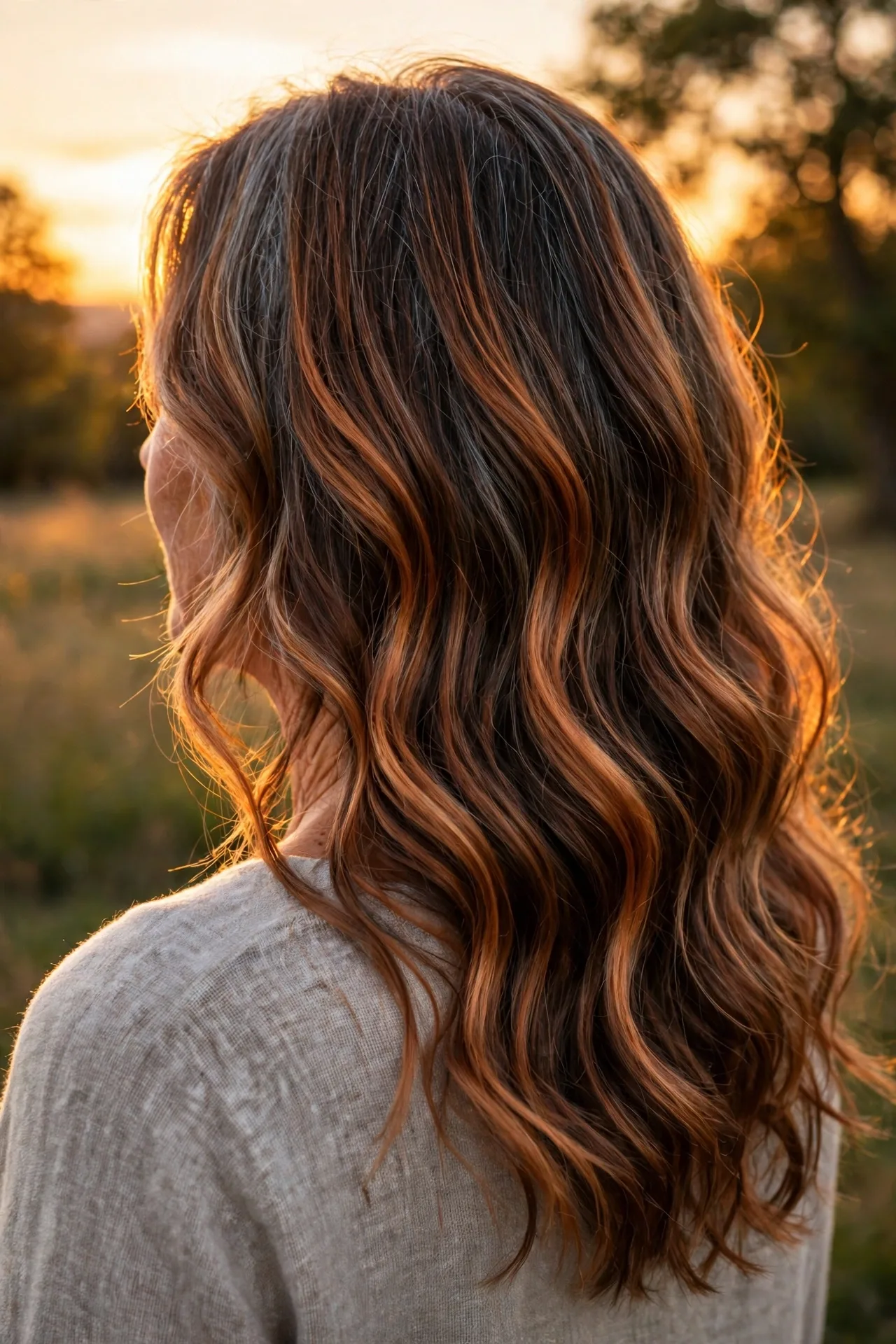
Sunset copper balayage is the boldest color in this list. Copper ribbons in sunset tones are painted through dark brown hair, so the color glows orange-pink in the light and reads warm indoors. It suits women who want a statement color that still grows out softly, and it flatters warm skin and brown eyes.
The principle is glow, not shock. Sunset copper is bright, but the balayage placement keeps it soft at the roots, so the color fades in rather than starting with a line. That is why it grows out better than a solid copper: the roots were never copper to begin with. It needs a color-safe shampoo and a gloss every six weeks, since copper fades fastest.
Medium to long lengths catch the copper best, on wavy or curly hair, from every angle. Keep the ribbons wide at the ends for the full sunset effect, and ask for a gloss to keep the copper glowing.
Best for
Warm skin, brown eyes
Upkeep
Gloss every 6 weeks
Grow-out
Soft, roots were never copper
Final Thoughts
Balayage over 50 comes down to one rule: paint for the grow-out, not for the day you leave the salon. Pick your gray level first, then your warmth, then your upkeep. Heavy gray suits silver and ash. Light gray suits caramel and honey. Thin hair suits babylights, and warm skin suits copper and honey. Take two or three ideas from this list to your colorist, point to the grow-out you want, and ask for a root melt or a root shadow to go with it. Save this list for your next appointment, so the color you pick is the one that still looks good three months later.
Frequently Asked Questions
Does balayage work on gray hair?
Yes. Balayage is one of the best ways to handle gray, because the colorist can weave silver and ash ribbons through the gray instead of covering it. The gray becomes part of the design, and the grow-out stays soft for three to four months. Ask for a silver gloss to keep the tone cool.
How long does balayage last?
Most balayage lasts three to four months before it needs a color visit, since the color starts below the roots and grows out without a line. A gloss every eight to ten weeks keeps the tone fresh between visits. Copper and red tones fade faster and need a gloss every six weeks.
Is balayage low maintenance after 50?
Yes, it is one of the lowest-maintenance color options. There is no monthly root appointment, and most women visit the salon only three or four times a year. A root melt or root shadow makes the grow-out even softer.
Can balayage make thin hair look fuller?
Yes, when the pieces are fine. Babylights and fine ribbons create variation that the eye reads as thickness, while chunky highlights can expose thin hair. Ask for pieces no wider than a few hairs, painted close to the scalp at the crown.
What should I ask my colorist for?
Bring two or three photos from this list and point to the grow-out you want. Ask for a root melt or root shadow, ribbons that start below the cheekbones, and a gloss to finish. Mention how much gray you have and how often you want to visit, so the colorist can match the upkeep to your life.