27 Cornrows for Black Women That Are Sleek, Bold, and Protective
Cornrows for black women are the foundation of protective styling, and they work because each row does two jobs at once. Every braid lies flat against the scalp, so the hair stays tucked away from daily friction, and the pattern on top gives the style its shape. The rule that decides whether a set protects or harms is tension. A cornrow that pulls at the hairline can thin the edges it was meant to guard, while a feed-in start that begins small and grows thicker keeps the front gentle. This list gathers 27 cornrow styles in five groups, classic rows, updos, finishes, color, and low-tension care, each chosen for Black women with natural or coily hair. Every idea notes who it suits, how long it lasts, and what to ask the braider, so you can walk in with a clear request. Use the Hairstyle Finder Quiz to narrow the shape that fits your face and your week, then save the rows that fit your hair, your edges, and your calendar.
At a glance
• Best classic: Classic Straight-Back Rows, neat rows that last four to six weeks.
• Best low tension: Edge-Safe Cornrow Rows, feed-in starts that guard the hairline.
• Best color: Wine Burgundy Cornrows, deep wine woven through dark rows.
• Best updo: High Cornrow Ponytail, braids swept up and out of the way.
Classic Straight-Back Rows
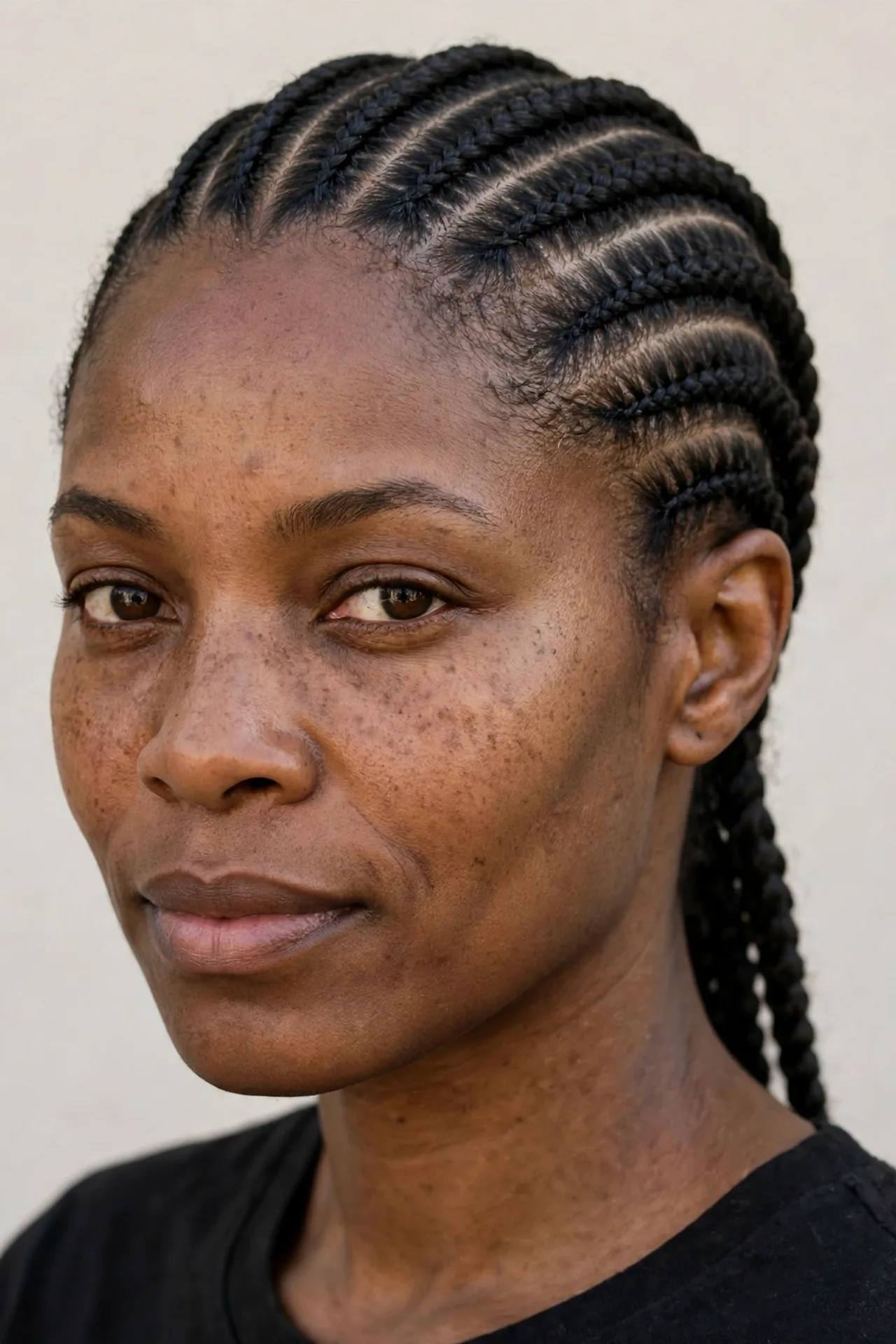
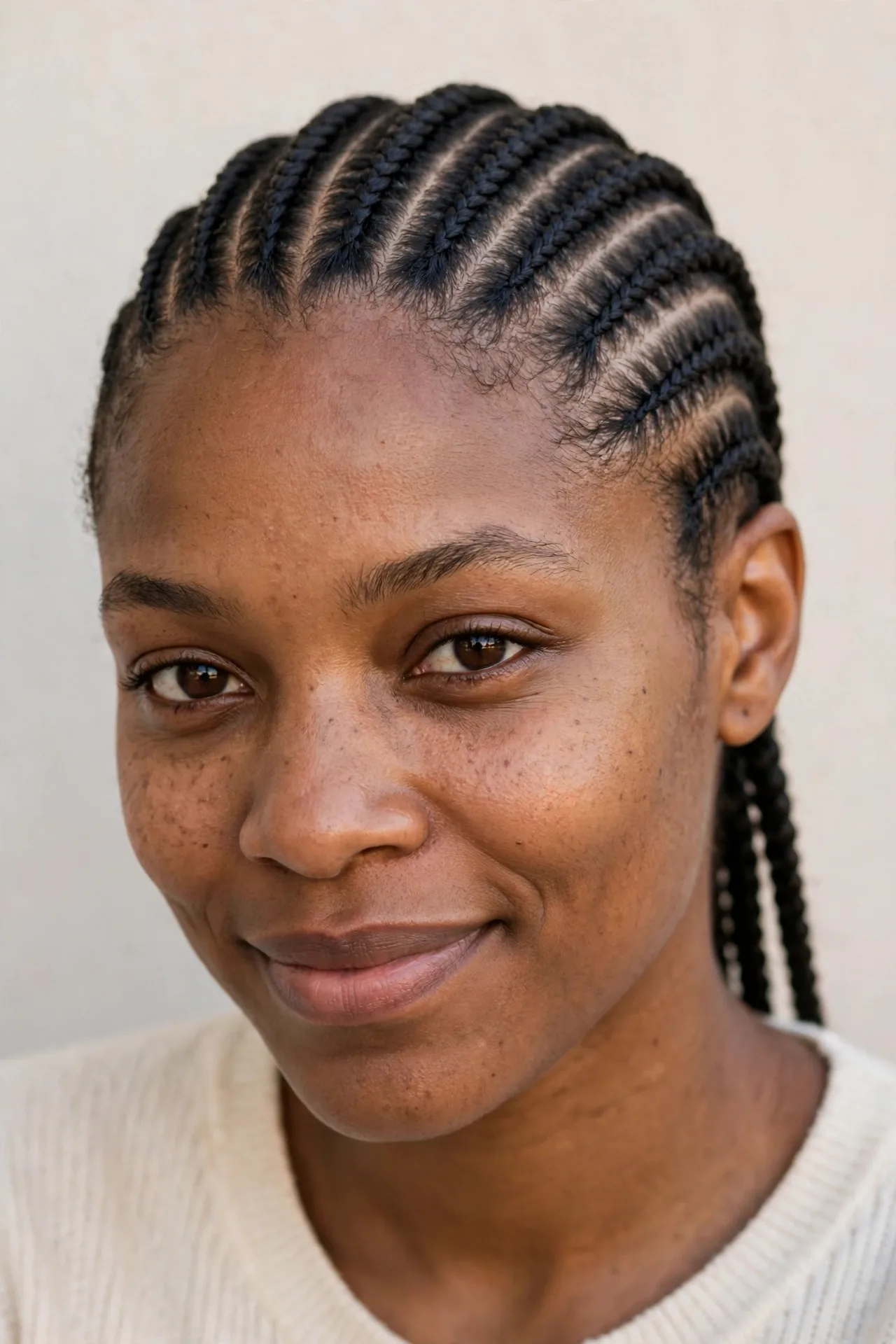
Classic straight-back rows are the foundation every other cornrow style builds on, and they earn that place by being neat, fast, and honest. The braider parts the hair into straight rows from the hairline to the nape, then braids each row flat against the scalp with no twists or turns. Medium rows suit 4C hair best, since the coils grip the braid and hold the shape for weeks. The rows frame the face cleanly and sit flat under a scarf or a hat.
The reason straight-back rows protect so well is the even tension. Each row pulls the same amount, so no single spot carries extra stress, and the ends stay tucked away from daily friction. Ask for medium rows with a feed-in start at the front, so the hairline stays gentle and the style lasts four to six weeks. Wash the scalp once a week with diluted shampoo, dry the rows fully, and sleep in a satin scarf to keep the parts crisp.
Tip
Ask for: medium rows with a feed-in start, so the hairline stays gentle for weeks.
Lemonade Side Sweep
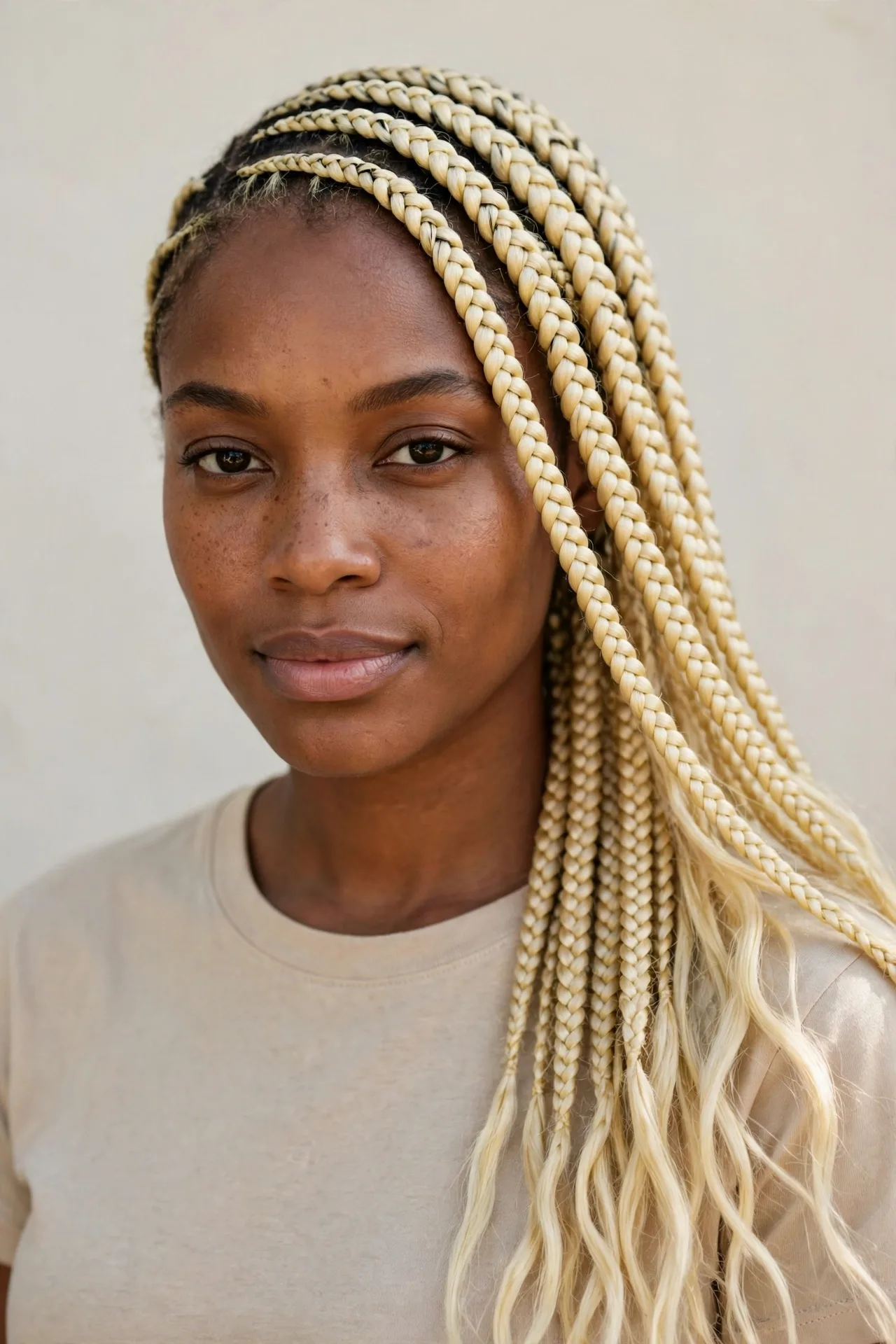
- Keep the sweep diagonal, from one temple down to the opposite shoulder.
- Ask for a feed-in start, so the front stays gentle on the edges.
- Let the ends flow long past the shoulders.
Lemonade side sweep takes its name from the side-swept feed-in rows that became a signature look, and it earns its place by flattering almost every face. The diagonal line draws the eye across the face instead of straight down, which softens a strong jaw and adds movement to the whole style. It suits long hair best, since the sweep needs length to show, and the feed-in start keeps the front gentle.
A set of braided hairstyles for long hair shows how length carries a side sweep, and lemonade rows use that length to their advantage. The braids fall over one shoulder, and the slant catches light in photos. Ask for clean parts and loose, long ends. The style lasts three to five weeks with a satin scarf at night, and it works for date nights, weddings, and workdays alike.
Before
Straight-back rows that read neat but plain, with no direction to the style.
After
The same rows swept diagonally, soft on the face and full of movement.
Crisp Stitch Rows
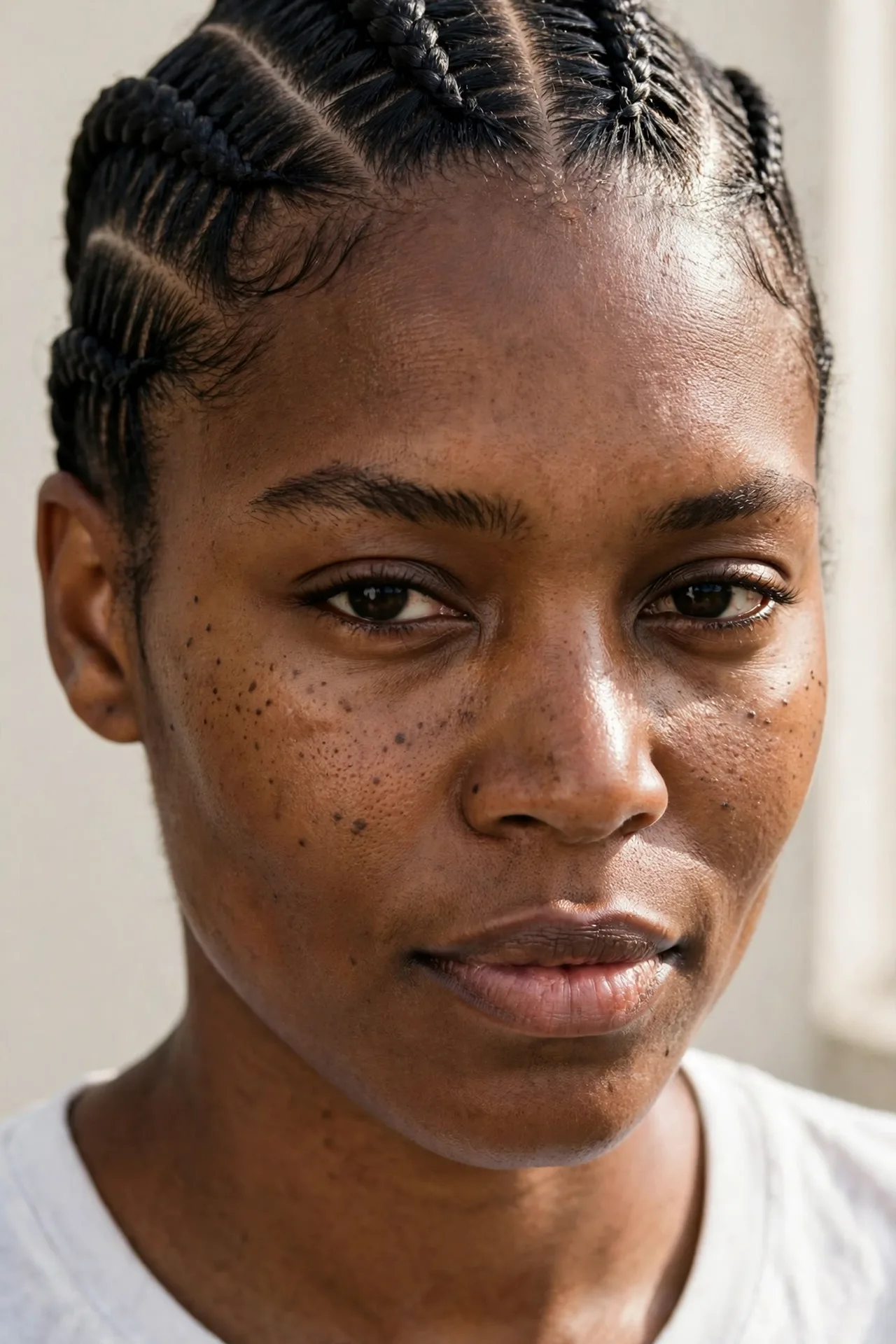
Quick Tip: Ask for the stitch kept crisp but never tight at the hairline, so the raised segments show without pulling.
Crisp stitch rows are the precision style of the cornrow family, and they earn that name from the raised, ribbed segments that look almost sewn onto the scalp. The braider feeds hair in small, even amounts, which leaves a clean line between each segment and a sculpted finish that photographs like art. It suits medium and thick hair best, since the coils hold the raised shape, and the look reads modern and confident from every angle.
The catch with stitch rows is the skill they demand. Clean parts and even feeding take a steady hand, so book a braider who has done stitch work before. A set of braided updo ideas for Black hair shows how stitch rows gather into sculpted updos, and the same crisp base works loose too. The style lasts three to five weeks, keeps the neck cool in heat, and pairs with gold cuffs at the ends for extra detail.
Checklist
☐ Crisp raised segments, even feeding
☐ Clean parts, no pulling at the hairline
☐ Gold cuffs at the ends for detail
Ghana Feed-In Rows
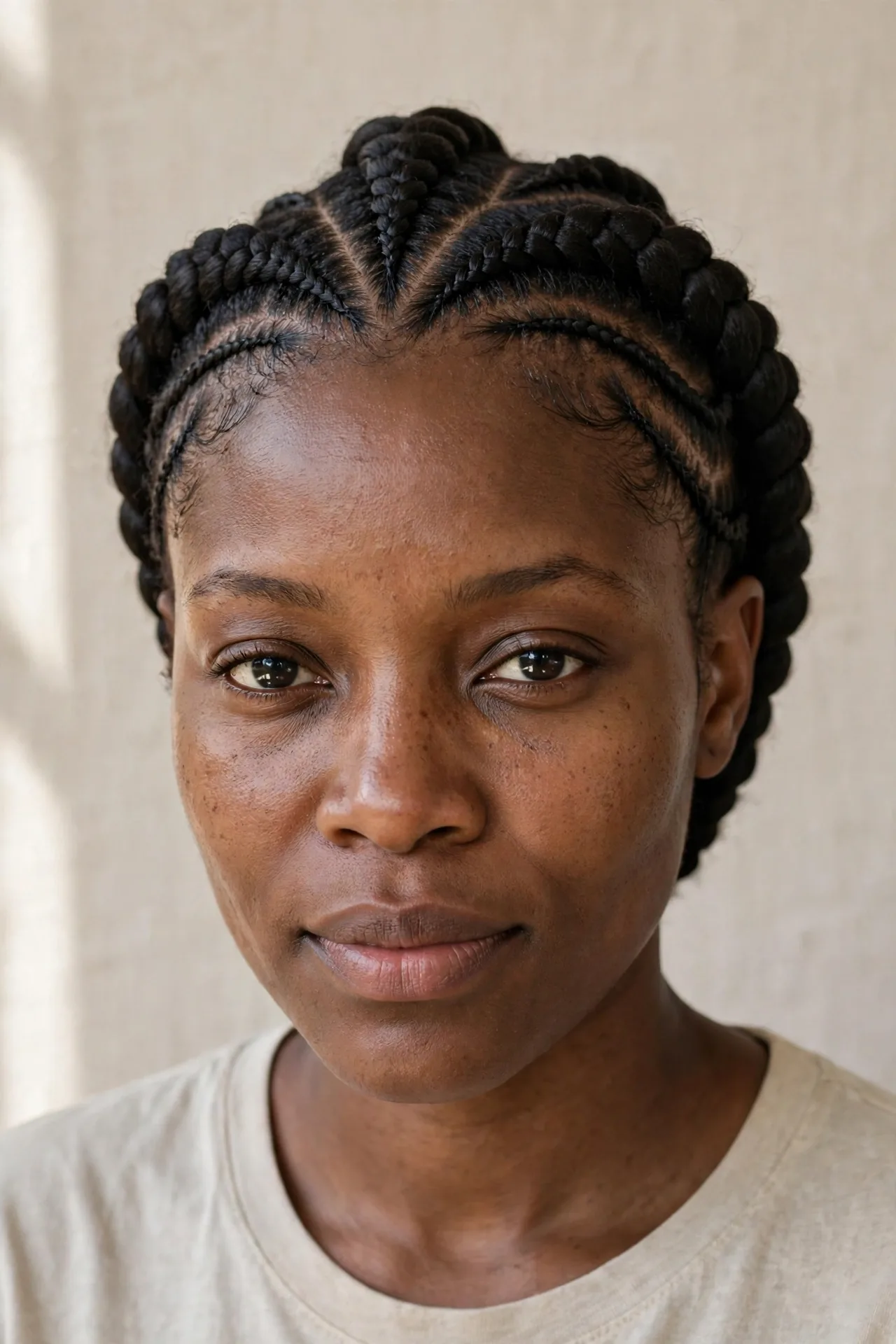
Before: Thick braids that start heavy at the hairline and pull on tender edges.
After: The same braids starting thin and growing thick, gentle at the front and sculpted at the back.
Ghana feed-in rows are the chunky, sculptural cousin of the classic cornrow, and they suit Black women who want a bold look without the heavy pull. The braider starts each row thin at the hairline, then feeds in extensions bit by bit, so the braid grows thicker as it travels back. That taper is what makes the style gentle where the hair is most fragile and dramatic where it shows most.
The reason Ghana rows protect edges is the feed-in start. Traditional braids grip the hairline at full thickness from the first stitch, while feed-in rows begin with almost no added hair and build slowly. Ask for chunky rows, four to six across the head, and ends left long or gathered into a bun. The style lasts four to six weeks, holds its shape in humidity, and reads regal with gold cuffs at the ends.
Best for
Thick hair, bold sculptural looks
Lasts
Four to six weeks with care
Finish
Chunky rows, gold cuffs or beads
Jumbo Sculpted Rows
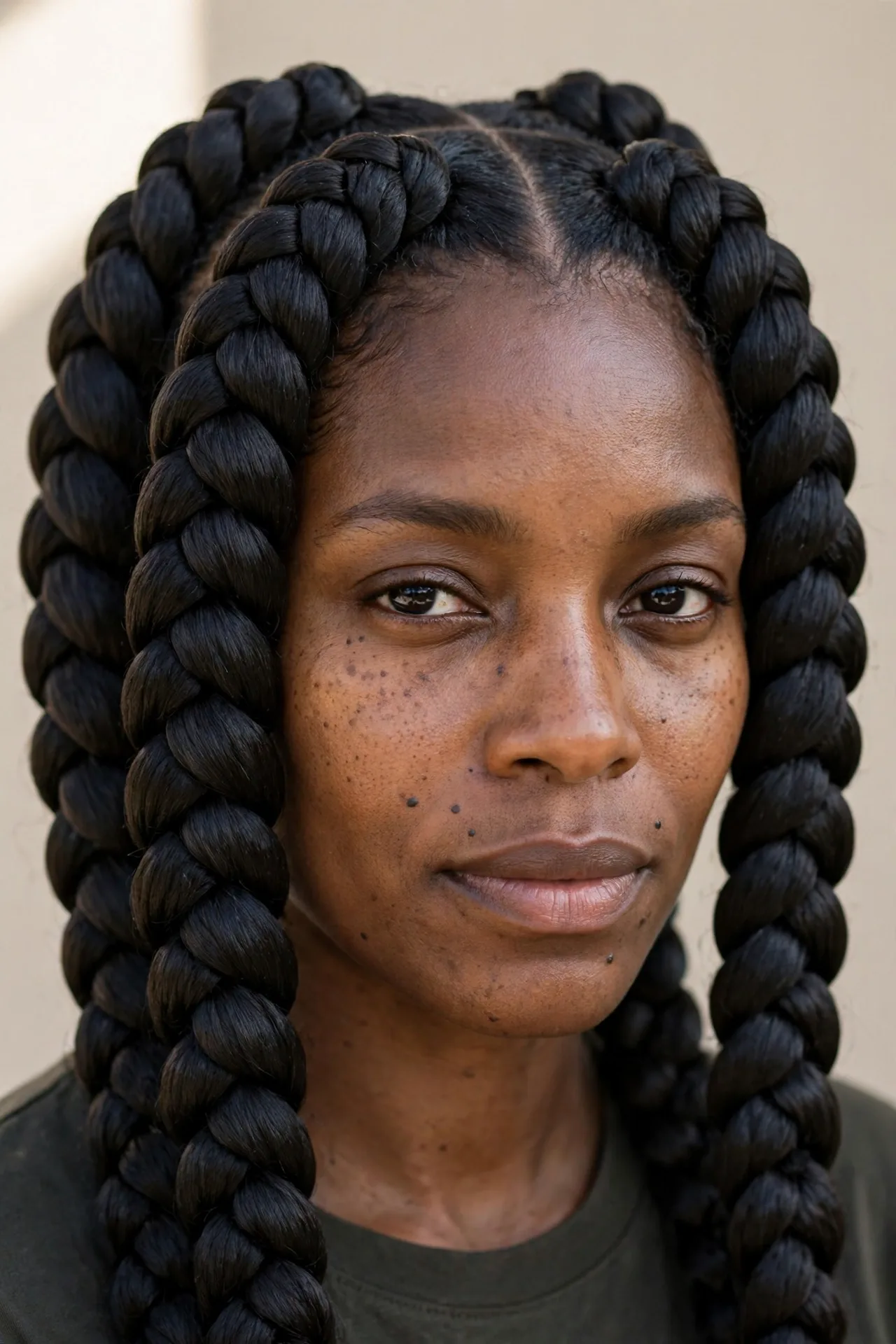
- Part the hair into four to six wide sections.
- Braid each row thick and even, from hairline to nape.
- Keep the front feed-in for a gentle hairline.
- Seal the ends and add cuffs to finish.
Jumbo sculpted rows are the fastest install in this list, and they suit readers who want maximum impact with minimum chair time. Fewer, larger rows mean the braider finishes in two to three hours, and the chunky sections frame the face with a bold silhouette. The style suits thick hair best, since the density fills each wide row, and it reads confident with a blazer or a tee.
In my experience, jumbo rows are also kinder to the scalp than people expect. The tension spreads across fewer, larger sections instead of many small ones, so no single spot carries a heavy pull. Ask for clean parts and rows curved into a heart or a zigzag for a playful finish. The style lasts three to five weeks, and the wide rows show the grow-out clearly.
Steps
1. Part the hair into four to six wide sections.
2. Braid each row thick and even, hairline to nape.
3. Keep the front feed-in for a gentle hairline.
4. Seal the ends and add cuffs to finish.
Zigzag Part Rows
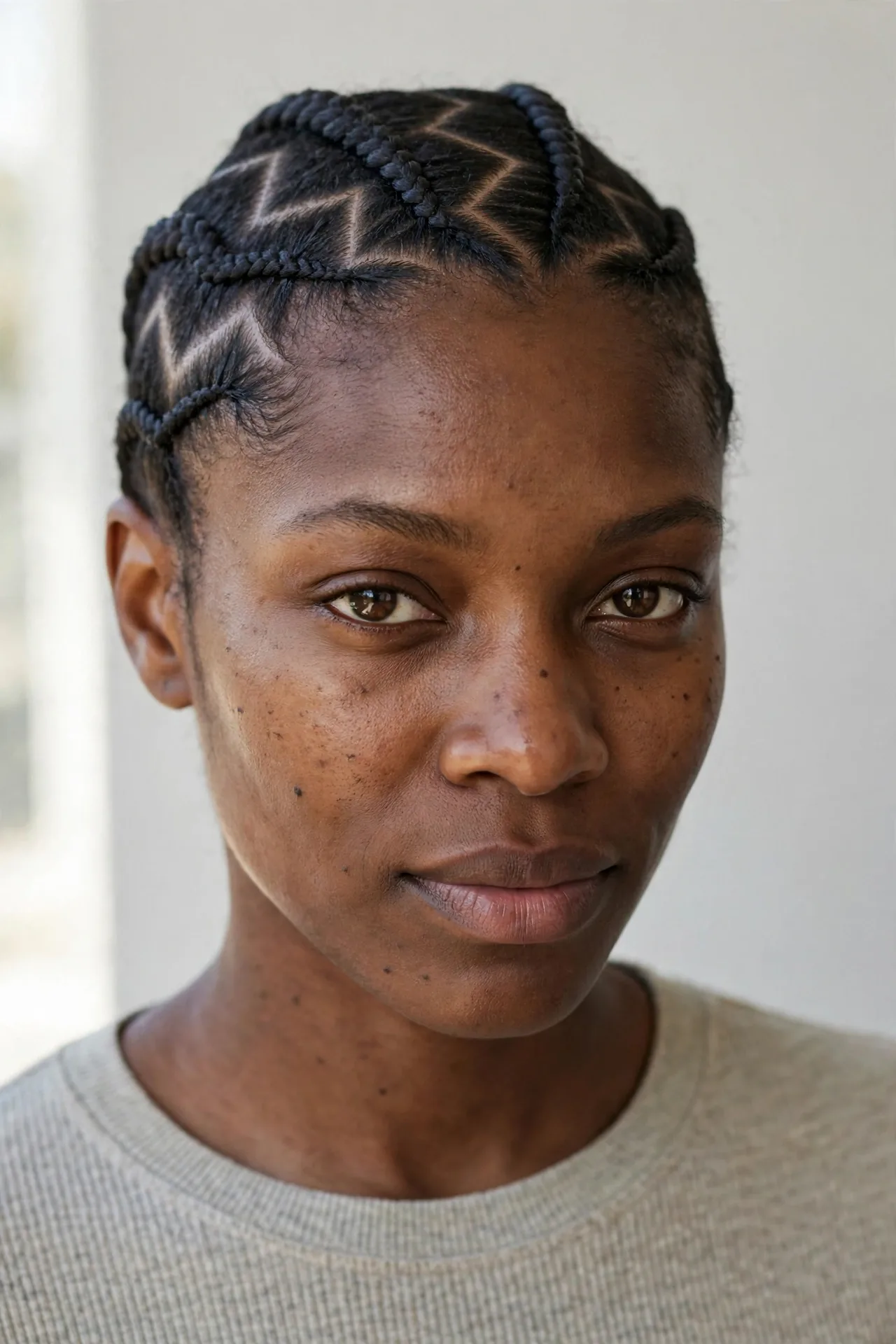
Do: Ask for sharp zigzag parts, so the pattern reads across the room.
Do: Keep the rows medium, so the angles stay crisp for weeks.
Don’t: Let the parts go soft, or the zigzag blurs into straight rows.
Don’t: Skip the edge gel, or the pattern loses its clean frame.
Zigzag part rows turn the scalp into geometry, and they suit Black women who want their braids to show personality first. The braider parts the hair in sharp angles, so each row bends back and forth and catches light differently at every turn. The pattern reads artistic and bold, and it photographs well from above and behind.
The reason zigzag rows work is the parting, not the braid. A straight part hides small mistakes, while a zigzag shows every wobble, so book a braider with a steady hand. Ask for a sharp zigzag and medium rows, so the angles hold for three to four weeks. Pair the look with a sleek edge finish and a few beads at the ends.
✓ Do
Keep the zigzag parts sharp and clean
✗ Don’t
Let the parts soften, or the pattern blurs
Curved Cornrow Flow
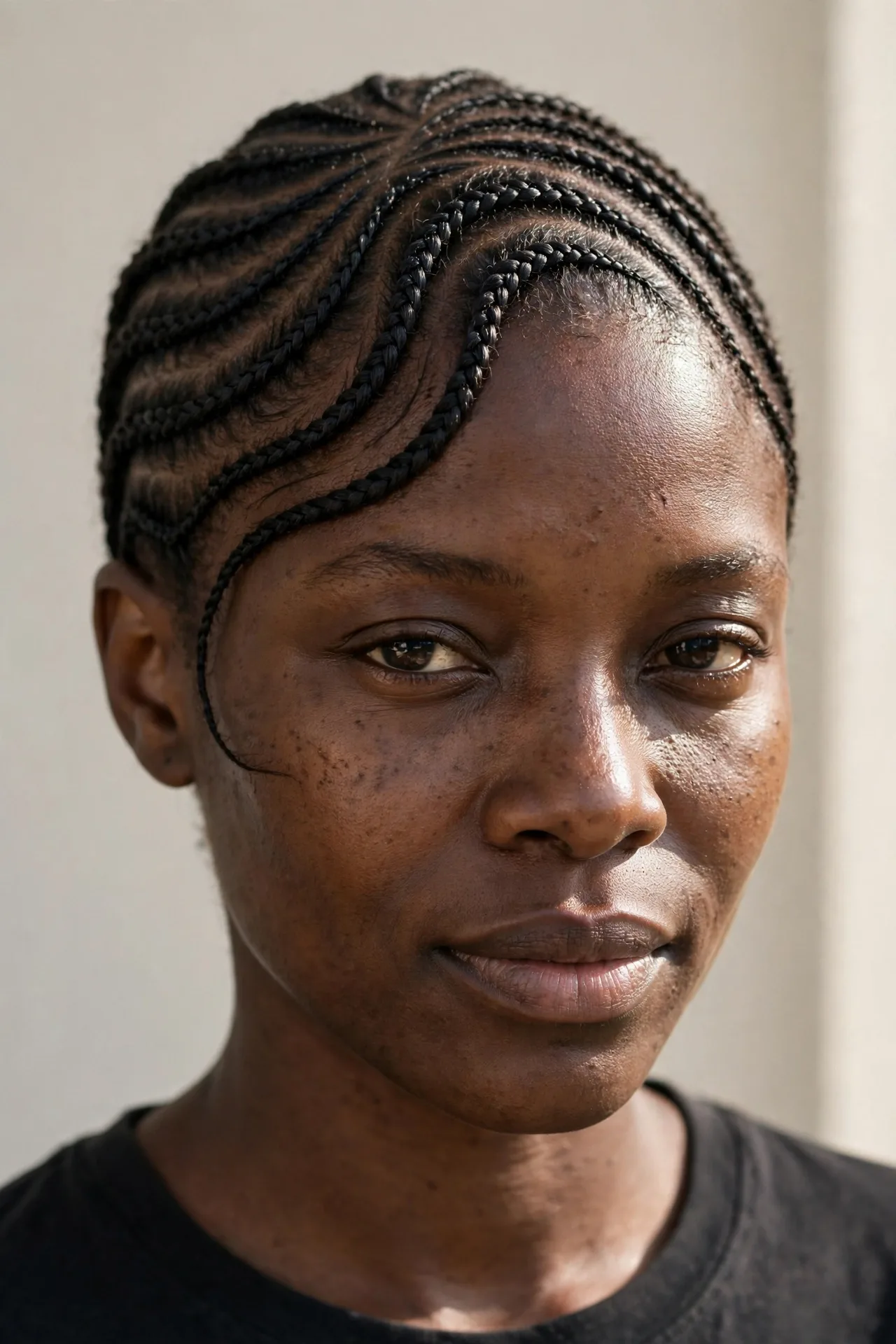
Best for: Strong jawlines and high foreheads.
Time: Three to four hours in the chair, then a scarf at night.
Hair: Medium to long, with coils that hold a curved shape.
Curved cornrow flow drops straight lines and sweeps the rows across the head in soft curves. The flowing direction gives the style an organic feel, and the curves draw the eye around the head, so every angle feels intentional. It suits medium to long hair best, since the length lets the curves show their full sweep, and the look reads modern, artistic, and deeply personal.
The reason curves flatter is the way they redirect the eye. A strong jaw softens when the rows curve away from it, and a high forehead reads shorter when the curves sweep across it. Ask the braider to map the curves to your face first, and let the rows flow into a side bun or a low ponytail. The style lasts three to five weeks, and the curves hold best with a light edge gel and a satin scarf at night.
• Curves sweep away from a strong jaw
• Rows flow into a side bun or low ponytail
• Light edge gel keeps the curves crisp
Heart Crown Rows
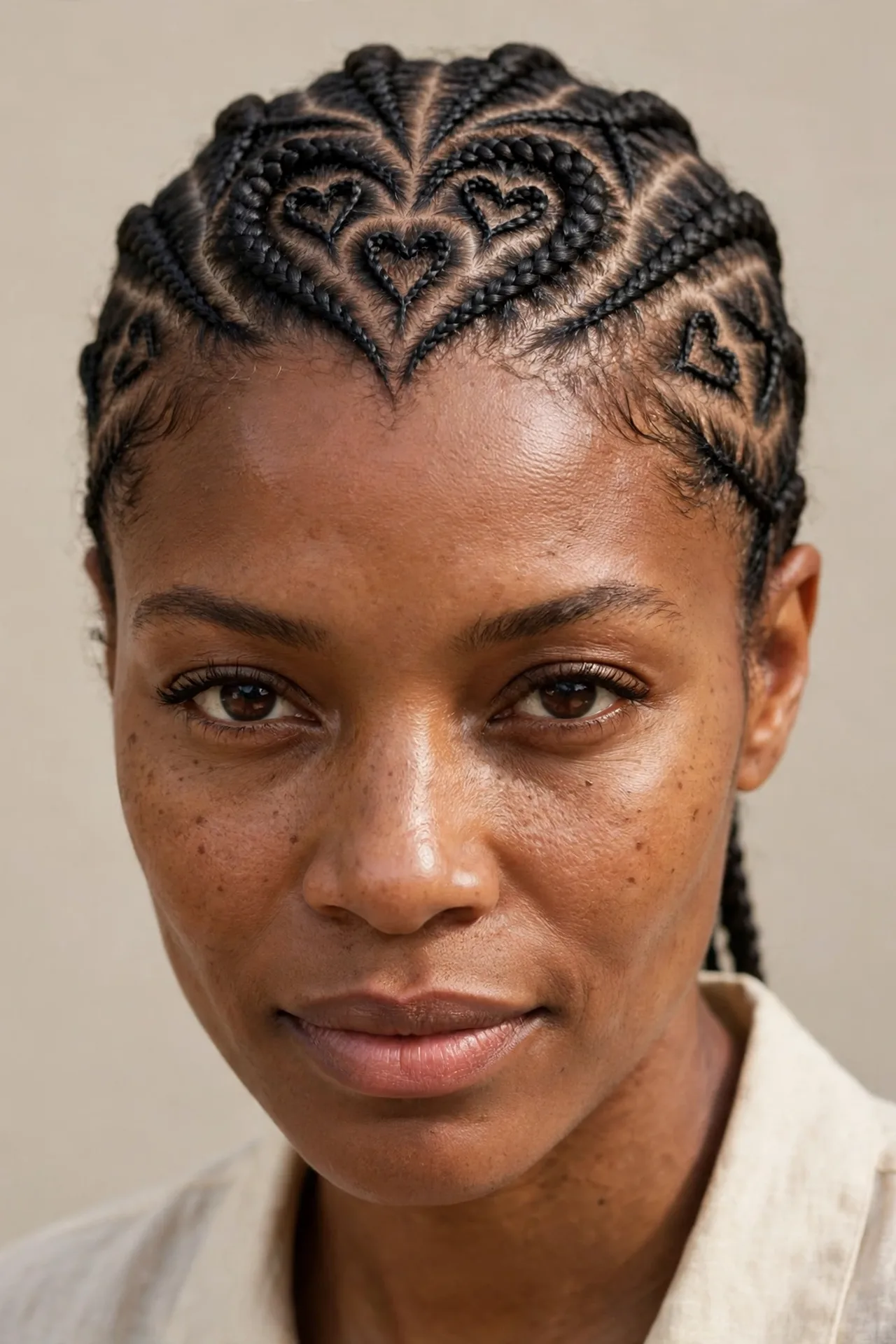
Heart crown rows curve into a soft heart shape at the crown, and they suit Black women who want a romantic detail without a full statement style. The braider parts a heart into the scalp, then braids the rest of the rows straight back, so the heart stays the focal point and the style stays wearable. It suits medium and long hair best, since the length gives the heart room to show, and the look reads sweet and intentional in photos.
The reason the heart works is restraint. A heart pattern across the whole head would read busy, while one heart at the crown, framed by clean straight rows, reads like a signature. Ask for the heart kept small and the rest of the rows simple, so the shape stays clear for three to four weeks. Pair the look with soft makeup and gold jewelry, and the heart becomes a quiet detail that people notice up close.
The takeaway
One heart at the crown, framed by clean straight rows, reads like a signature instead of a pattern.
Triangle Part Rows
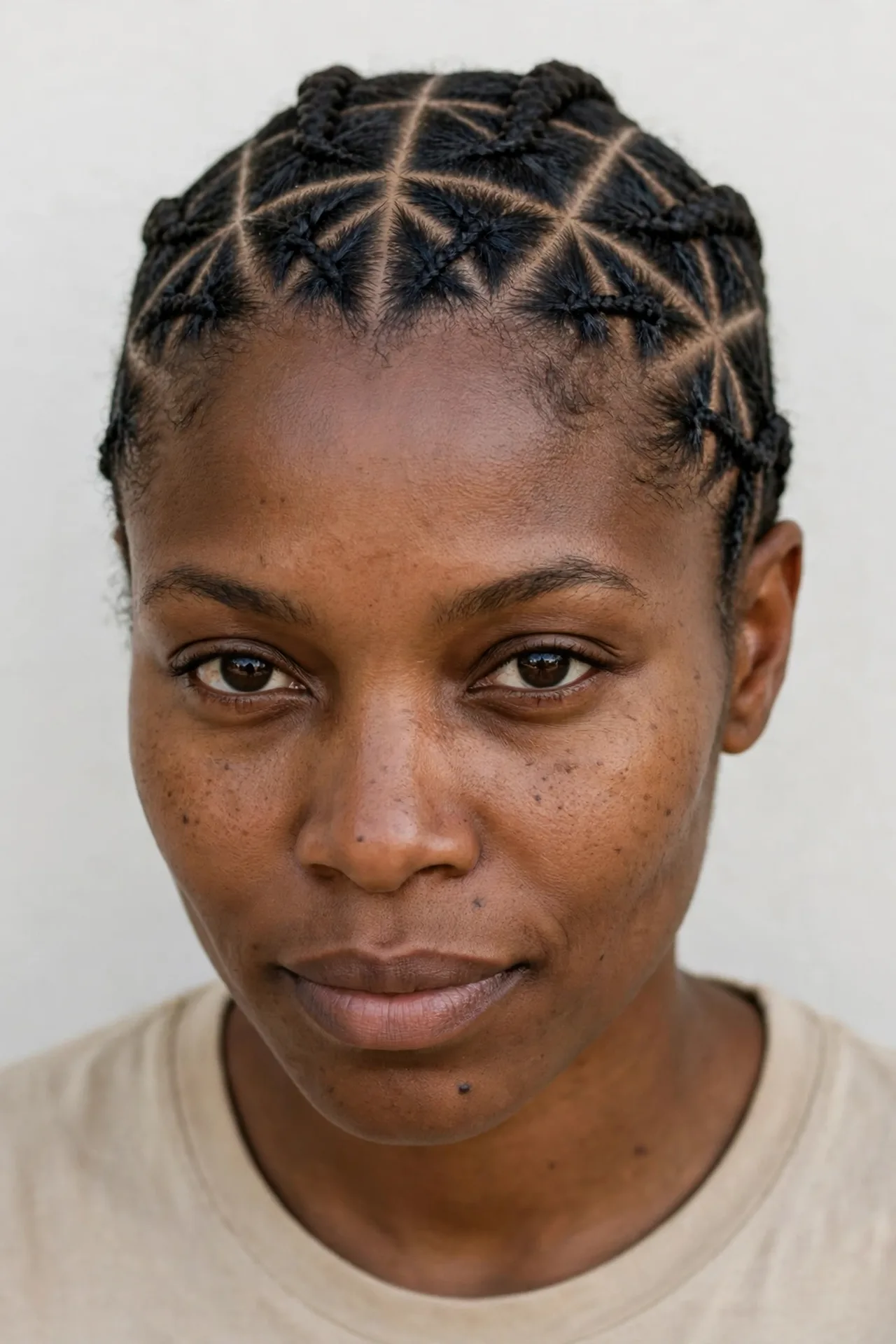
- Part the hair in sharp triangles, not squares, for a geometric base.
- Keep the rows medium, so each triangle reads clearly.
- Add a gold cuff at the end of one or two rows for detail.
Triangle part rows ditch the standard square parting and use sharp triangular sections instead, and the result feels almost futuristic across the scalp. The geometry gives each braid its own spotlight, and the triangular base spreads the weight evenly, which can make the style feel lighter than straight rows. It suits medium and long hair best, since the length shows the triangles from above and behind.
The reason triangle parts photograph so well is the shadow they create. Each triangle casts a small shadow, so the scalp pattern reads like architecture. Ask for triangles even in size, so no row carries more weight than the rest. The style lasts three to five weeks, and it pairs with bold makeup or a sharp outfit, since the hair already carries so much visual interest on its own.
Tip
Ask for: triangles even in size, so the weight spreads evenly and no row pulls harder.
High Cornrow Ponytail
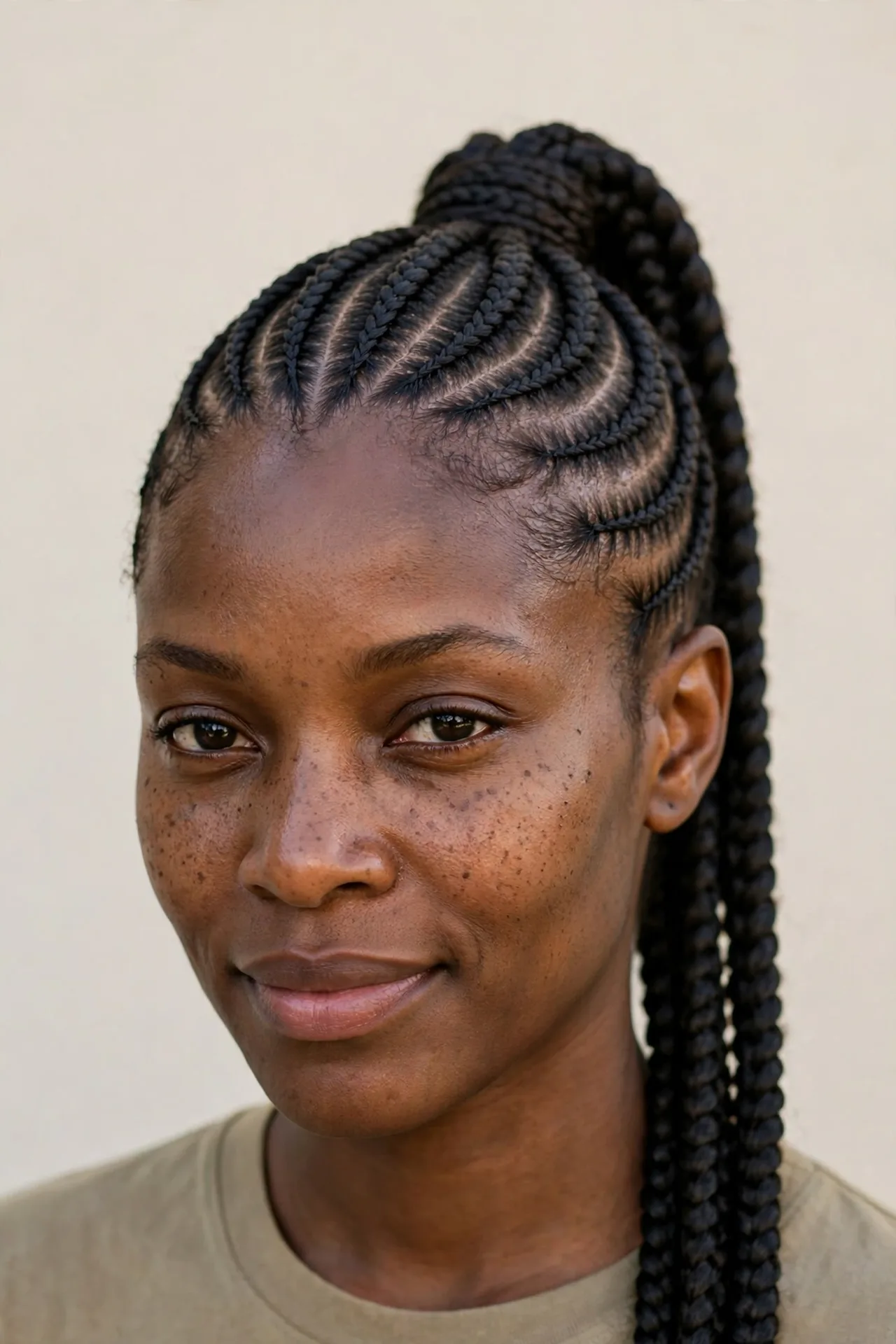
Quick Tip: Ask for the rows fed into the pony from the front, so the hairline stays smooth and the height holds.
High cornrow ponytail is the clean, sporty style that works from the gym to a dressed-up evening, and it earns that range by being sleek and secure. The braider feeds the rows up from the hairline into a single high pony, so the scalp pattern shows in front and the tail flows free behind. It suits medium and long hair best, since the tail needs length to move, and the height adds drama to the whole silhouette.
The reason the high pony flatters is the lift. A high ponytail pulls the face upward and shows the jawline and neckline, while the tight rows keep every strand in place for hours. Ask for the base wrapped with a strand of hair, so no elastic shows, and keep the tail long or curled at the ends. The style lasts three to five weeks, holds through workouts and long days, and pairs with statement earrings on the exposed side.
Before
Loose rows down the back, neat but flat, with no height to the style.
After
The same rows swept into a high pony, lifted at the face and flowing behind.
Low Cornrow Bun
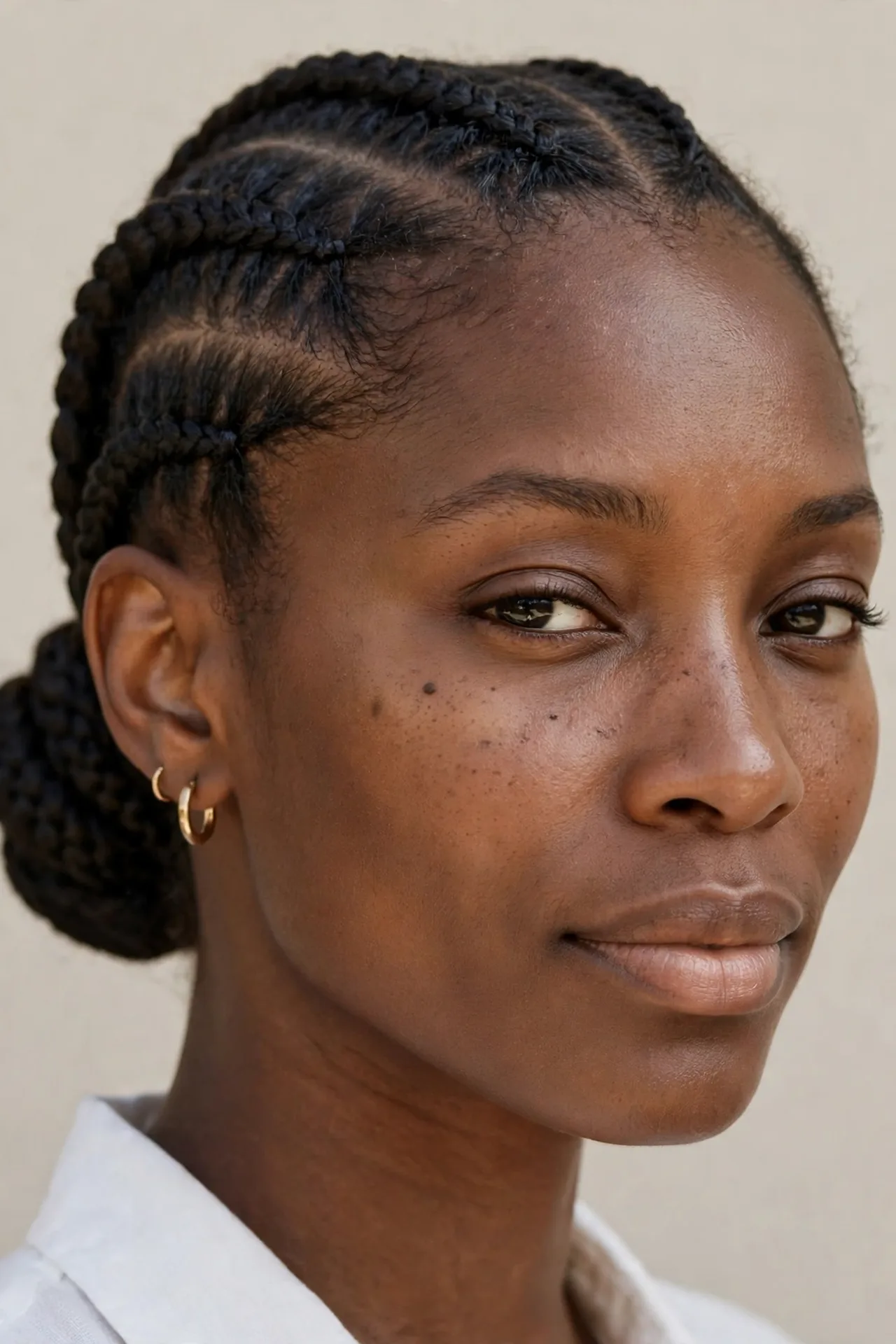
Before: Rows left loose, pretty but in the way on hot days and long shifts.
After: The same rows gathered into a low bun, cool on the neck and regal from every angle.
Low cornrow bun gathers all the rows into a sculpted bun at the nape, and it suits Black women who want elegance without fuss. The bun sits low and close, so the neckline stays exposed and the style reads calm. It suits any length past the shoulders, and the look adapts from brunch to a formal event without a restyle.
The reason the low bun works is the balance it keeps. A high bun adds height and drama, while a low bun keeps the silhouette close and quiet, which lets statement earrings or a bold lip carry the look. Ask for the bun wrapped smooth with no loose ends, and edges laid with a light gel. The style lasts four to six weeks, keeps the hair off the neck in summer heat, and holds its shape through long workdays.
Checklist
☐ Bun wrapped smooth, no loose ends
☐ Edges laid with a light gel
☐ Satin scarf at night to hold the shape
Cornrow Top Knot
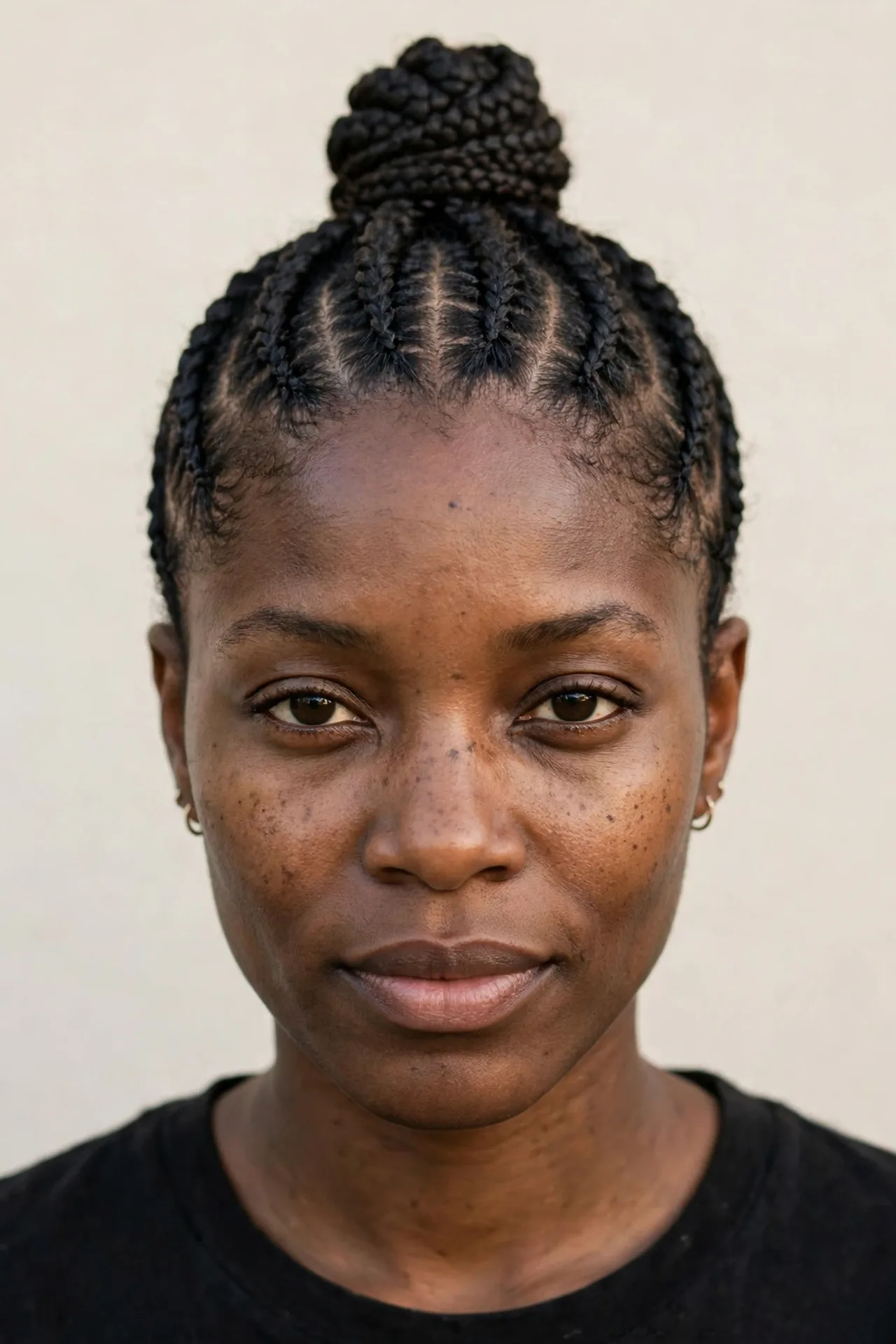
- Feed the rows up toward the crown.
- Gather the ends into a knot at the very top.
- Wrap a strand around the base.
- Lay the edges smooth and seal with a light gel.
Cornrow top knot is the tallest style here, and it suits Black women who want height and a clean face frame. The rows travel up from every side and meet at the crown, where the ends twist into a knot. It suits medium and long hair best, and the height elongates the face, which flatters round faces most.
The reason the top knot works is the vertical line it creates. A low bun pulls the eye sideways, while a knot on top pulls it up, and the lift makes the whole face read longer and leaner. Ask for a neat knot and rows fed in gently at the front, so the hairline stays comfortable. The style lasts three to five weeks, keeps the hair off the face, and pairs with hoop earrings.
Best for
Round faces, readers who want height
Lasts
Three to five weeks with care
Finish
Neat knot, edges laid smooth
Half-Up Cornrow Crown
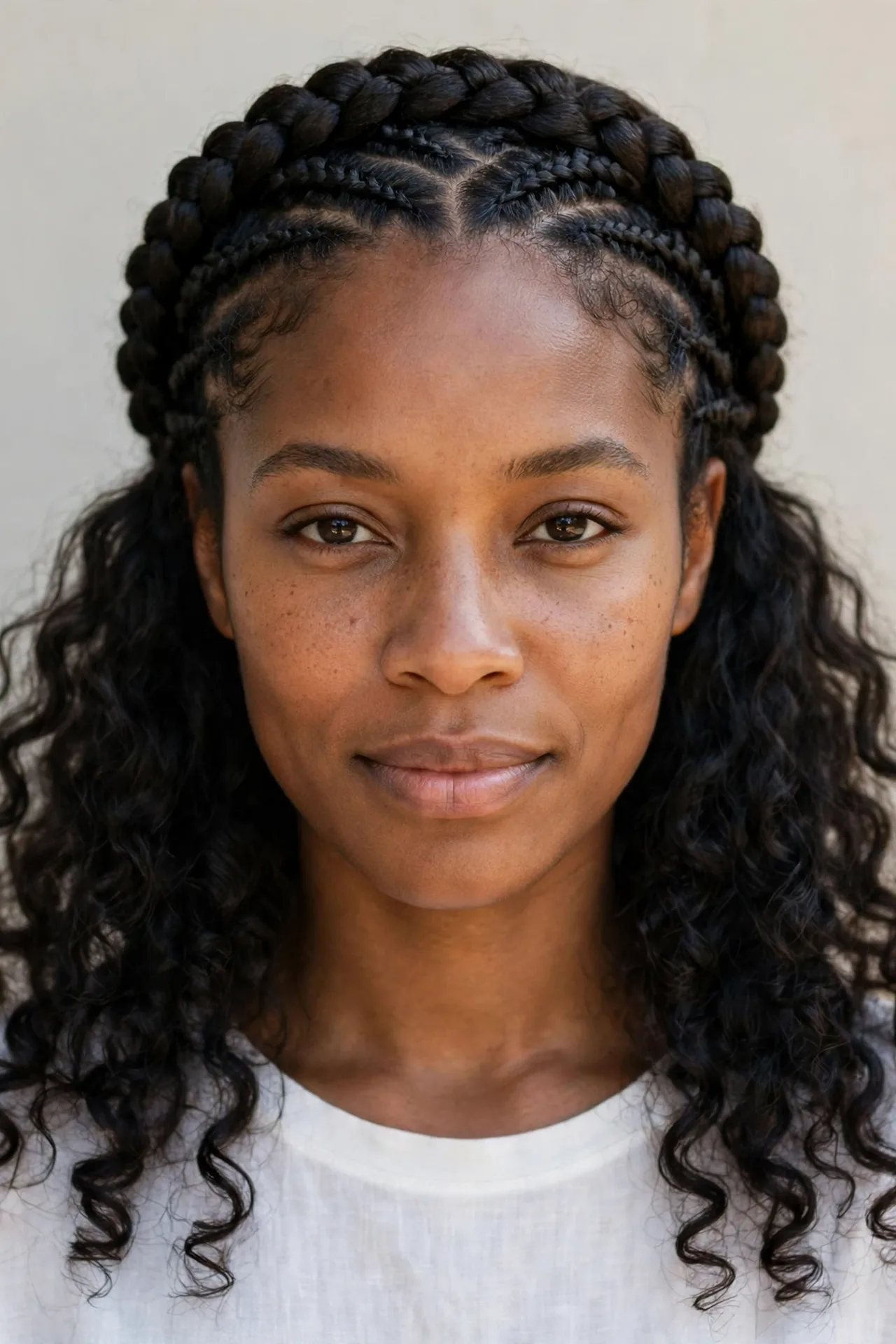
Do: Ask for the crown braided tight, so the frame holds for weeks.
Do: Leave the bottom in soft curls, so the style stays gentle.
Don’t: Braid the whole head, or the half-up balance disappears.
Don’t: Skip the satin scarf, or the loose section frizzes by morning.
Half-up cornrow crown gives the best of both worlds, structured braids on top and free hair below, and it suits Black women trying cornrows for the first time. The braided crown frames the face cleanly, while the loose section adds softness underneath. It works with natural curls left out or sleek extensions, and the mix reads youthful and relaxed.
I’ve noticed the half-up crown is the style that wins over readers who fear a full braided look. The crown keeps hair off the face during workouts and hot afternoons, while the loose section keeps it feeling like everyday hair. Ask for the crown braided temple to temple, and finish the loose ends with soft waves. The style lasts two to four weeks, and the crown holds with a light gel at the edges.
Steps
1. Braid the crown from temple to temple.
2. Leave the bottom section loose and free.
3. Finish the loose ends with soft waves.
4. Lay the edges with a light gel.
Beaded Cornrow Ends
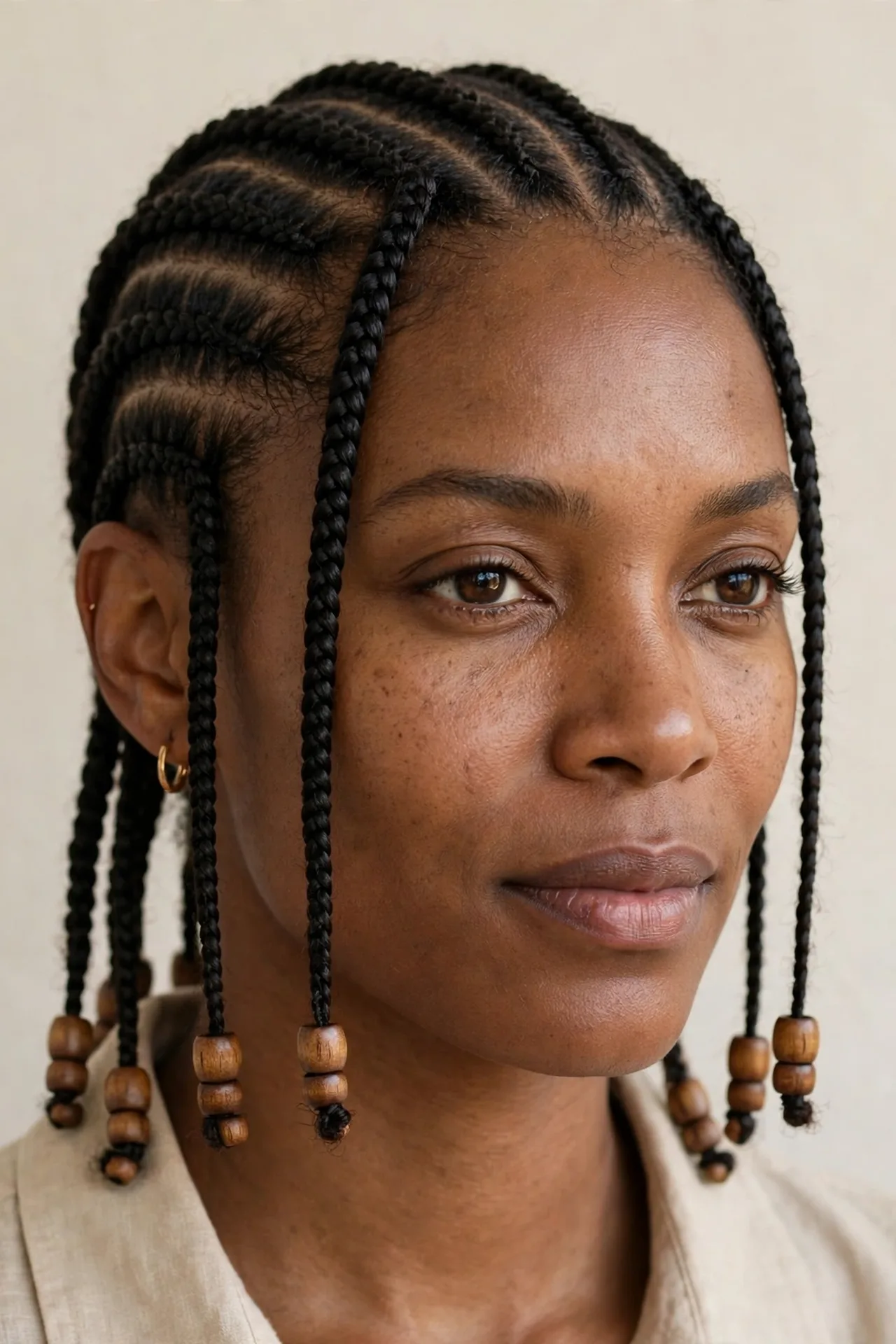
Best for: Festivals, vacations, and readers who love movement.
Time: Four to six hours with beadwork, then a scarf at night.
Hair: Medium to long rows, with ends left free for the beads.
Beaded cornrow ends turn a neat protective style into something joyful, and they suit Black women who want braids that move and catch light. The beads sit at the ends of the rows, where they click softly as you walk and flash color with every turn. Wooden beads read warm and traditional, while metallic cuffs read sleek and modern, and the choice sets the mood.
The reason beads belong on cornrows is the weight they add. A bead at the end of each row helps the braid hang straight and move with intention. Ask for two or three bead colors for a curated look, or a full mix for a festival statement. The style lasts four to six weeks, and the beads need a weekly check, since a loose bead can slide off.
✓ Do
Pick two or three bead colors for a clean look
✗ Don’t
Let a bead sit loose, or it slides off
Gold Cuff Cornrows
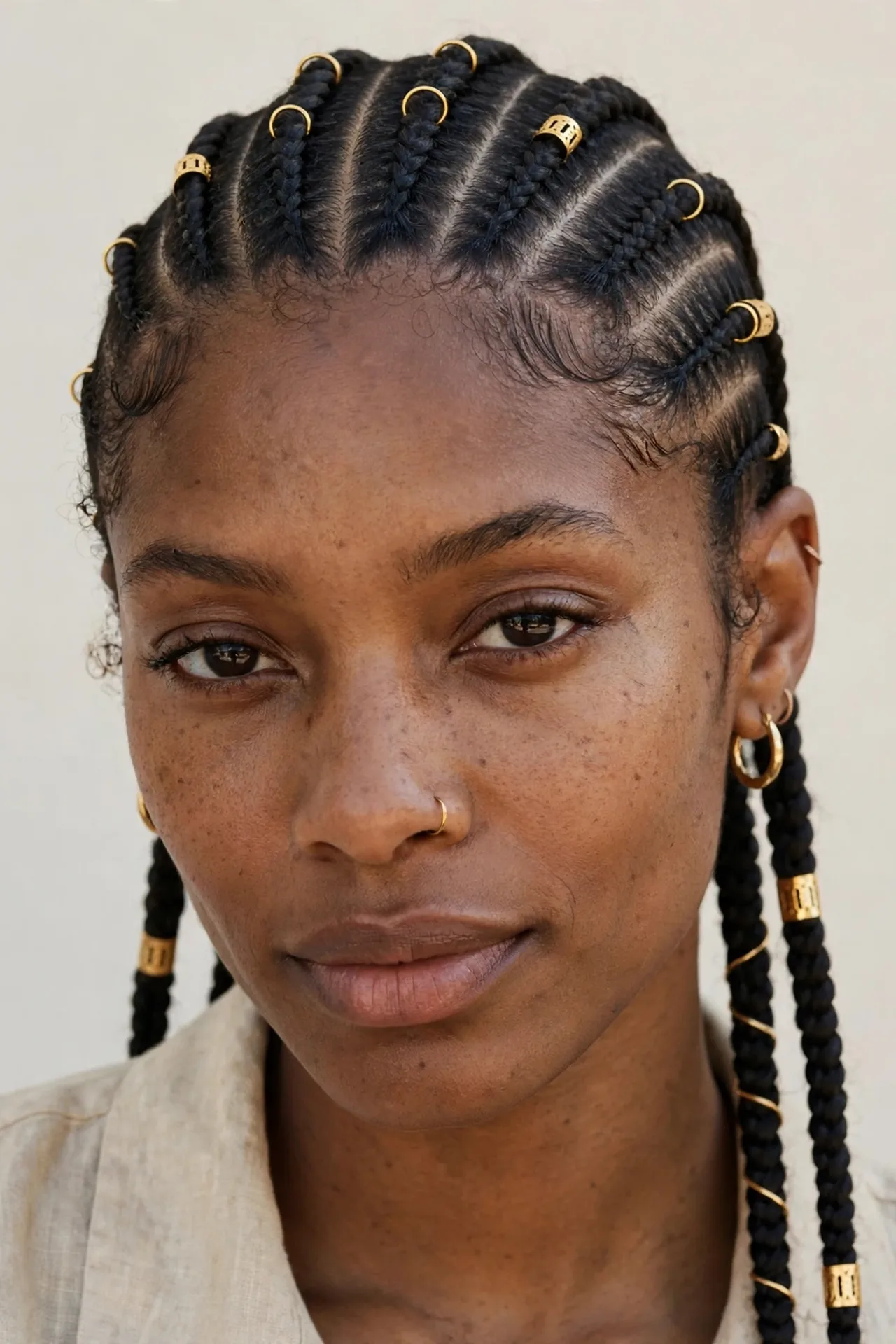
Gold cuff cornrows thread small metal rings along the rows, and they suit Black women who want a regal finish without color or length. The cuffs catch light as the head turns, and a few placed near the face frame the eyes like jewelry. Small cuffs read delicate and everyday, while larger cuffs at the ends read bold and formal, and the mix sets the tone of the whole style.
The reason cuffs work on cornrows is the flat surface they sit on. A cuff on a loose braid slides and turns, while a cuff on a flat cornrow stays put and shows its shape from every angle. Ask for cuffs clipped tight at the ends of two or three rows, not every row, so the metal accents the braids instead of covering them. The style lasts four to six weeks, and the cuffs need a quick squeeze each week to stay shut.
• Small cuffs near the face, larger at the ends
• Clip tight on two or three rows, not every row
• Squeeze shut once a week to keep them on
Cowrie Shell Cornrows
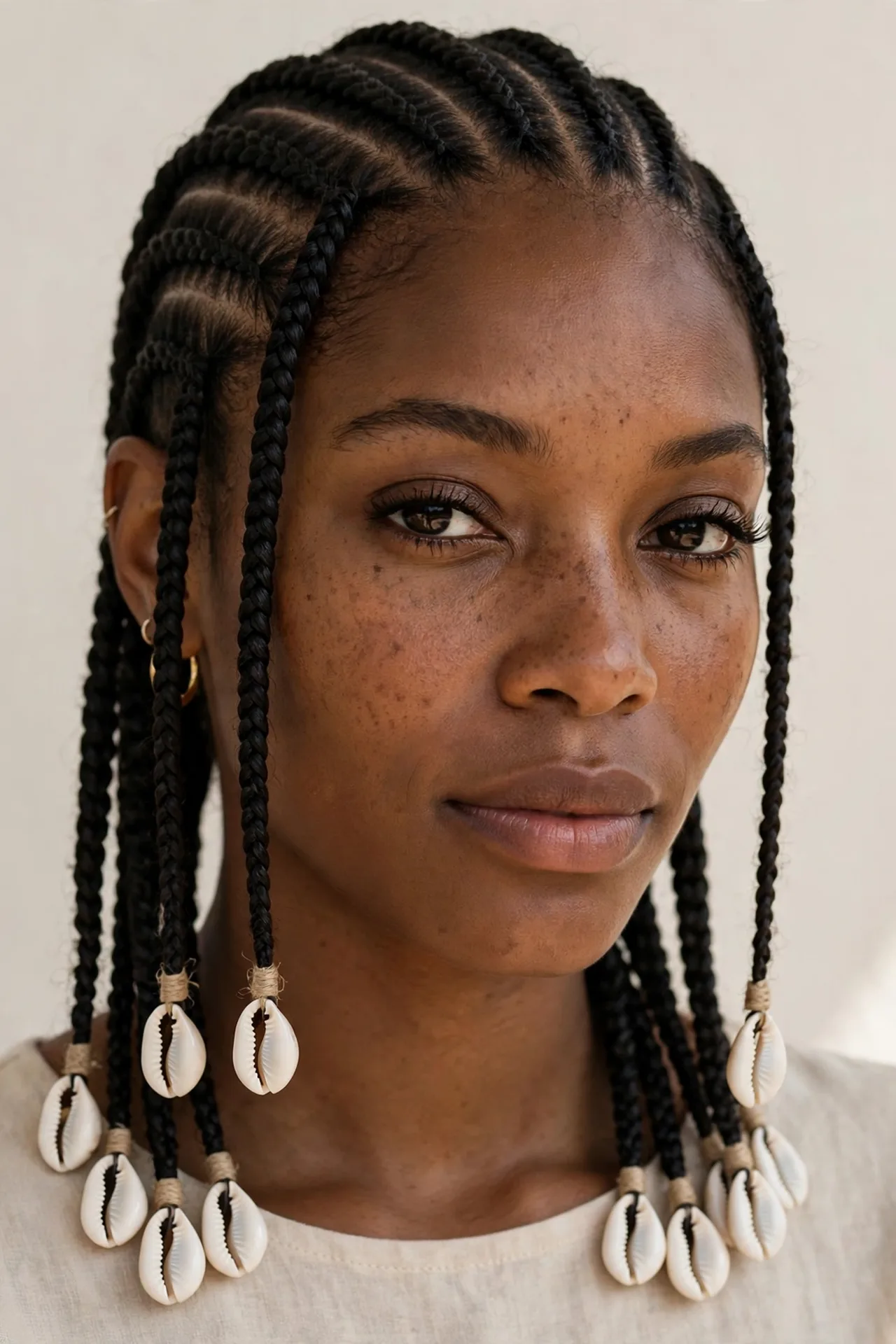
- Choose light cowrie shells, so they never pull.
- Place the shells at the ends and along one or two rows.
- Tie each shell tight, so it stays put.
Cowrie shell cornrows carry a heritage deeper than fashion, and they suit Black women who want braids that tell a story. Cowrie shells were once currency across West Africa, and they still read as heritage and beauty woven into braids. The shells sit at the ends and along the crown, where they catch light as the head turns.
The reason shells belong on cornrows is the way they anchor the style in culture. A bead adds color, while a shell adds meaning, and the two together turn a protective style into a statement of identity. Ask for light shells tied tight at the ends, since heavy shells pull on the rows and loosen the braids. The style lasts four to six weeks, and it suits cultural celebrations, festivals, and any day you want your hair to speak first.
The takeaway
A bead adds color, while a shell adds meaning, and together they turn a protective style into identity.
Cornrow Bob Cut
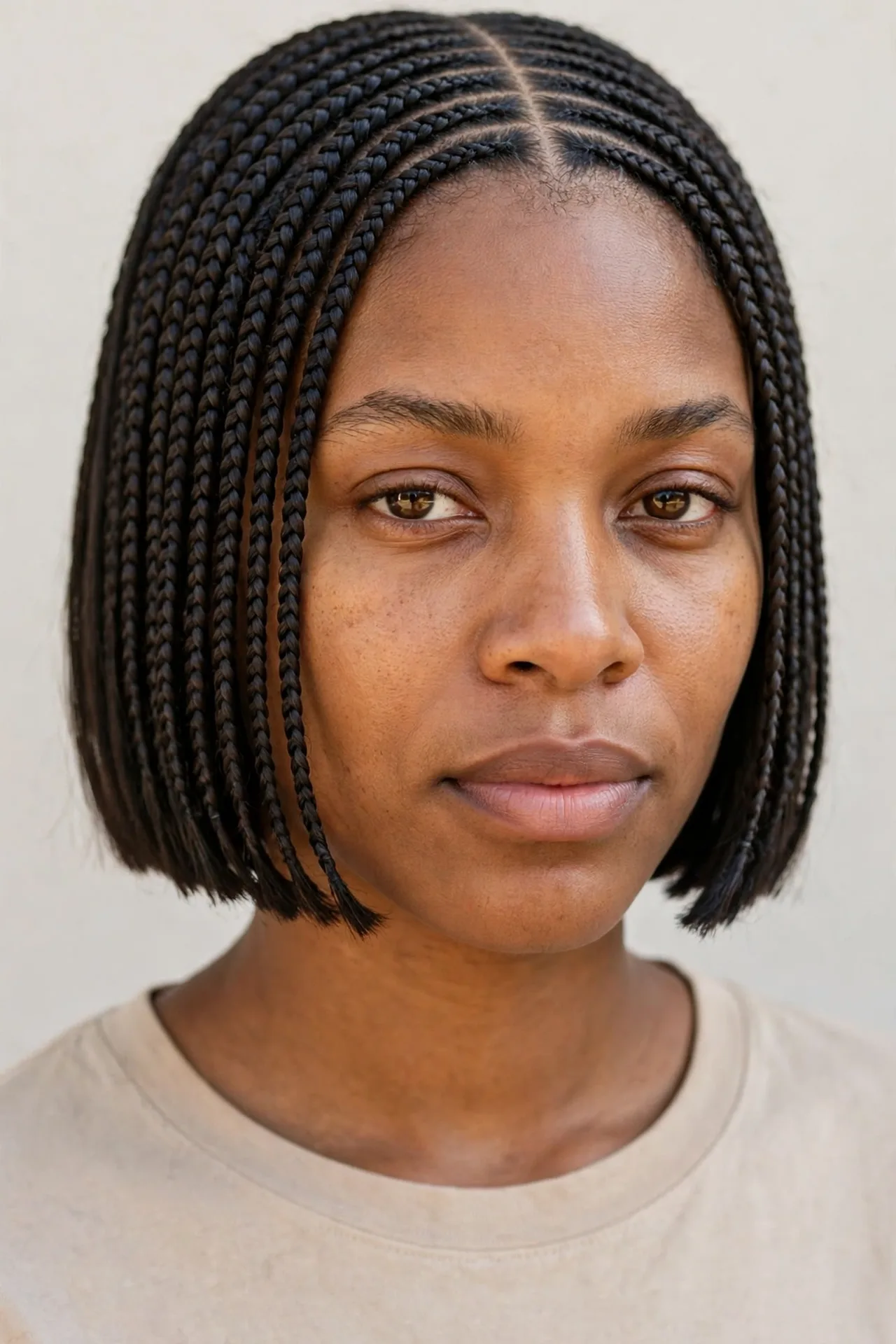
Quick Tip: Ask for the rows to end at the jaw, so the bob holds its shape without extra length.
Cornrow bob cut ends the rows at the jaw or chin, and it suits Black women who want cornrows without the weight of long braids. The short length keeps the style light on the scalp, which matters for fine hair and tender edges, and the blunt ends give the bob a thick, full read. It suits round and oval faces best, since the chin-length frame draws the eye to the face.
The reason the bob works for cornrows is the weight it removes. Long braids pull with every turn of the head, while a bob ends before the weight builds, so the style feels light all day. Ask for the rows kept neat and even, with the ends sealed smooth and no loose strands. The style lasts three to four weeks, holds its shape with a satin scarf at night, and reads neat enough for work and chic enough for evenings.
Tip
Ask for: rows ending at the jaw, so the bob holds its shape without extra weight.
Curly-Tipped Cornrow Ends
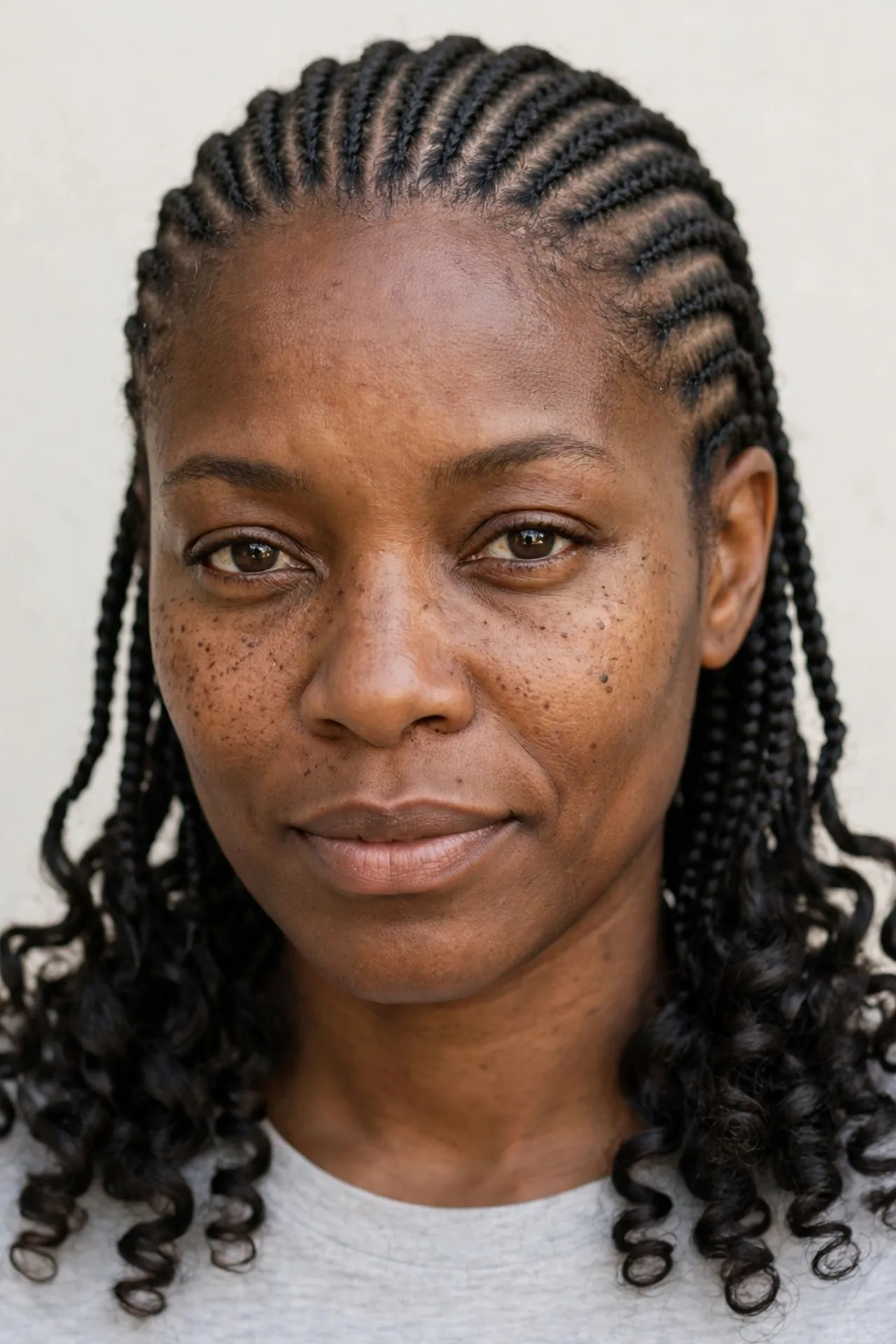
Before: Tight rows with straight ends, neat but sharp from every angle.
After: The same rows finished in soft curls, gentle at the edges and full of movement.
Curly-tipped cornrow ends finish each braid with a burst of springy curls, and they suit Black women who want contrast between structure and softness. The tight rows hold the scalp pattern clean, while the curls at the ends catch light and move with every turn of the head. It suits medium and long hair best, since the curls need length to show, and the look reads playful and youthful.
The reason curls work on cornrows is the balance they strike. Straight ends can read severe against a soft face, while curls soften the whole silhouette and add a flirty finish. Ask for the curls set with mousse or perm rods overnight after install, so they hold their shape for weeks. The style lasts three to five weeks, and the curls refresh with a light mousse and a finger comb each morning.
Before
Tight rows with straight ends, neat but sharp.
After
The same rows finished in soft curls, gentle and full of movement.
Wine Burgundy Cornrows
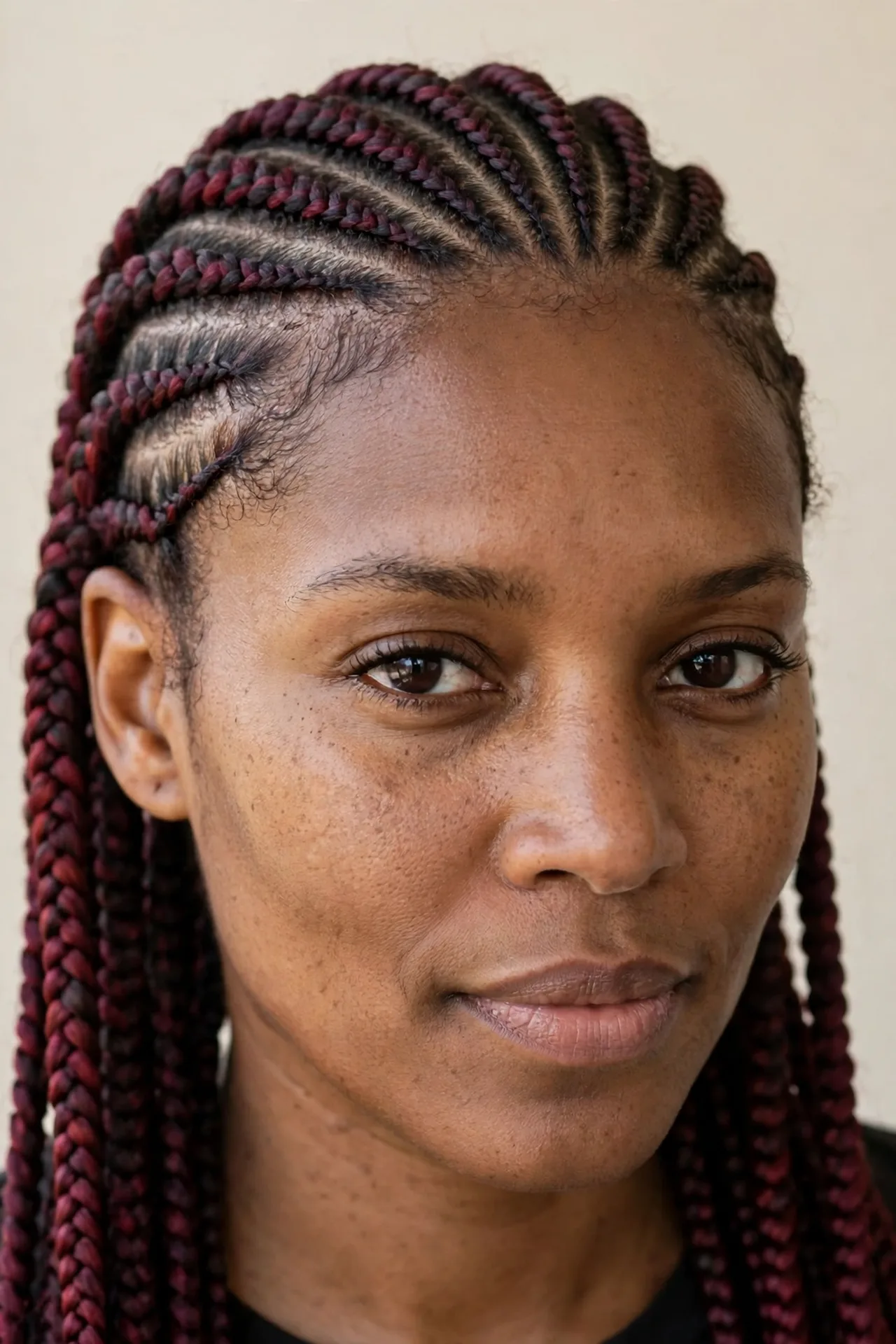
- Start with dark rows as the base.
- Weave wine burgundy extensions through the lengths.
- Keep the burgundy fine, not in wide stripes.
- Seal with a light oil so the wine stays deep.
Wine burgundy cornrows weave deep wine red through dark rows, and they suit Black women who want color without dyeing their own hair. The burgundy reads rich indoors, then flashes wine in sunlight, so the color stays subtle at work and bold in photos. It suits medium and long hair best, and the depth makes the whole face look warmer.
The reason wine beats bright red on cornrows is control. Bright red fights with the scalp pattern and reads loud, while deep wine sits inside the dark rows and adds a warm light that flatters deeper skin. Ask for deep burgundy with wine tones, not bright red, woven fine through the lengths. The style lasts four to six weeks, and the color needs no upkeep of its own, since it lives in the extensions.
Checklist
☐ Deep wine, not bright red
☐ Burgundy woven fine through the lengths
☐ Light oil to keep the wine deep
Honey Cornrow Highlights
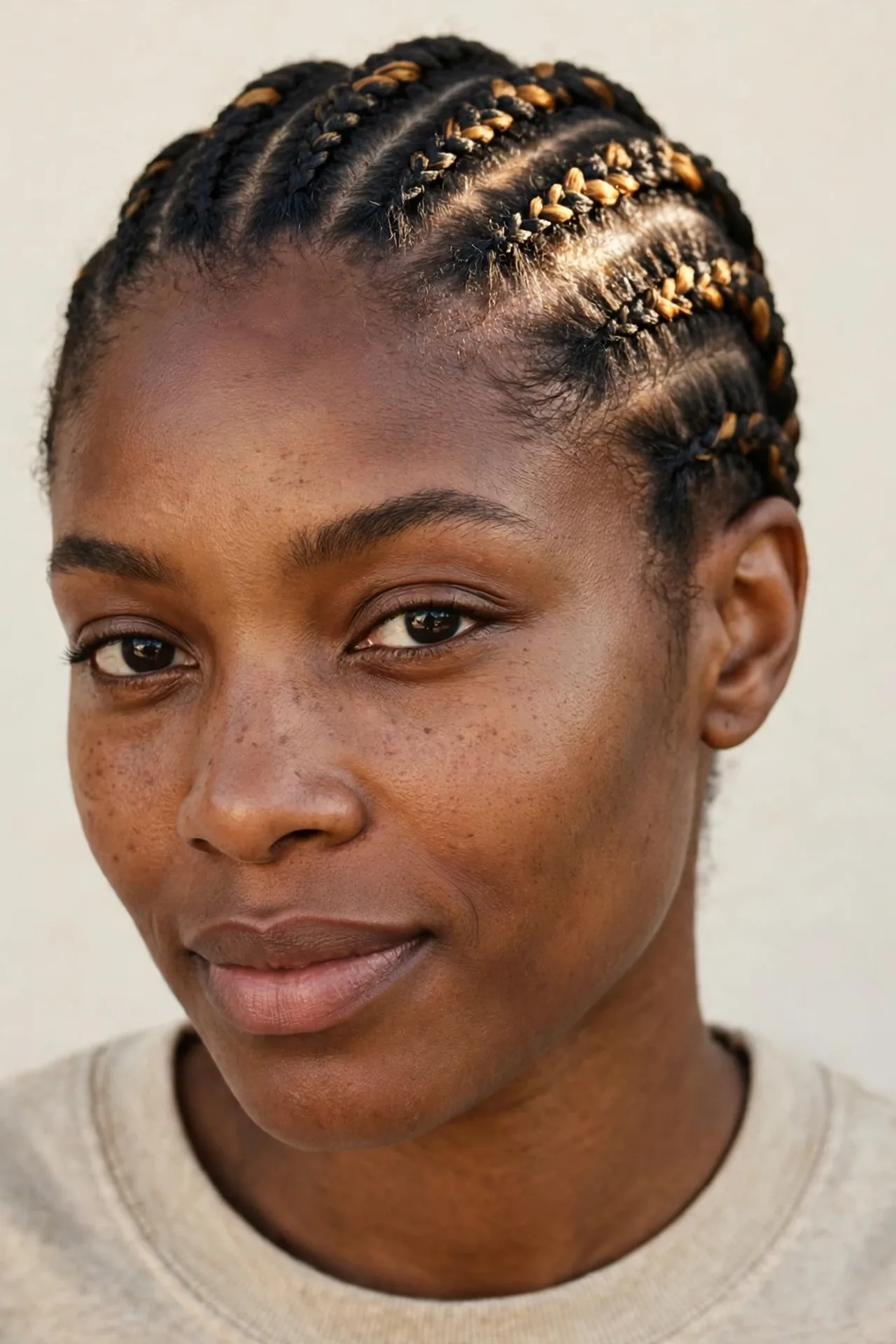
Do: Ask for honey woven through the lengths.
Do: Keep the face pieces a shade lighter, so the honey frames the eyes.
Don’t: Let the honey go too light, or the rows read blonde instead of brunette.
Don’t: Skip the seal, or the honey fades to a dull brown.
Honey cornrow highlights thread warm golden strands through dark rows, and they suit Black women who want light without a full color change. The honey lifts the dark base a level or two, and the strands catch the sun, so the color glows in daylight. It suits long hair best, and the warmth flatters deeper skin.
I’ve seen this work best on readers who love warmth but fear going too light. The honey reads brown in shade and golden in sun, so the rows gain light without a blonde commitment. Ask for the honey kept fine and woven, so the color melts into the dark rows. The style lasts four to six weeks, and a light oil seals the honey tone.
Best for
Long hair, readers who want warmth
Lasts
Four to six weeks with care
Finish
Fine honey strands, sealed with oil
Ombre Cornrow Fade
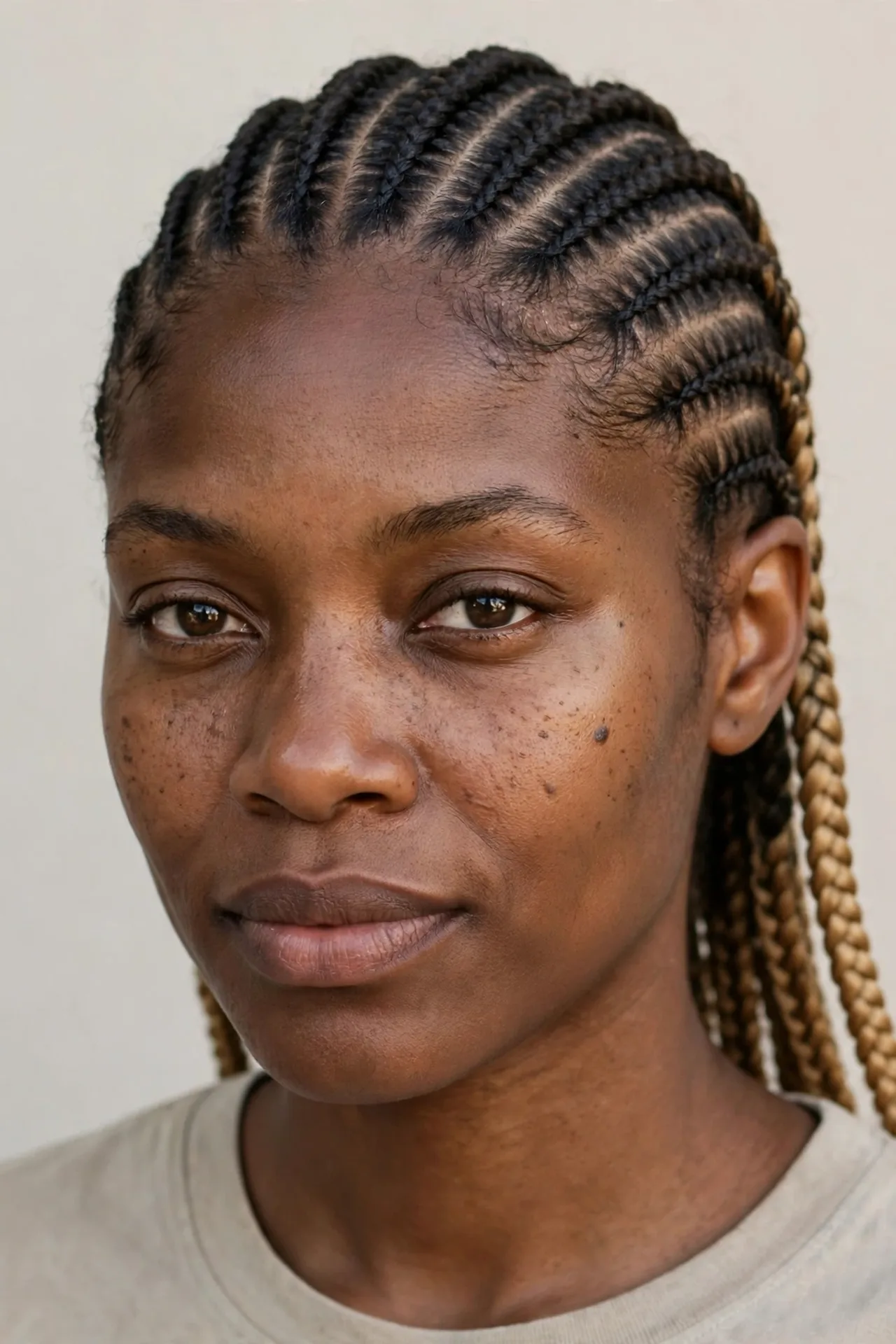
Best for: Long hair, and readers who want no root upkeep.
Time: Four to five hours in the chair, then a scarf at night.
Hair: Long, with extensions that carry the fade.
Ombre cornrow fade runs dark at the roots and light at the ends, and it suits Black women who want two tones without monthly salon visits. The fade lives in the extensions, so the roots stay dark while the ends glow honey or copper, and the grow-out stays invisible. It suits long hair best, since the fade needs length to show.
The reason ombre works on cornrows is the way the braid carries the gradient. A solid color shows every inch of grow-out, while a fade hides it, since the roots were dark from the start. Ask for a gradual fade, with light tones only in the last third, so the blend reads smooth. The style lasts four to six weeks, and the ends need a light oil to keep the lighter tones from drying out.
Steps
1. Keep the roots dark and natural.
2. Fade to honey or copper in the last third.
3. Blend the tones smooth, no hard line.
4. Seal the ends with a light oil.
Cornrow Space Buns
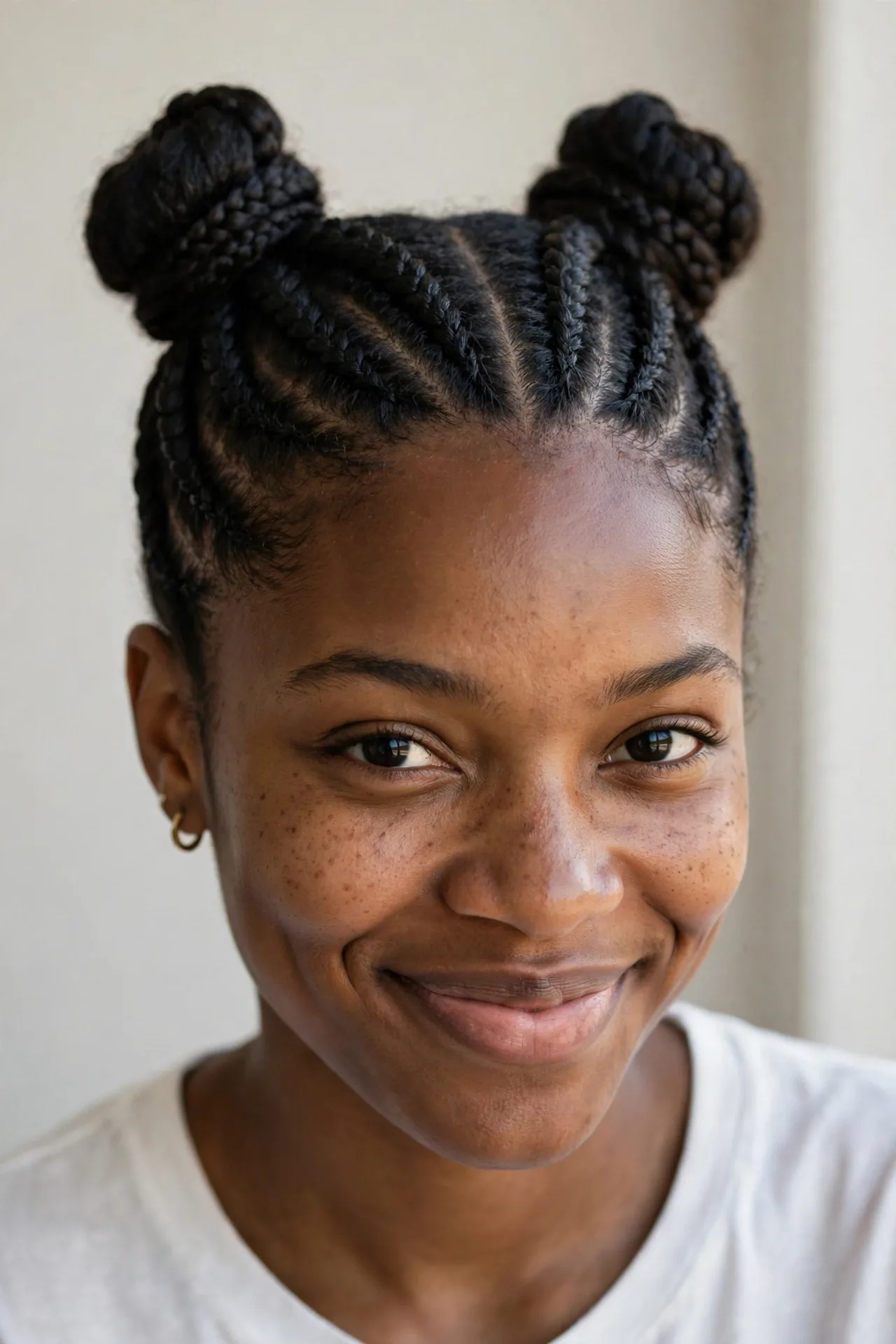
Cornrow space buns split the rows into two buns, one on each side of the head, and they suit Black women who want a playful style that still protects. The rows travel up from the hairline and gather into two round buns at the crown, so the hair stays fully off the face and neck. It suits medium and long hair best, since each bun needs enough length to wrap, and the look reads fun and youthful.
The reason space buns work on cornrows is the structure underneath. Loose hair in two buns falls apart by noon, while braided rows hold each bun tight and round for the whole day. Ask for the buns placed high and even, with the parts kept clean down the middle, and wrap a strand around each base to hide the elastic. The style lasts three to five weeks, keeps the neck cool in heat, and suits festivals, workouts, and any day you want the hair out of the way.
✓ Do
Place the buns high and even on both sides
✗ Don’t
Let one bun sit lower, or the look tilts
Asymmetric Cornrow Sweep
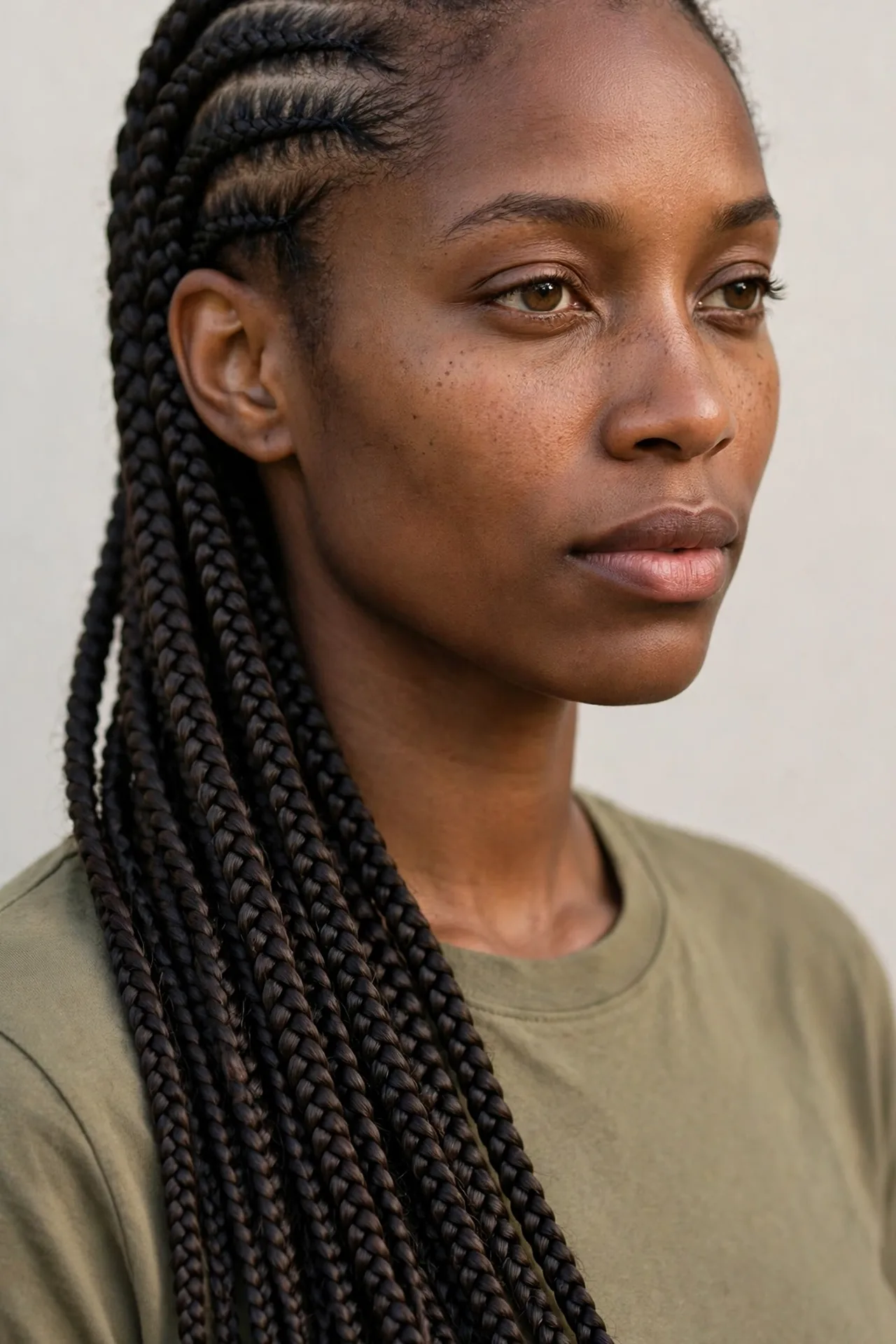
- Sweep all the rows to one side, from a deep side part.
- Keep the exposed side sleek, so the sweep reads clean.
- Add a cuff or two on the heavy side for detail.
Asymmetric cornrow sweep pulls every row to one side, and it suits Black women who want drama without length or color. The deep side part sets the direction, and the rows cascade over one shoulder, which softens the face and adds movement. It suits medium and long hair best, and the look reads striking in photos.
The reason asymmetry flatters is the diagonal it creates. A center part splits the face in two, while a side sweep draws the eye across it, which softens a strong jaw and adds a flirty edge. Ask for the exposed side sleek with a light edge gel, and the heavy side left long. The style lasts three to five weeks, works for date nights and weddings, and pairs with statement earrings on the bare side.
• Deep side part sets the sweep direction
• Exposed side sleek with a light edge gel
• Statement earrings on the bare side
Cornrow Pigtail Pair
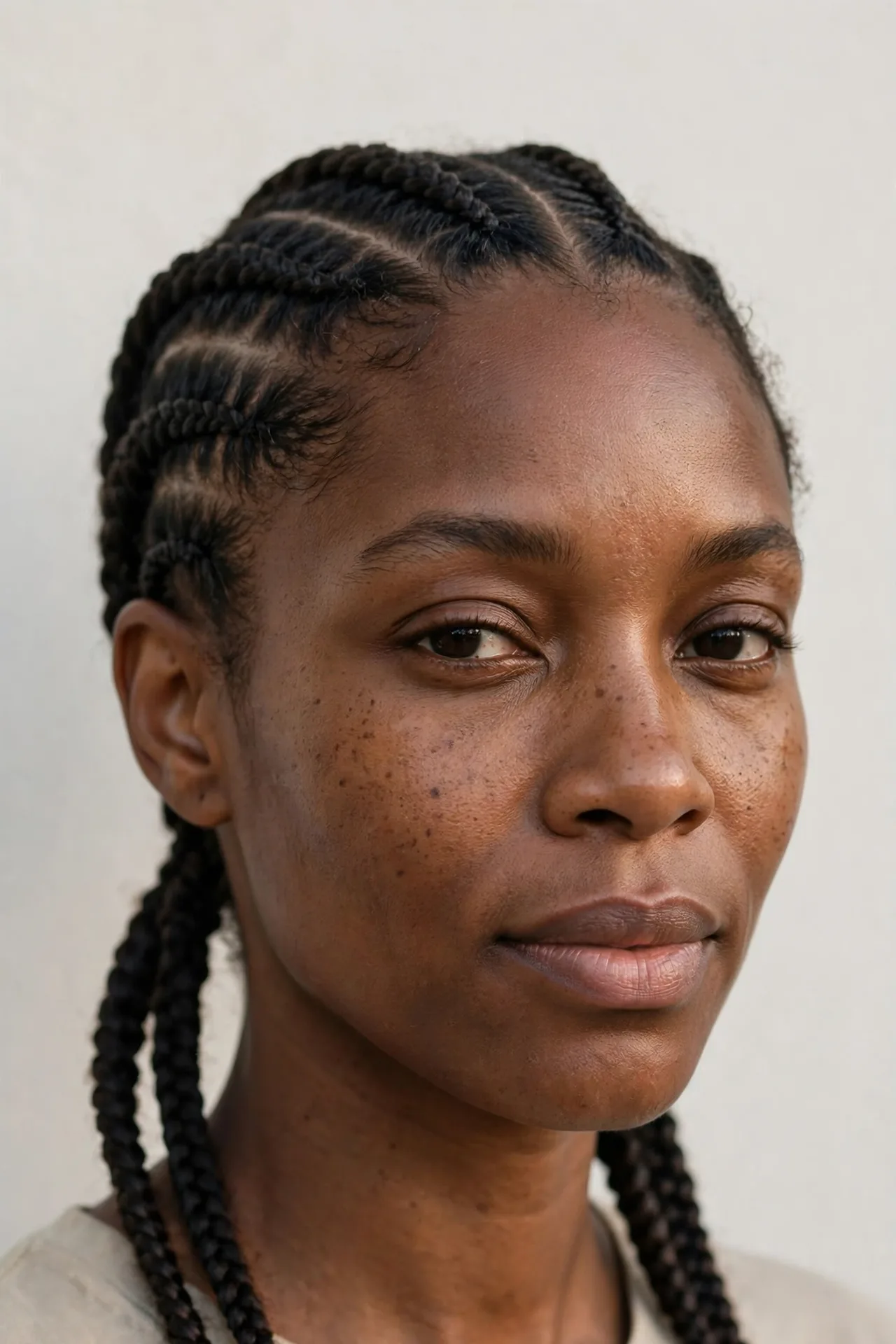
Quick Tip: Ask for the parts kept clean down the middle, so the two sides match exactly.
Cornrow pigtail pair splits the rows into two low pigtails, and it suits Black women who want a youthful style that still protects the hair. The braider parts the hair straight down the middle, braids each side into neat rows, and gathers them into two pigtails at the nape or a little above it. It suits medium and long hair best, since each tail needs length to show, and the look reads fresh and relaxed.
The reason pigtails work on cornrows is the even split. Loose pigtails slide and loosen by midday, while braided rows hold each tail tight and even for weeks. Ask for the tails kept the same length and fullness, so the pair reads balanced from behind. The style lasts three to five weeks, holds through workouts and long days, and pairs with cuffs at the base of each tail for a finished look.
The takeaway
Braided rows hold each tail tight and even for weeks, while loose pigtails slide by midday.
Edge-Safe Cornrow Rows
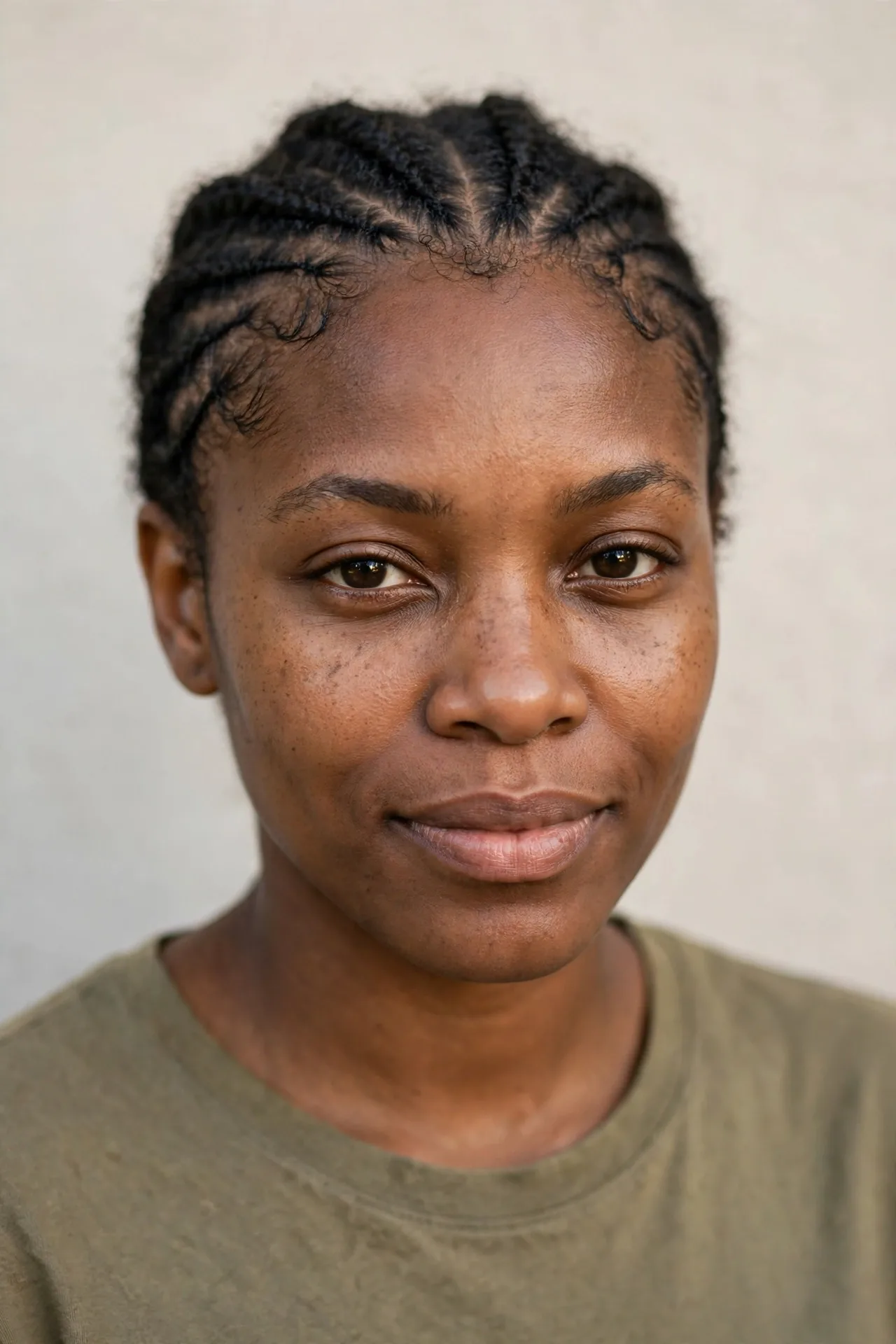
Before: Rows that grip the hairline at full thickness and pull on tender edges.
After: The same rows starting thin and growing thick, gentle at the front and secure behind.
Edge-safe cornrow rows are the most important idea here, because they answer the question every protective style must pass: does it guard the hairline or harm it. The braider starts each row with almost no added hair at the front, then feeds in extensions bit by bit, so the braid grows thicker as it travels back. It suits fine hair and tender edges best, and it works on any length.
The reason feed-in rows protect edges is the taper. A traditional braid grips the hairline at full thickness, while a feed-in start spreads the pull across the row. Tell the braider to ease the front and leave a buffer row behind the hairline, and speak up if any row hurts, since pain means the tension is too high. The style lasts four to six weeks, and the edges stay full when the rows come down.
Tip
Ask for: a feed-in start and a buffer row, and speak up if any row hurts.
4C Cornrow Care
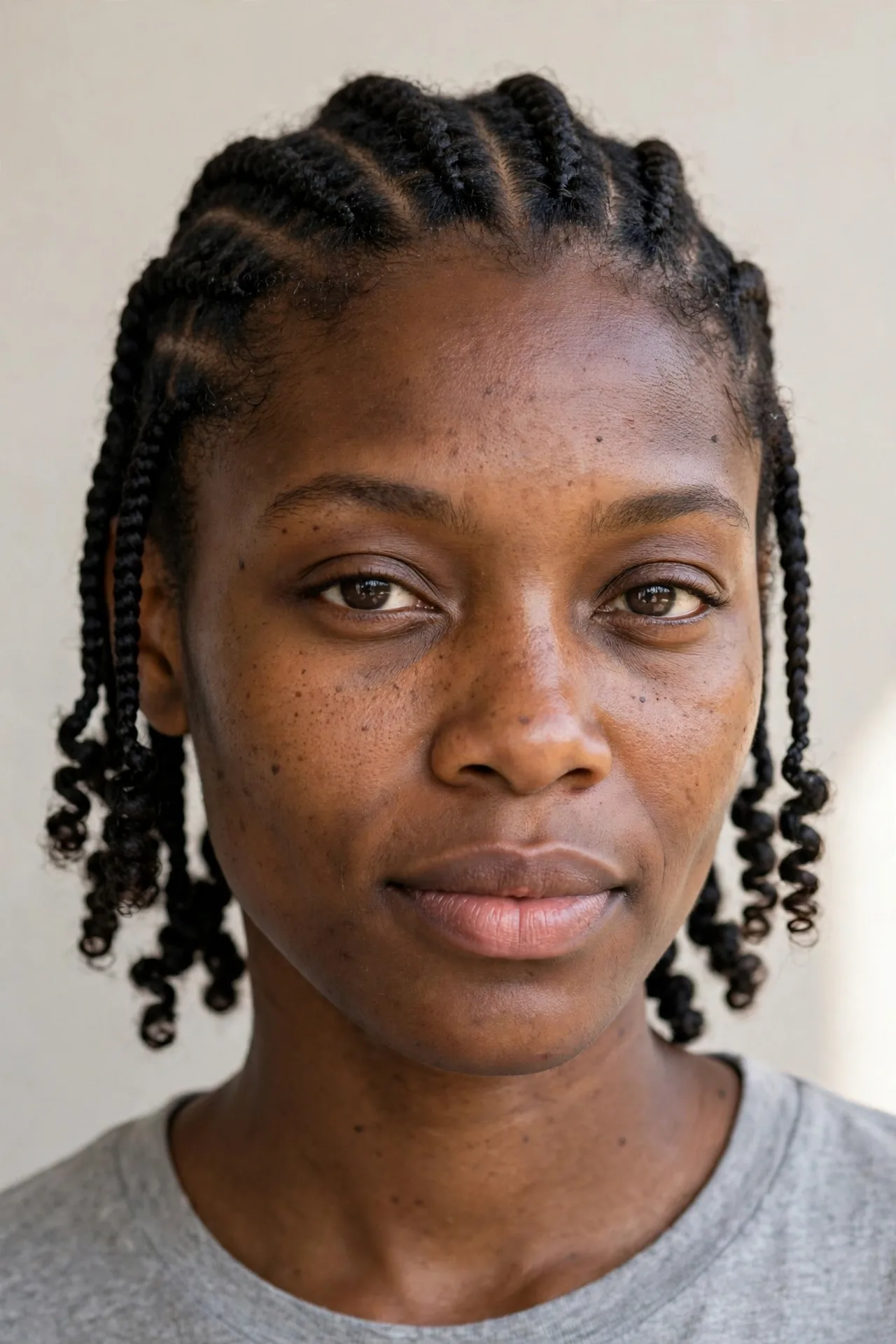
- Moisturize well before the install, so the coils stay soft.
- Ask for small to medium sections, so the coils grip the braid.
- Keep the style in for four to six weeks, no longer.
- Oil the scalp twice a week and sleep in a satin scarf.
4C cornrow care is for the tightest coils, and it suits Black women whose hair shrinks, tangles, and breaks when left loose. The tight curl pattern grips a braid best, so small and medium rows hold their shape for weeks. The same tight pattern tangles fast when dry, so moisture before the install decides whether the style protects or harms.
The reason 4C hair loves cornrows is the grip. Loose styles unravel on tight coils, while braids lock the pattern in place. Ask for the hair stretched gently before braiding, and keep the rows in for four to six weeks at most. Oil the scalp twice a week, wash with diluted shampoo, and the coils come out soft when the rows come down.
Before
Dry 4C hair braided tight, tangled and brittle when the rows come down.
After
The same hair moisturized first, soft and full when the rows come down.
Mohawk Cornrow Strip
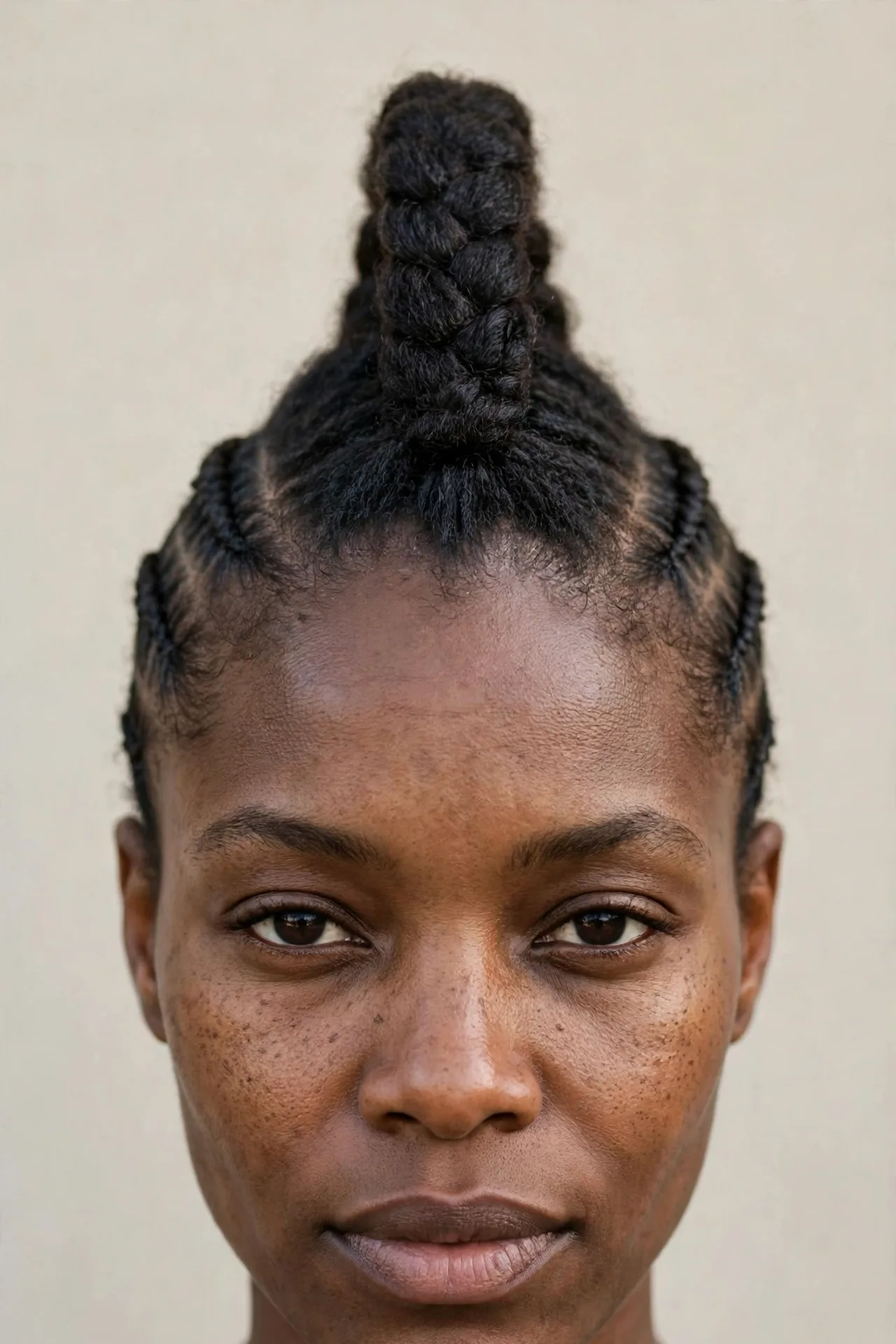
Do: Ask for the sides braided flat and tight, so the center stands out.
Do: Keep the center strip in braids or twists, so the height holds.
Don’t: Let the sides go loose, or the mohawk shape disappears.
Don’t: Skip the edge gel, or the sides lose their clean frame.
Mohawk cornrow strip braids the sides flat and leaves a dramatic strip down the center, and it suits Black women who want the boldest look here. The sides lie sleek and tight, while the center strip rises in braids or twists, and the contrast reads edgy and confident. It suits medium and long hair best, and turns heads at festivals and nights out.
The reason the mohawk works is the contrast between flat and tall. Flat sides alone read plain, and a tall center alone reads messy, while the two together feel intentional and strong. Ask for tight sides with a light edge gel, and the center left in braids that gather into a faux-hawk. The style lasts three to four weeks, and the center refreshes with mousse.
Checklist
☐ Sides braided flat and tight
☐ Center strip in braids or twists
☐ Edge gel to keep the sides clean
Final Thoughts
Cornrows for black women protect best when the tension is right, and that is the formula to carry into the chair: pick the tension first, gentle feed-in at the front, then the pattern that fits your face, then the length your week can carry. Classic rows suit a reader who wants neat and long-lasting, lemonade suits one who wants a side sweep, and stitch suits one who wants crisp detail. The right set guards your edges and still turns heads, so save this list and start with the rows that fit your hair.
Frequently Asked Questions
How long do cornrows last?
Most cornrows last four to six weeks with care, while stitch rows last three to five. Take them out by six weeks at the latest, since longer wears dry the ends and stress the edges. Sleep in a satin scarf each night, and wash the scalp once a week with diluted shampoo to keep the style fresh.
Do cornrows damage your edges?
Cornrows only damage edges when they are braided too tight at the hairline. A feed-in start, a small buffer row behind the hairline, and a braider who eases the front keep the edges safe. If any row hurts or pulls, speak up right away, since pain means the tension is too high.
What is the difference between stitch braids and regular cornrows?
Stitch braids use a feed-in technique that leaves crisp, raised segments with clean parts between them, while regular cornrows add hair evenly along the row. Stitch rows read more sculpted and precise, and they need a braider with a steady hand and clean sections.
Can cornrows help hair grow?
Cornrows protect length by tucking the ends away from daily friction, which lets the hair keep the growth it already makes. They do not make hair grow faster, since growth comes from scalp health. Keep the scalp clean, moisturize the hair, and do not keep the rows in past six weeks.
How do I wash cornrows?
Dilute shampoo with water, work it into the scalp with your fingertips, and rinse well without roughing up the rows. Dry the braids fully, since damp rows can smell and loosen, then add a light oil to the scalp. Wash every one to two weeks, and refresh the edges with a light gel.