25 Pink Peekaboo Hairstyles With Hidden Pops of Color
Why Hidden Pink Works
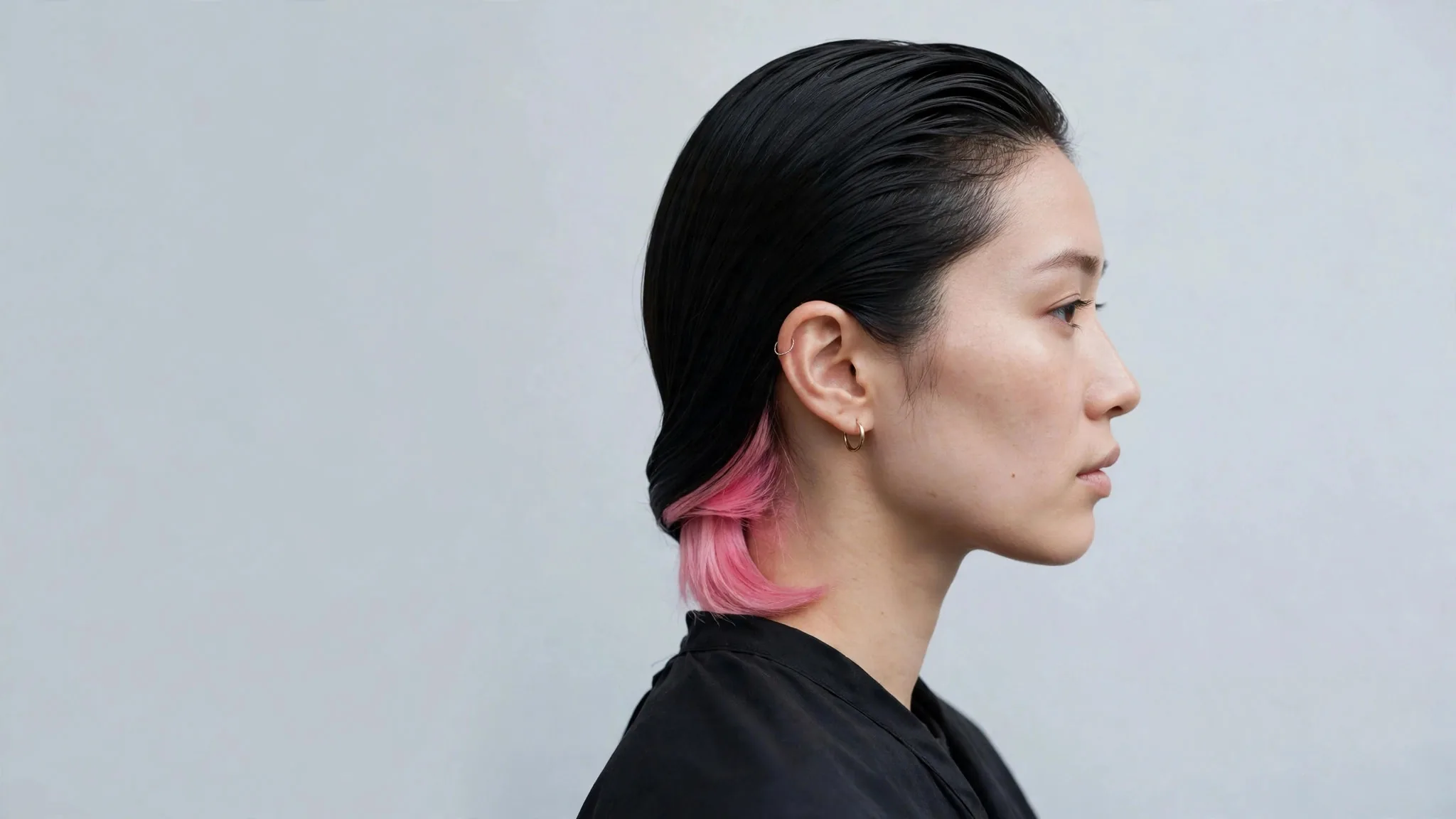
Pink peekaboo hair hides bright color beneath a normal looking top layer, so you decide who sees it and when. The color sits underneath, on the nape, behind the ears, or in a lower panel, and it only shows when the hair moves, gets tucked back, or goes up. That hidden placement is the whole appeal. It suits workplaces with strict rules, first timers who are nervous about bold color, and anyone who wants pink without committing every strand to it. The 25 ideas below cover dark hair, blonde hair, soft pastels, bold magentas, braids, ponytails, and buns, with upkeep notes for each. Read with your base color and your comfort level in mind, then take your favorite photo to your colorist.
Hidden Rose Underlayer
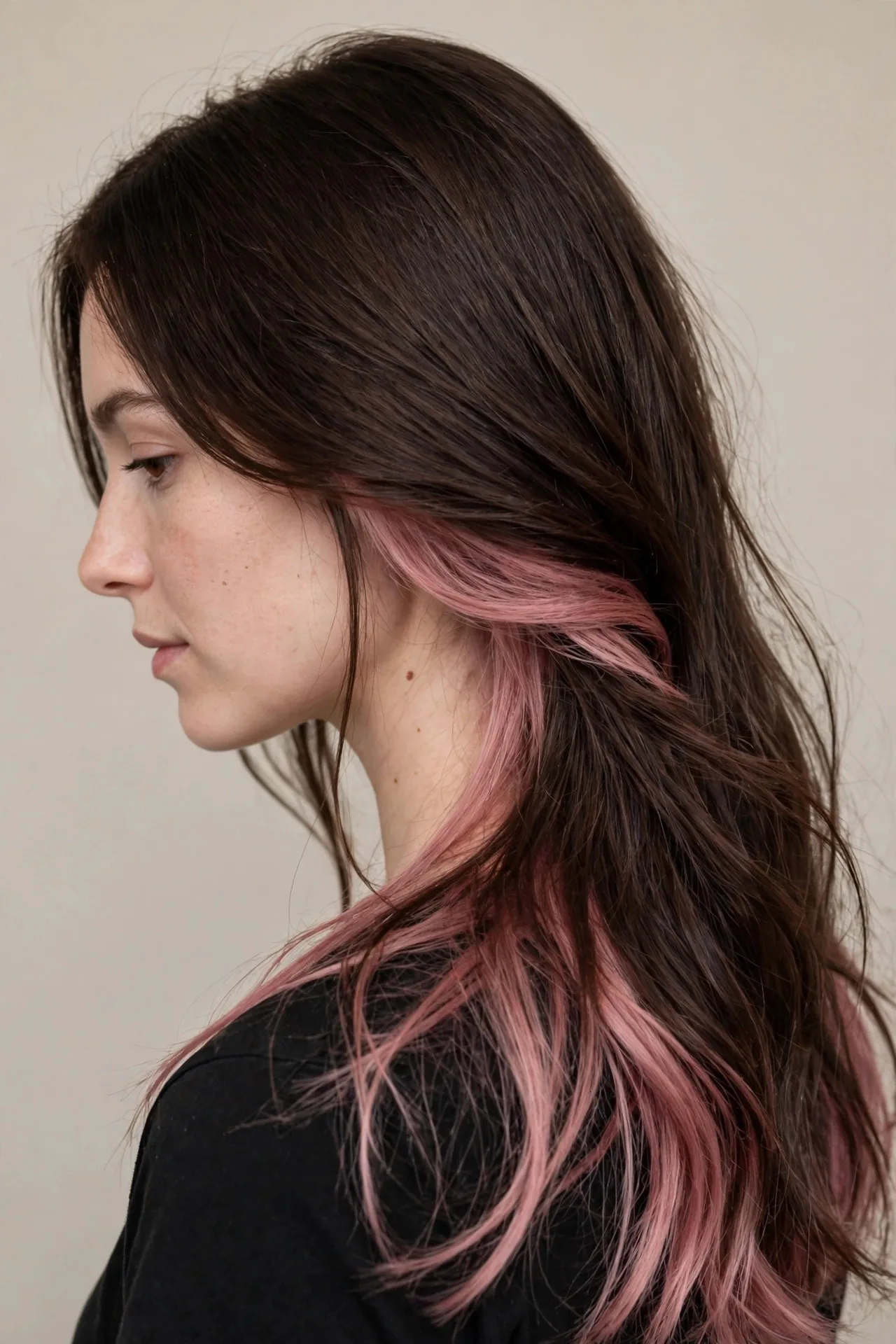
A rose underlayer hides under dark brown hair, showing only at the ends and the nape when the hair swings. The top layer stays fully dark, so the pink reads as a surprise rather than a statement. It suits anyone who wants color at work without a visible dye job.
Ask your colorist for a dusty rose panel on the lowest layer, from ear to ear across the back. The shade should sit one or two levels lighter than your base for a soft blend. Root touch ups stay simple, since regrowth hides under the dark top layer.
Midnight Pink Panels
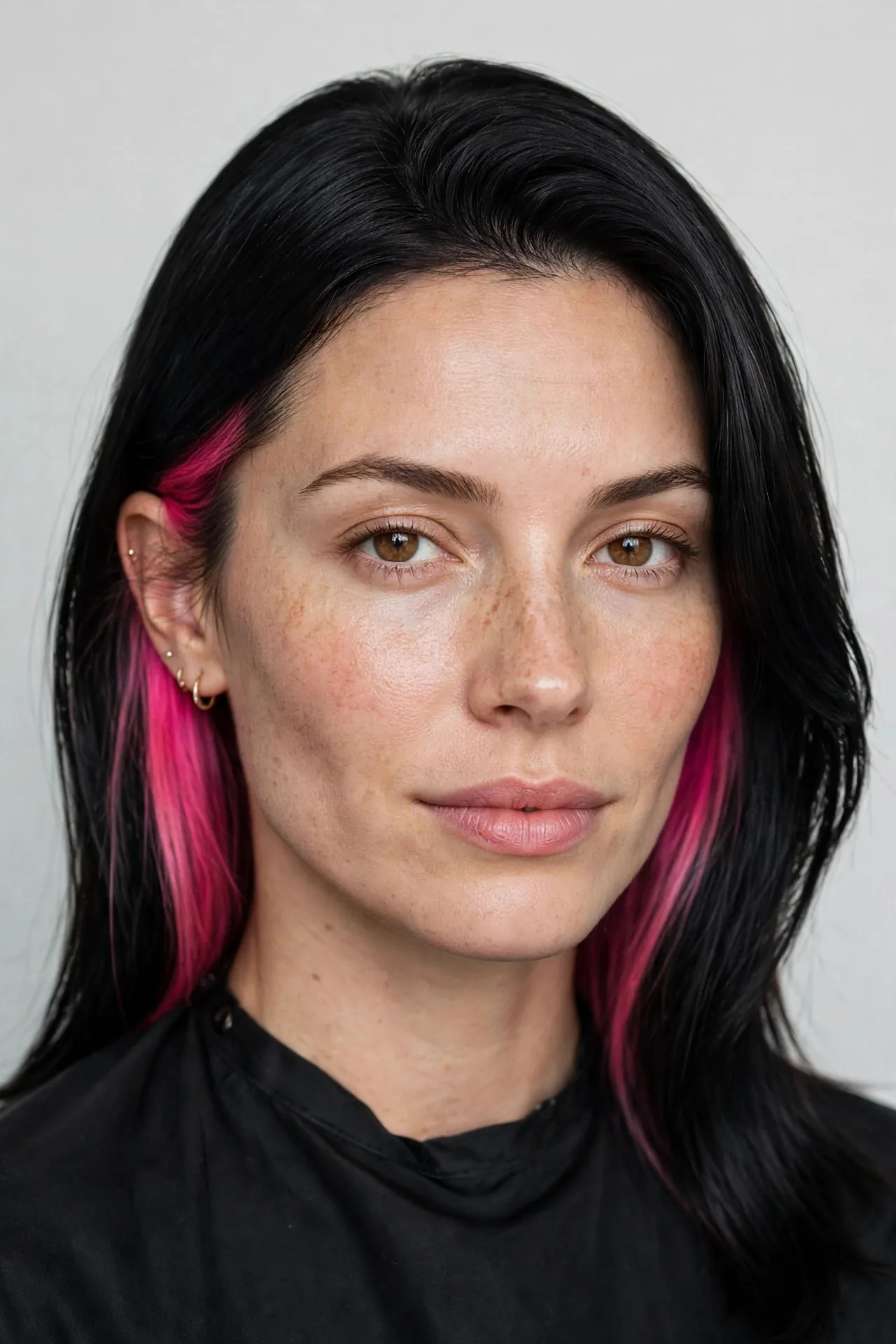
- Midnight black hair makes hot pink panels glow, since the dark base gives the color nowhere to hide.
- Panels sit behind the ears and along the sides, so they flash when the hair moves.
- Ask for two wide panels per side, not thin streaks, so the pink reads clearly.
- Straight or sleek hair shows panels best, because waves can bury the color.
- Color safe shampoo keeps the pink vivid for four to six weeks.
Panels suit bold dressers who still want a normal looking top layer for the office. The contrast does the talking, so styling stays simple: a middle part and a smooth blow dry show the panels best. Trims every eight weeks keep the panel edges clean and the color fresh.
Blonde Pink Veil
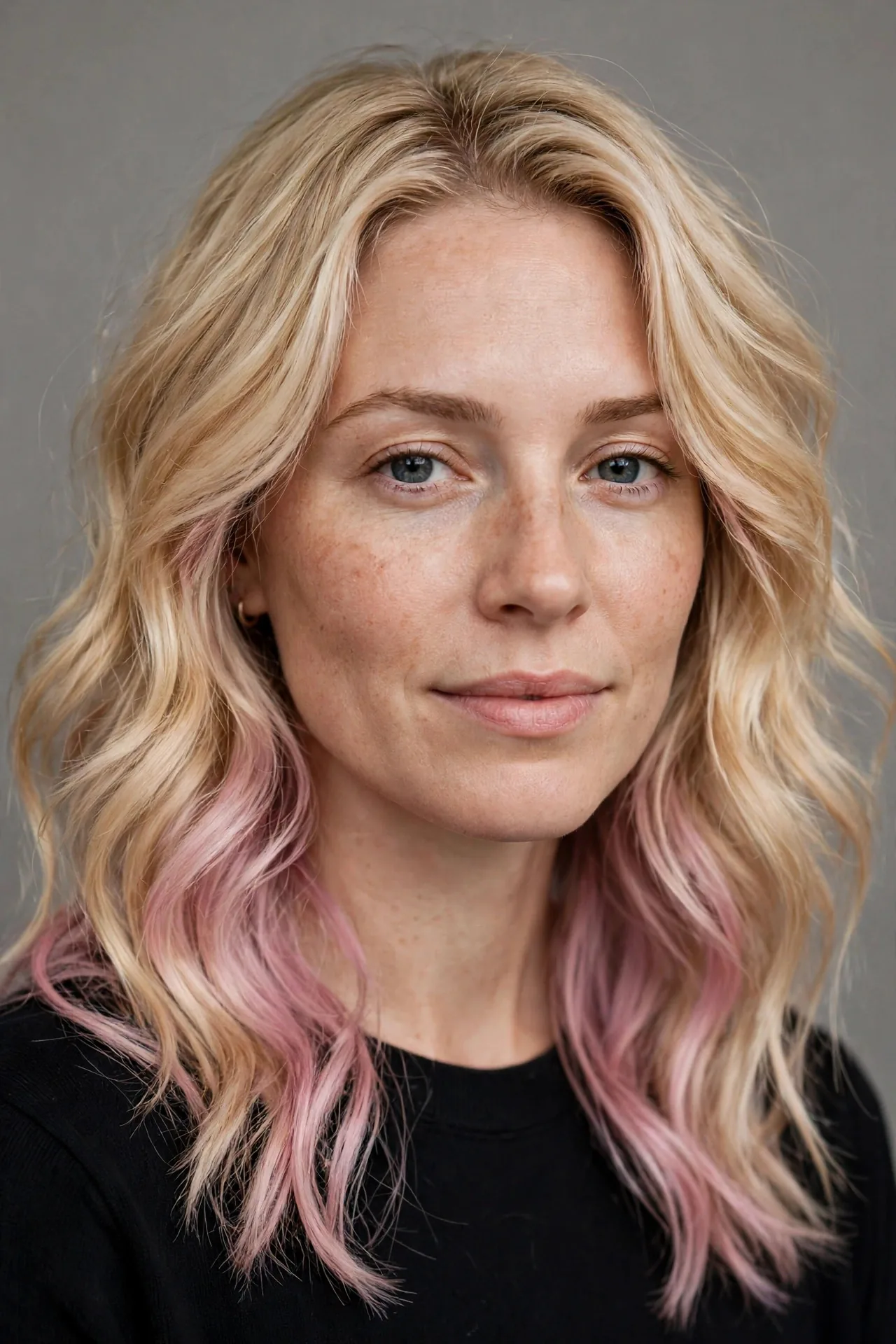
Quick Tip: Ask for the pink on the underlayer only, not through the top blonde. Pink over bleached blonde grabs fast and can turn patchy, while a separate underlayer keeps the blend even.
A pastel pink veil under blonde hair glows softly in sunlight and nearly vanishes indoors. The effect suits blondes who want a hint of color without a full pastel dye job. Toner refreshes every six weeks keep the pink from washing out to silver completely.
Candy Stripe Pieces
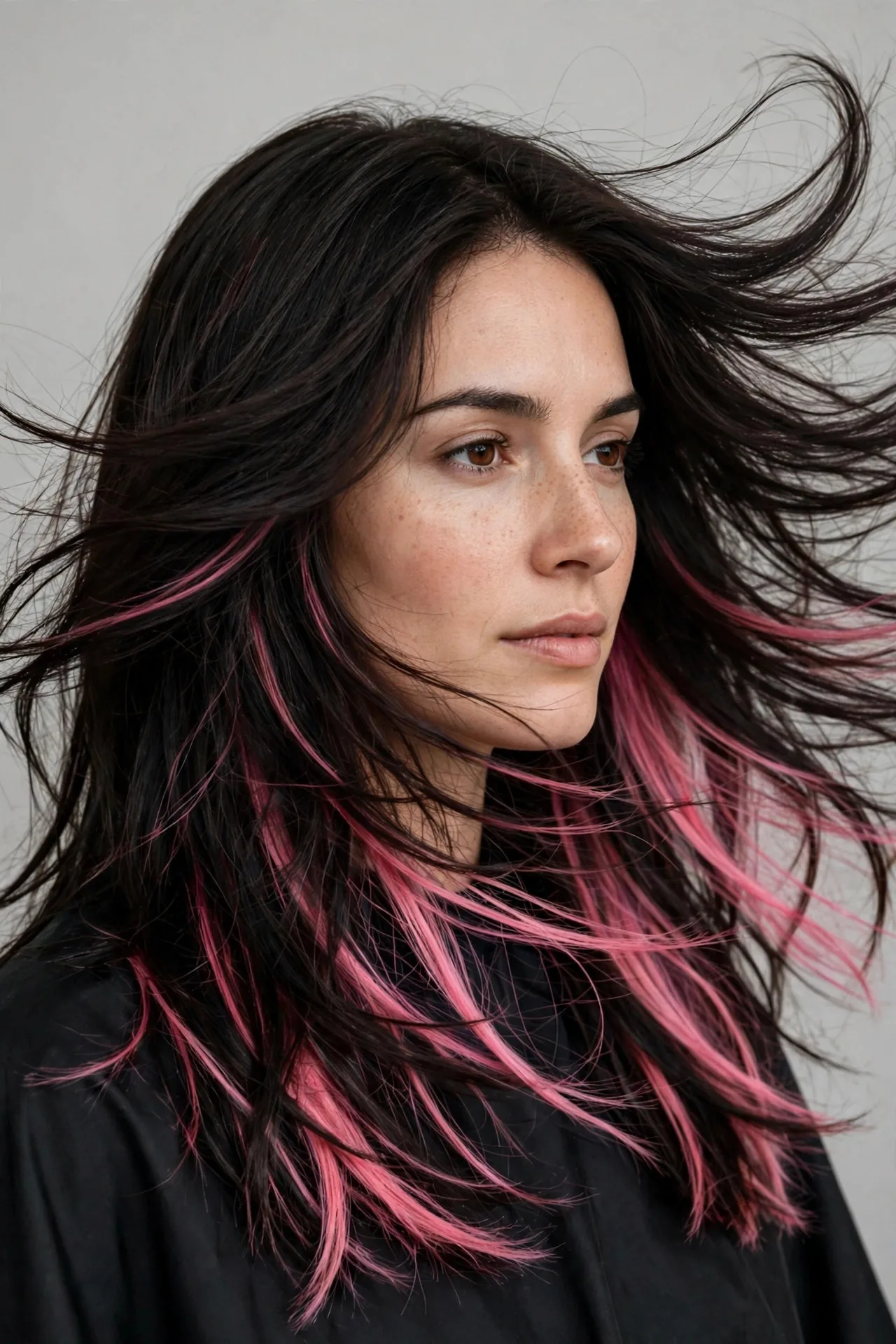
BEFORE: One flat color can look dull on long dark hair, with no detail to catch the eye. The hair hangs in a single shade, and the style feels unfinished even after a fresh cut.
AFTER: Thin candy pink stripes under the top layer break up the darkness with small flashes of color. The stripes show when the hair moves and hide when it rests, so the look stays playful without turning loud.
Stripes suit long hair best, since length gives the hidden color room to appear and disappear. Ask for stripes no wider than a pencil, spaced through the lower half only. Gloss treatments between color visits keep the pink bright and the dark base fully glossy.
Shadow Pink Layers
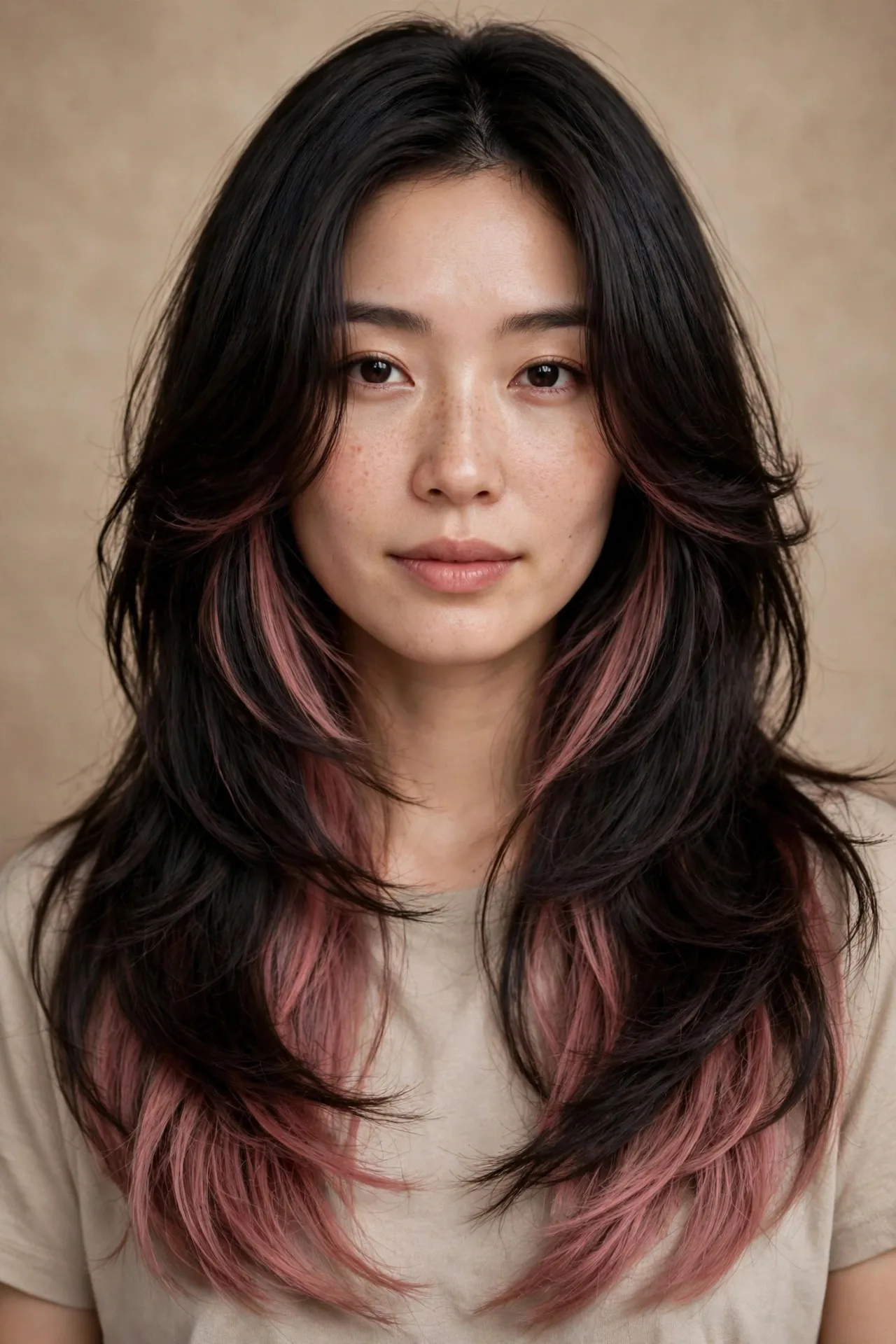
- Ask for layers that start at the cheekbones, so the hidden pink has movement.
- Place the pink on the shortest layers only, keeping the longest layer dark.
- Choose a muted rose shade, so the color reads as shadow rather than neon.
- Style with a round brush, lifting each layer so the pink catches light.
Shadow layers suit thick hair, since the cut removes weight while the color adds depth. The pink stays subtle indoors and glows in sunlight, which makes it a safe first step into vivid color. A color depositing conditioner every third wash keeps the rose from fading to peach.
Pink Nape Flash
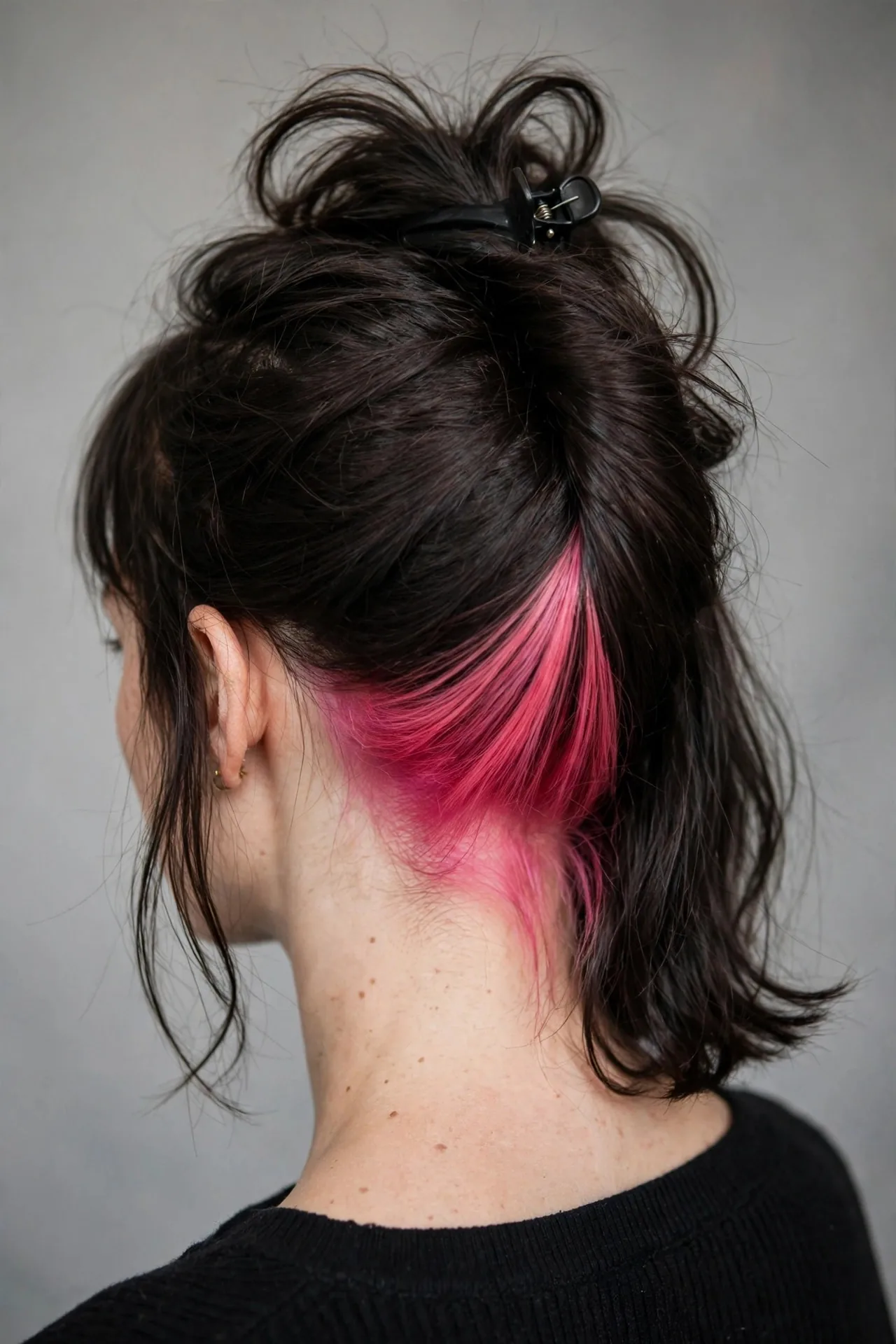
| Placement | Shows when | Best base |
|---|---|---|
| Nape only | Hair goes up | Dark brown or black |
| Nape and sides | Hair tucks back | Any dark shade |
| Full underlayer | Hair moves | Medium to long hair |
A nape flash is the smallest commitment on this list, since only a few inches of hair carry color. It suits updo lovers, because every bun and ponytail reveals the pink. The small area also means cheaper touch ups and faster appointments. Color lasts longer here, since the nape avoids sun and heat styling.
Braided Pink Reveal
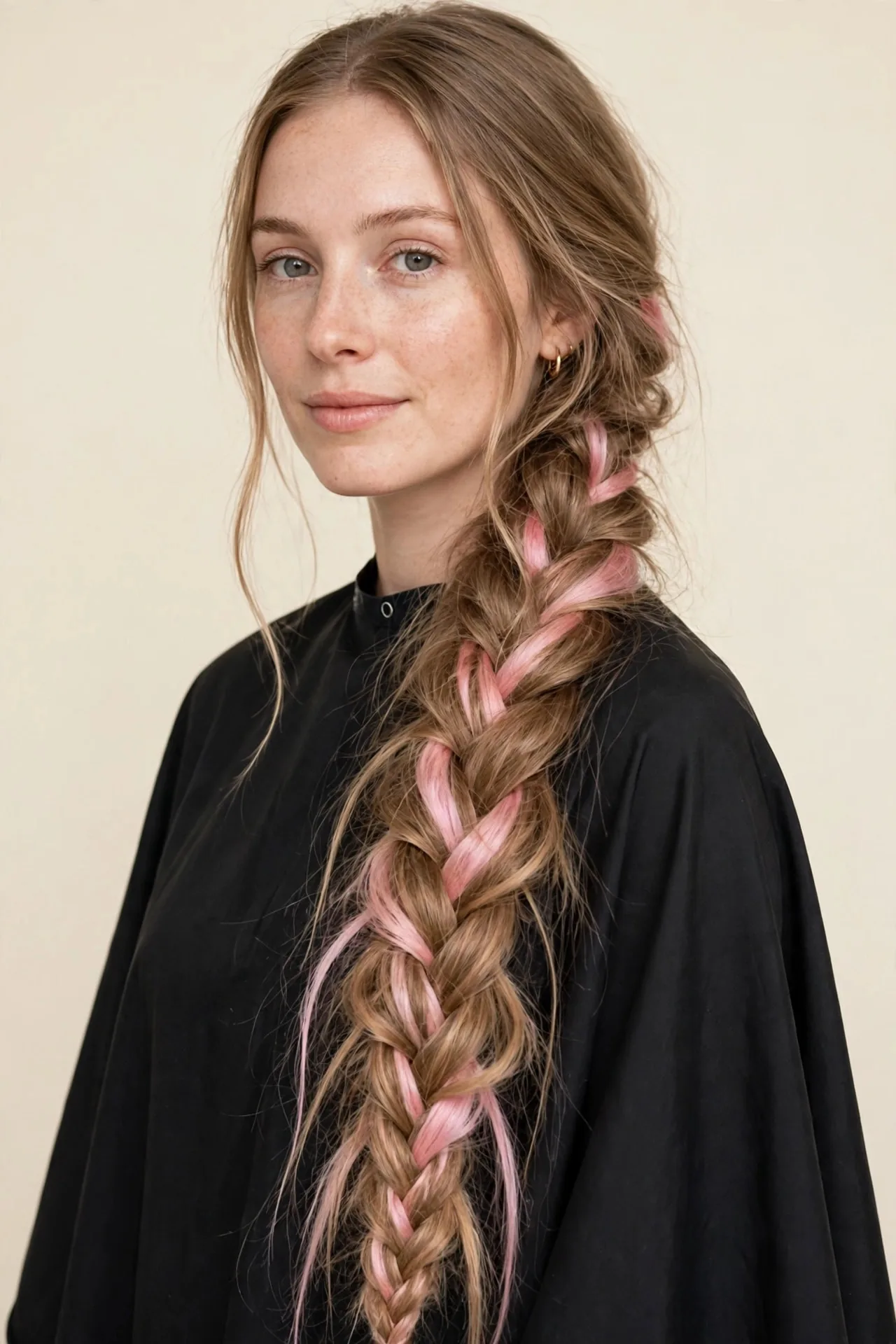
- Do braid loosely, so the pink sections peek through the gaps.
- Do place pink on the underside of each braid section for even reveals.
- Do use clear elastics, so no dark band hides the color.
- Don’t braid too tightly, or the pink stays buried inside the braid.
- Don’t put pink only on top sections, or the reveal looks one sided.
- Don’t skip a shine spray, since braids dull color faster than loose hair.
Braids turn hidden color into a slow reveal, with pink appearing at each twist. In my experience, a side braid shows the color best, since the braid sits where eyes land first. The style suits festivals, workouts, and second day hair, and it needs no heat at all.
Soft Pastel Underneath
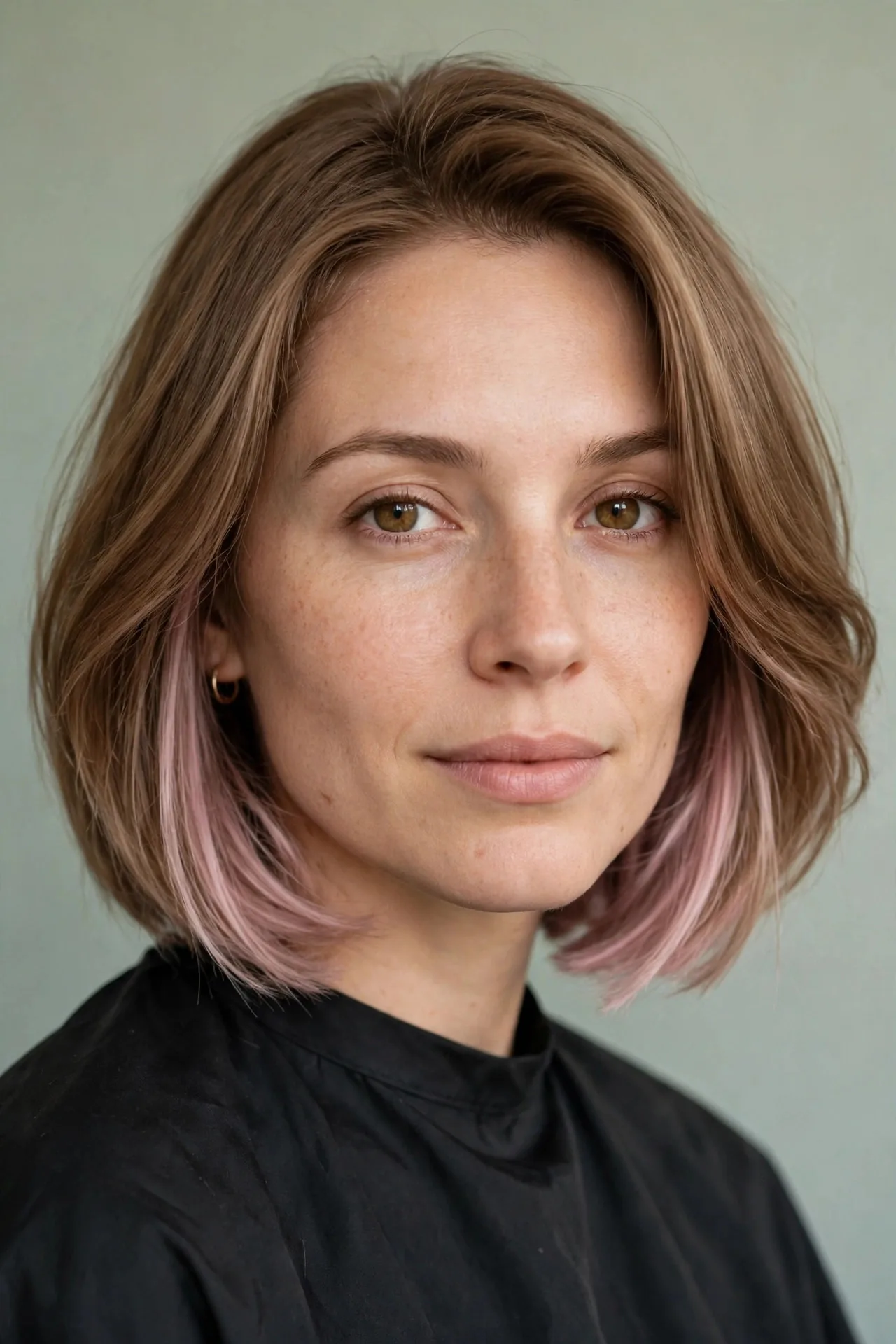
Best For: Fair to medium skin tones | Time: Two hours in the salon | Upkeep: Toner every six weeks | Skill Level: Colorist only
Pastel pink under light brown hair looks like a watercolor wash, soft at the edges and gentle in daylight. The shade suits first timers, since pastel fades gracefully instead of turning patchy. Keep shampoo washes to twice a week, and the color holds for six to eight weeks.
Magenta Underlayer Pop
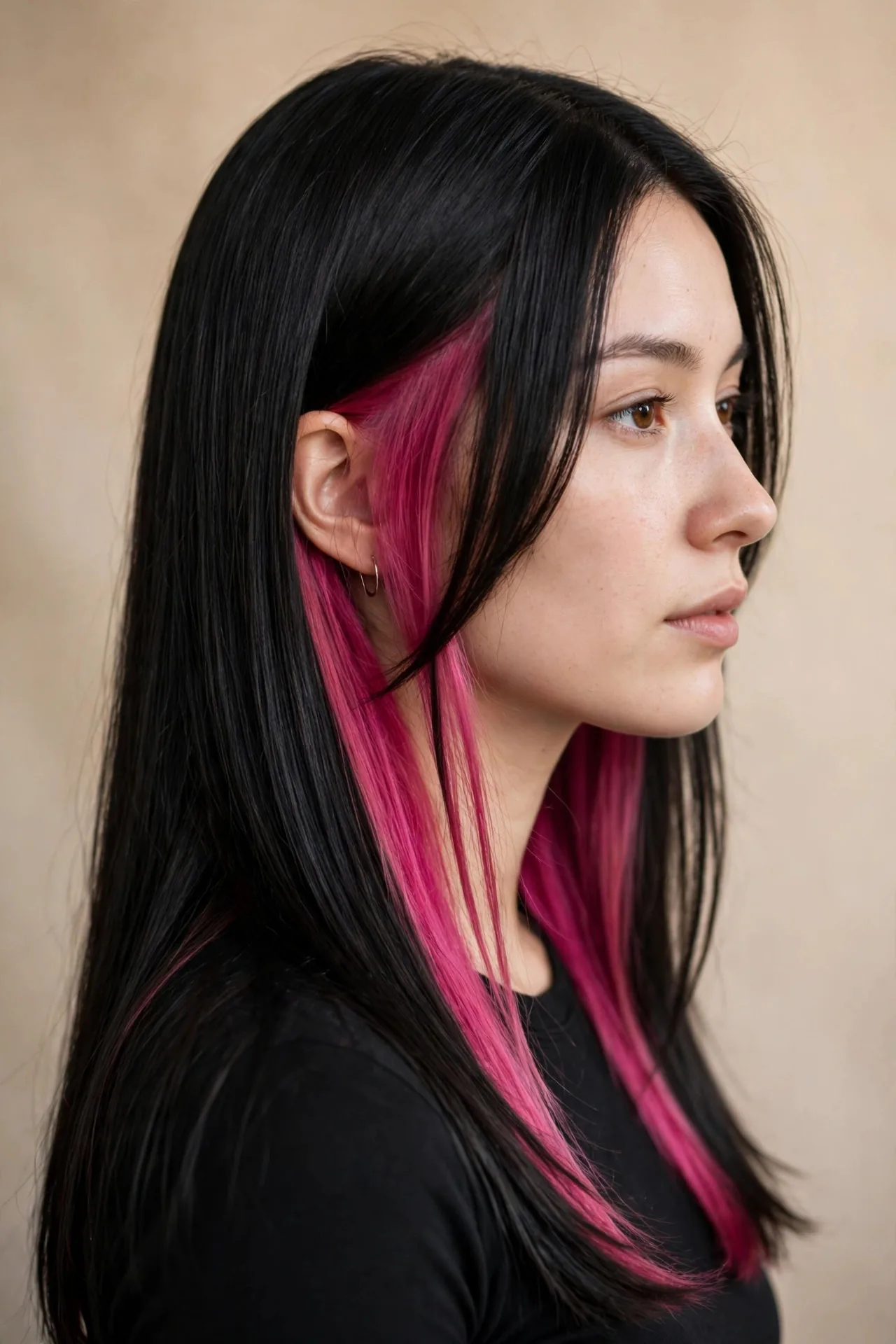
Magenta under black hair hits hard, with a bold panel that shows in every head turn. The top layer stays black, so the look reads polished from the front and daring from the back. It suits confident dressers who want vivid color without a full dye job.
Ask for a true magenta, not a muted rose, so the panel keeps its punch after several washes. Dark hair needs pre lightening on the panel only, which keeps damage low. Touch ups every five weeks keep the magenta loud. Use color safe shampoo between visits.
Face Frame Streaks
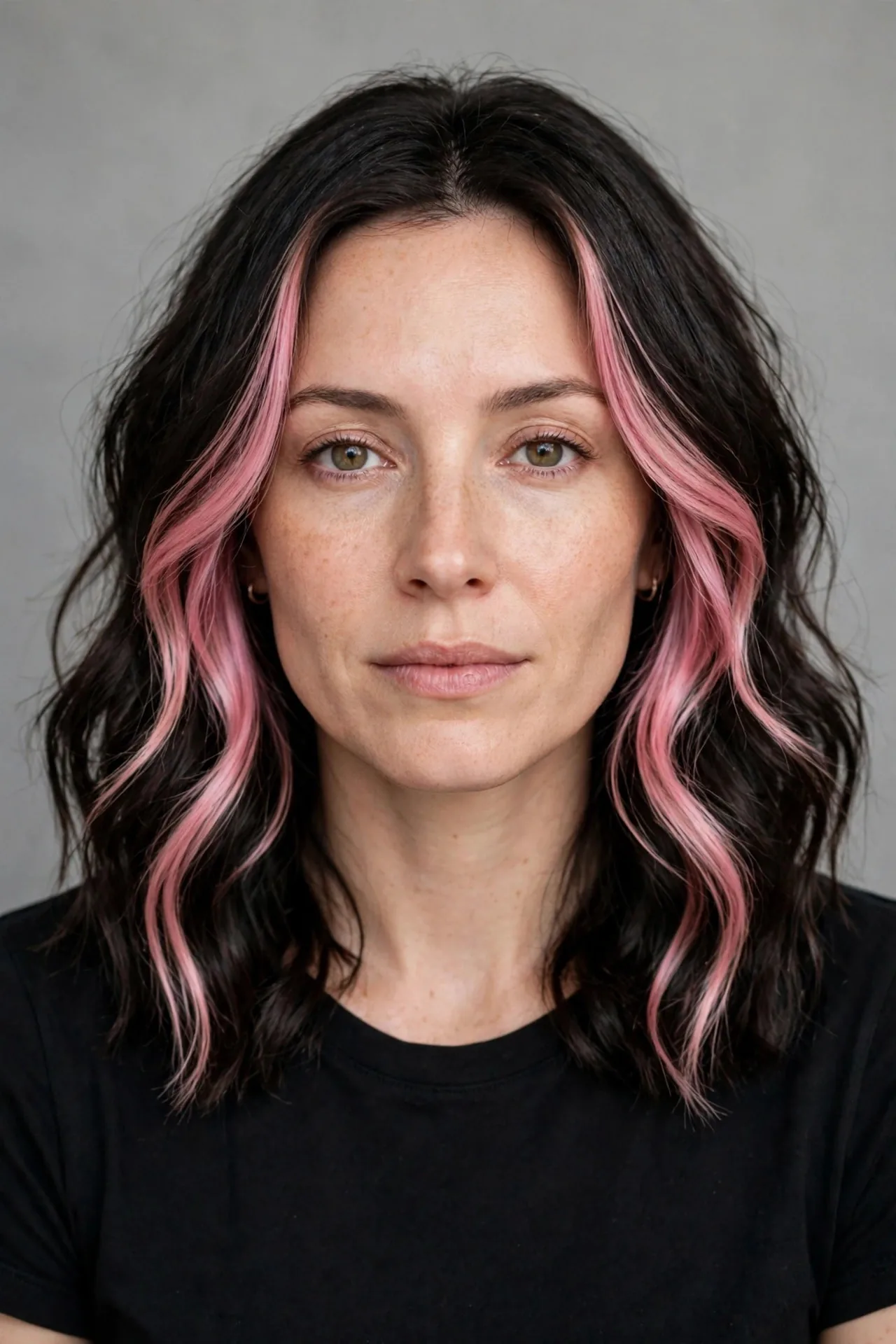
- Streaks frame the face with pink, so the color shows even when the rest hides.
- Two streaks per side keep the look balanced and easy to style.
- Soft pink suits warm skin, while hot pink suits cool skin best.
- Straight hair shows streaks cleanly, and waves soften them nicely.
Face frame streaks suit anyone who wants visible pink without dyeing the whole head. The placement puts color where the eye lands, so a little pink goes far. Root regrowth shows faster here, so plan touch ups every four weeks. A gloss between visits keeps the streaks shiny.
Ponytail Pink Surprise
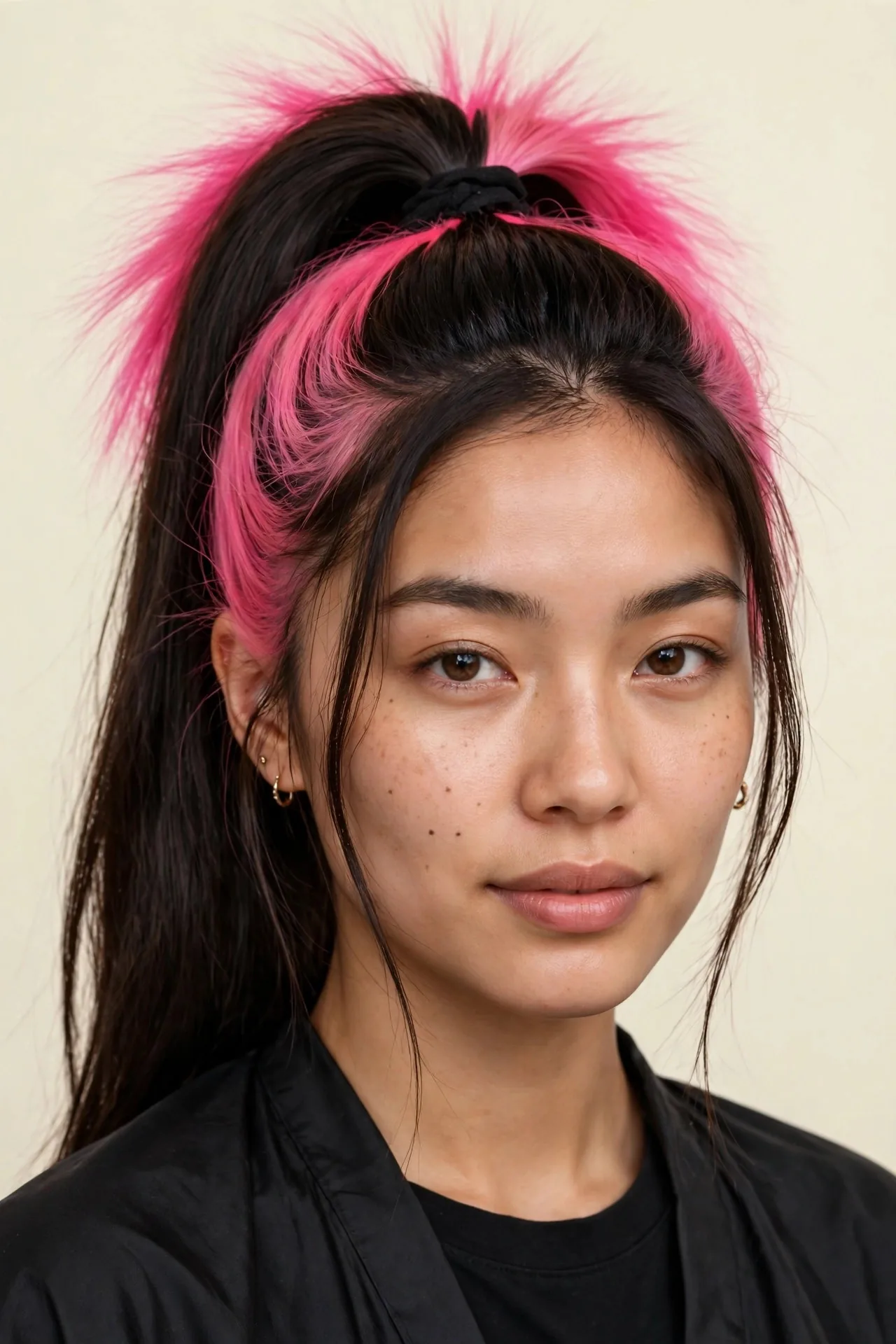
Quick Tip: Pull the ponytail high, not low, for the full surprise. A low ponytail covers the underlayer, while a high one lifts it into view. Smooth the top layer with a brush so the pink edge looks clean.
A high ponytail turns hidden pink into a bright halo around the base. The style suits gym days, hot weather, and anyone who wears their hair up often. Pink on the underlayer also means the top stays neat for work when the hair comes down.
Peekaboo Pink Curls
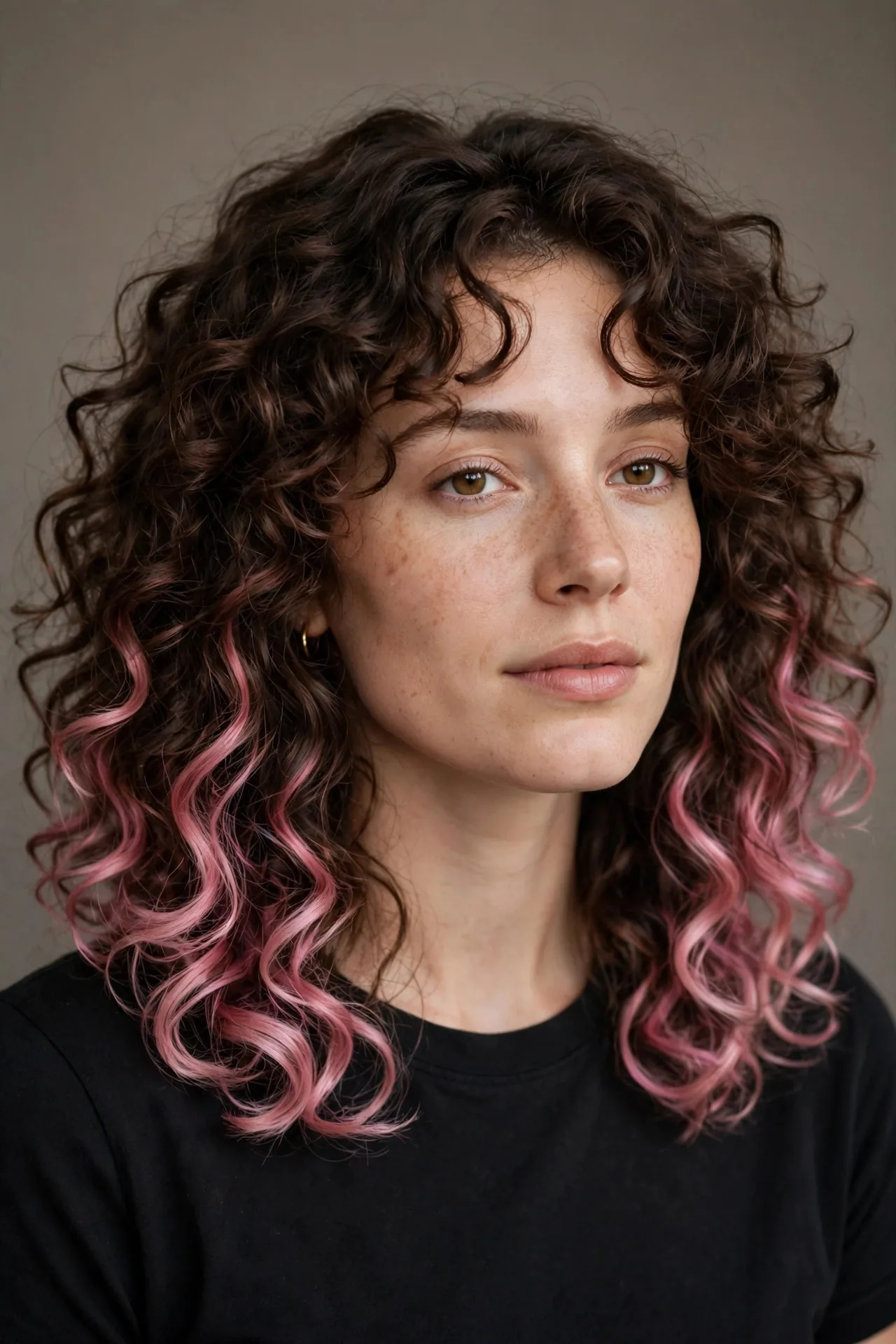
BEFORE: Curly hair can swallow hidden color, since curls stack and cover the layers beneath. The pink sits inside the curl pattern and rarely shows, even in bright light.
AFTER: Placing pink on the outer curls of the lower layer lets the color bounce with each curl. The pink appears as the curls move and hides when they settle, which keeps the look playful.
Curls suit peekaboo color well, because movement is built into the texture. Ask for pink on curls that sit at the ends, not at the roots, so regrowth stays hidden. A soft curl cream defines each curl and keeps the pink clearly visible between washes.
Pink Ribbon Braids
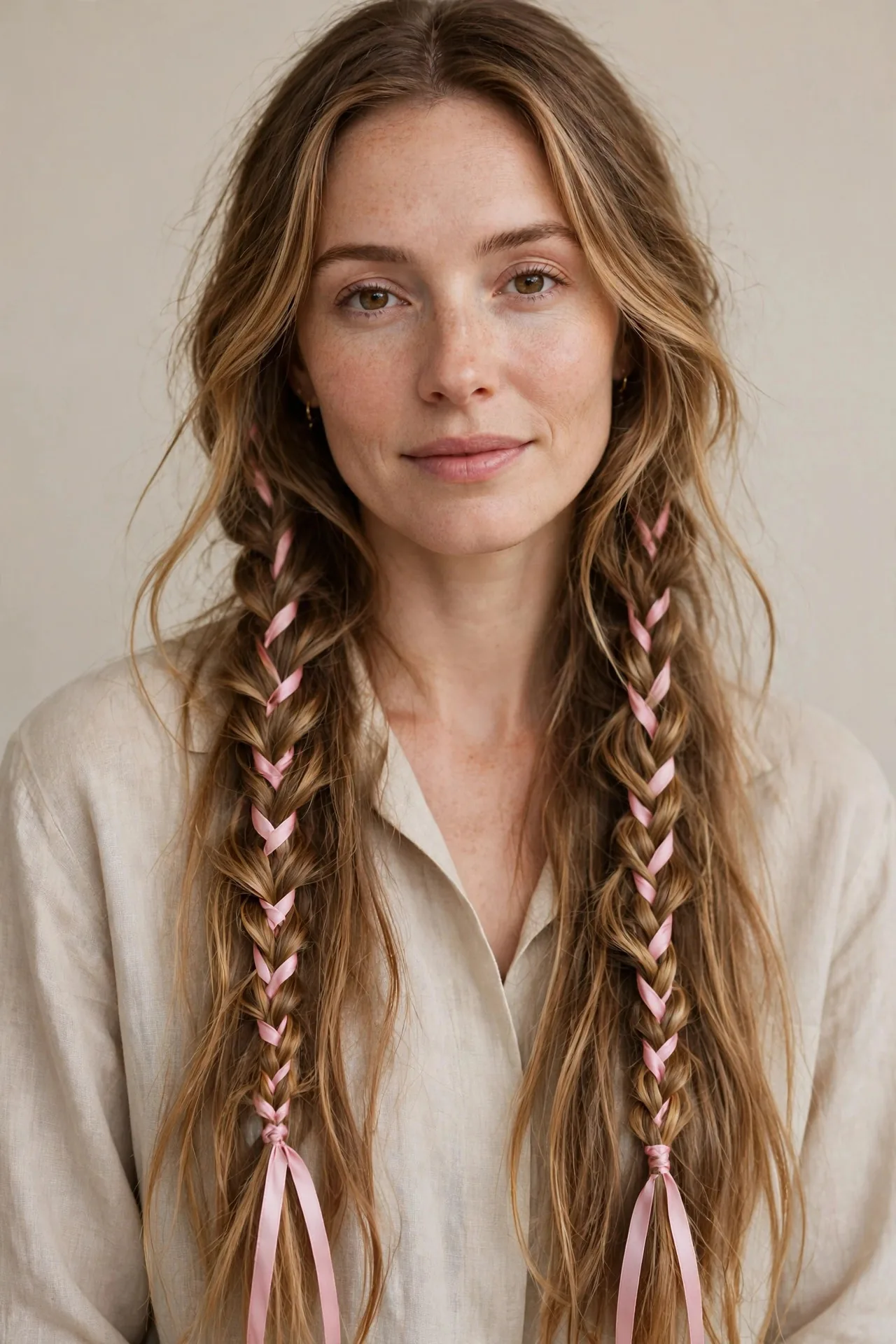
- Part the hair down the middle, then split each side into three sections.
- Weave a thin pink extension ribbon through one section of each braid.
- Braid loosely to the ends, letting the ribbon show through the gaps.
- Secure with clear elastics and a light shine spray.
Ribbon braids suit anyone who wants pink without dye, since the ribbon carries the color. The style works for weddings, festivals, and photo days, and it washes out with one shampoo. Change ribbon shades anytime, from pastel to neon, with no salon visit at all.
Smoky Pink Shadow
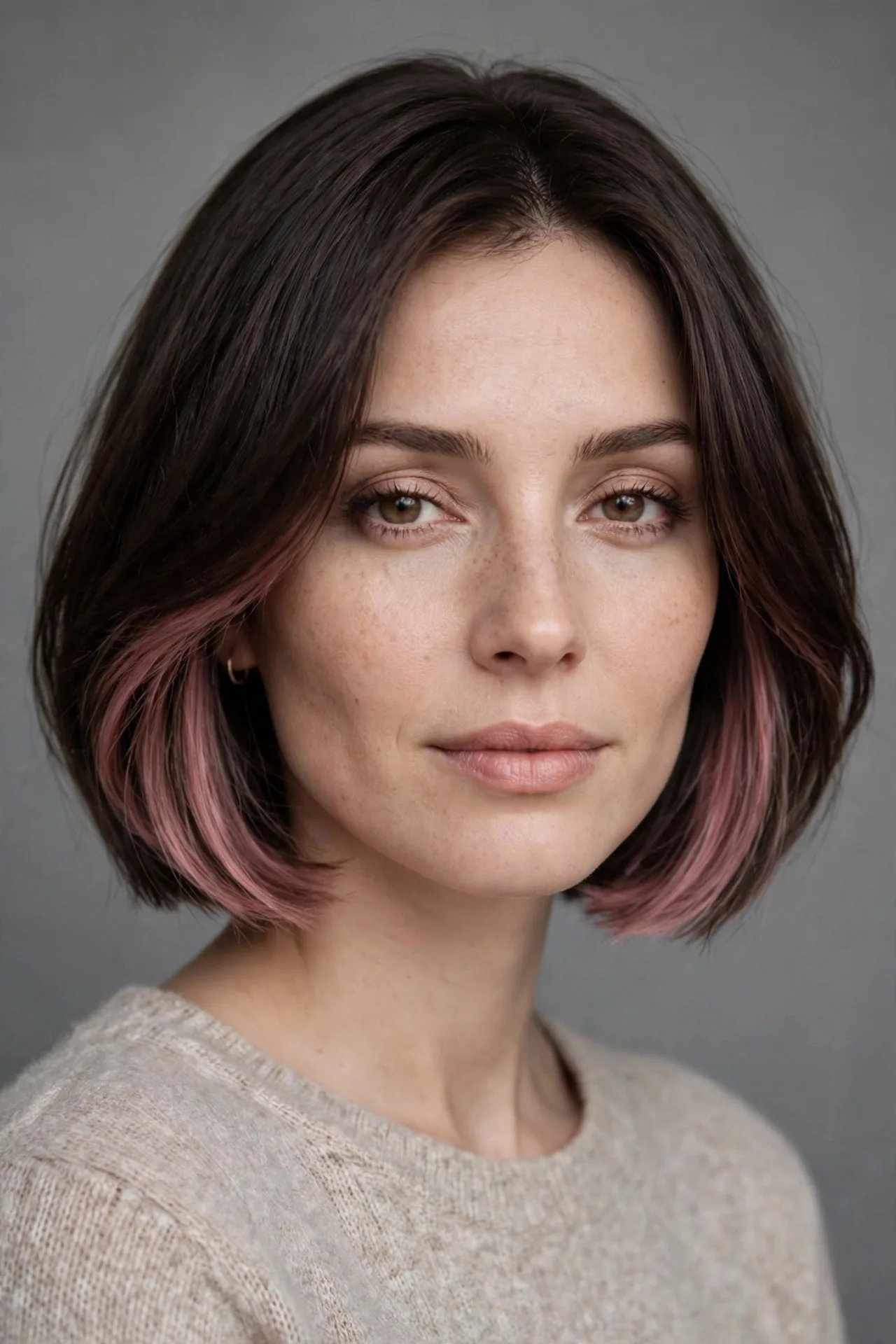
| Shade | Mood | Best base |
|---|---|---|
| Smoky rose | Soft and muted | Dark brown |
| Dusty pink | Vintage and gentle | Medium brown |
| Ash pink | Cool and modern | Black |
Smoky pink suits minimalists, since the color reads as a shadow rather than a shout. I’ve noticed smoky shades last longer between visits, because fading looks intentional instead of washed out. The muted tone also pairs well with office wear and neutral makeup every day.
Pink Ends Only
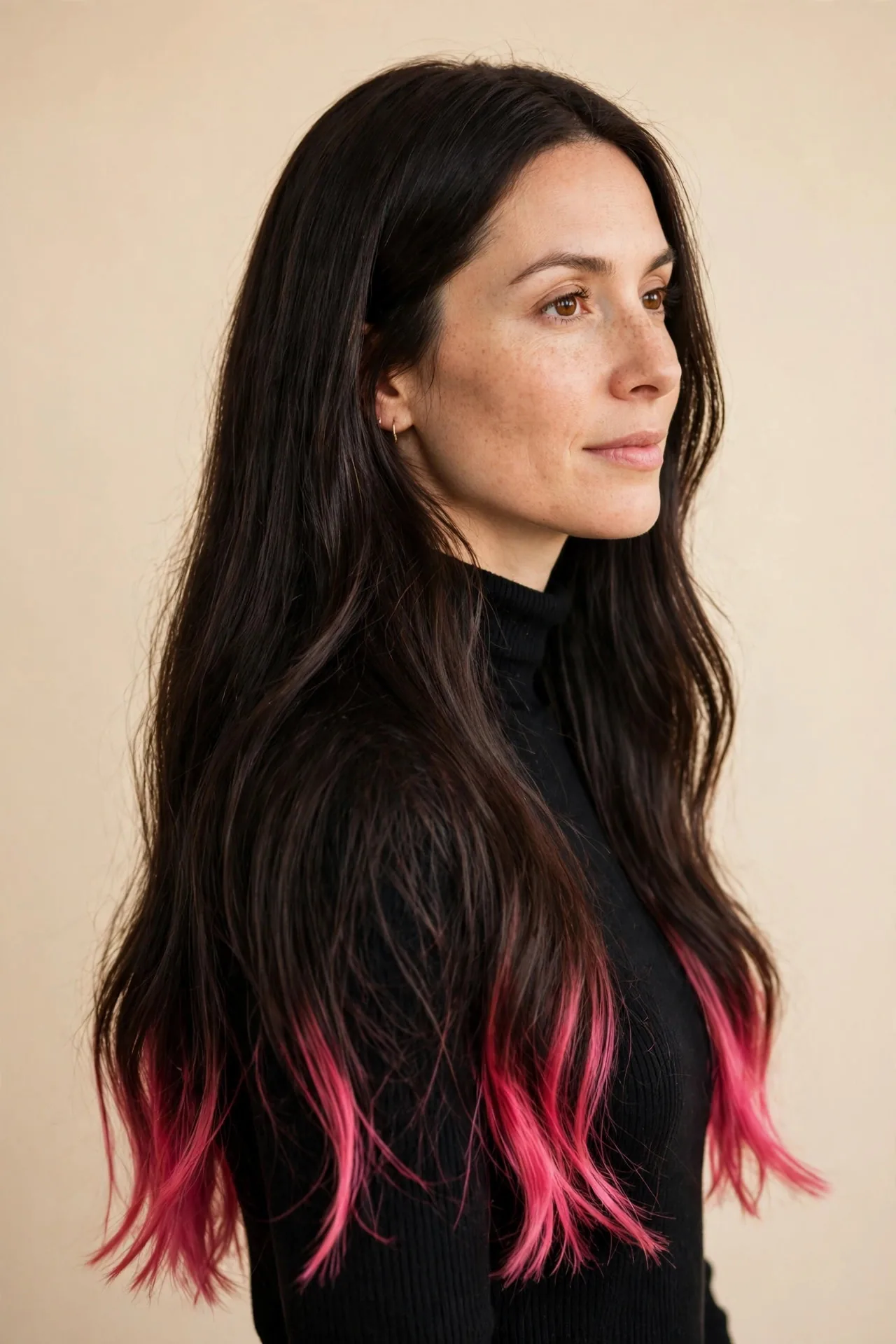
- Do color only the last two inches, so the pink reads as a dip dye surprise.
- Do choose a bright shade, since the small area needs punch.
- Do trim the ends first, so the color takes evenly.
- Don’t color higher than planned, or the peekaboo effect turns into an ombre.
- Don’t skip toner on lightened ends, or the pink turns brassy.
- Don’t wash with hot water, since heat strips pink fast.
Pink ends suit cautious first timers, because the color sits far from the roots and the face. The placement also makes growing out easy: trims remove the color gradually with no harsh line. Refresh the ends every six weeks to keep the shade fully bright.
Hidden Pink Crown
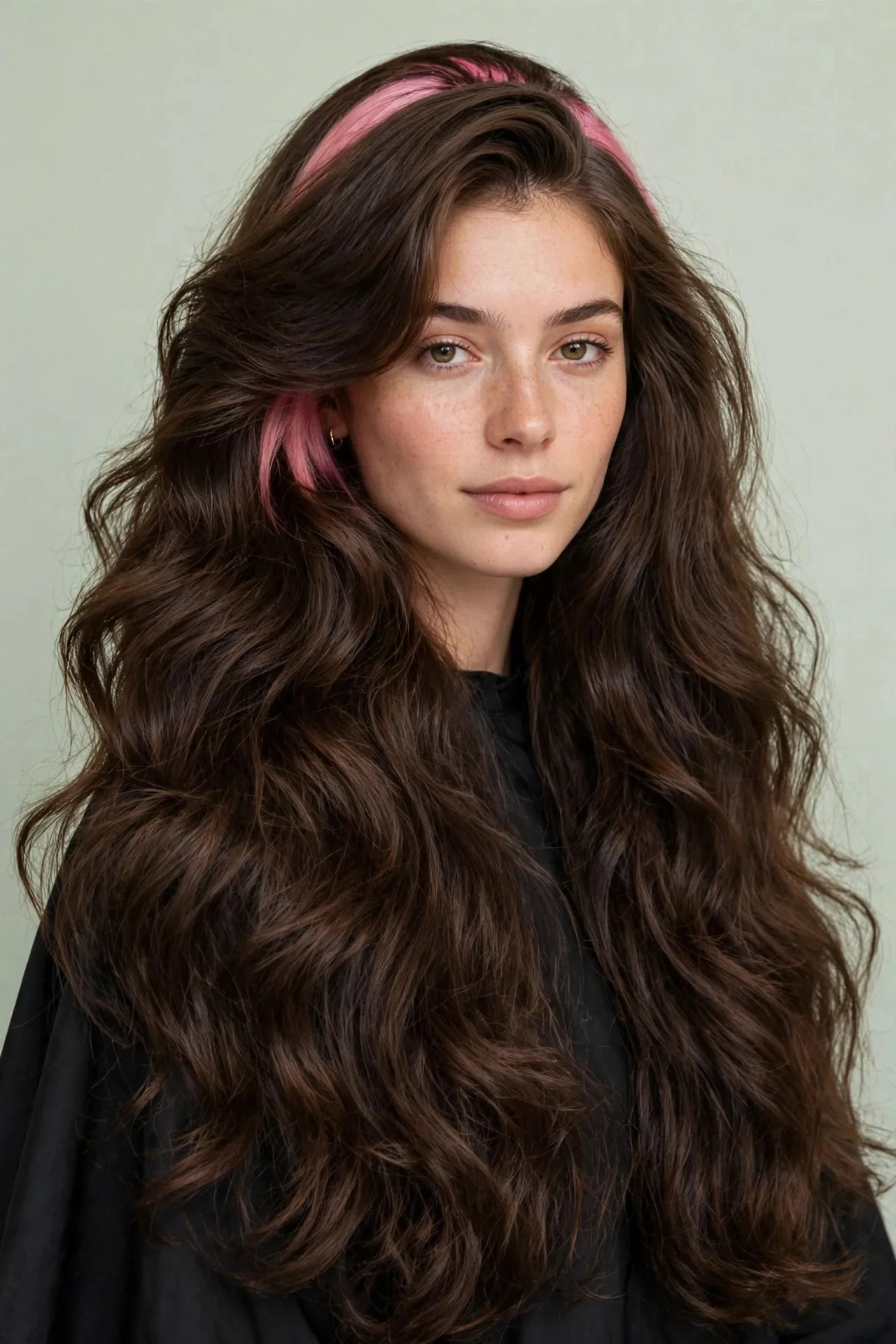
Best For: Thick hair with volume | Time: Two to three hours | Upkeep: Gloss every six weeks | Skill Level: Colorist only
Pink at the crown hides under the top layer and flashes when the hair parts or lifts. The placement suits thick hair best, since volume keeps the color covered until movement reveals it. Styling with a side part shows more pink, while a middle part hides it.
Dual Tone Peekaboo
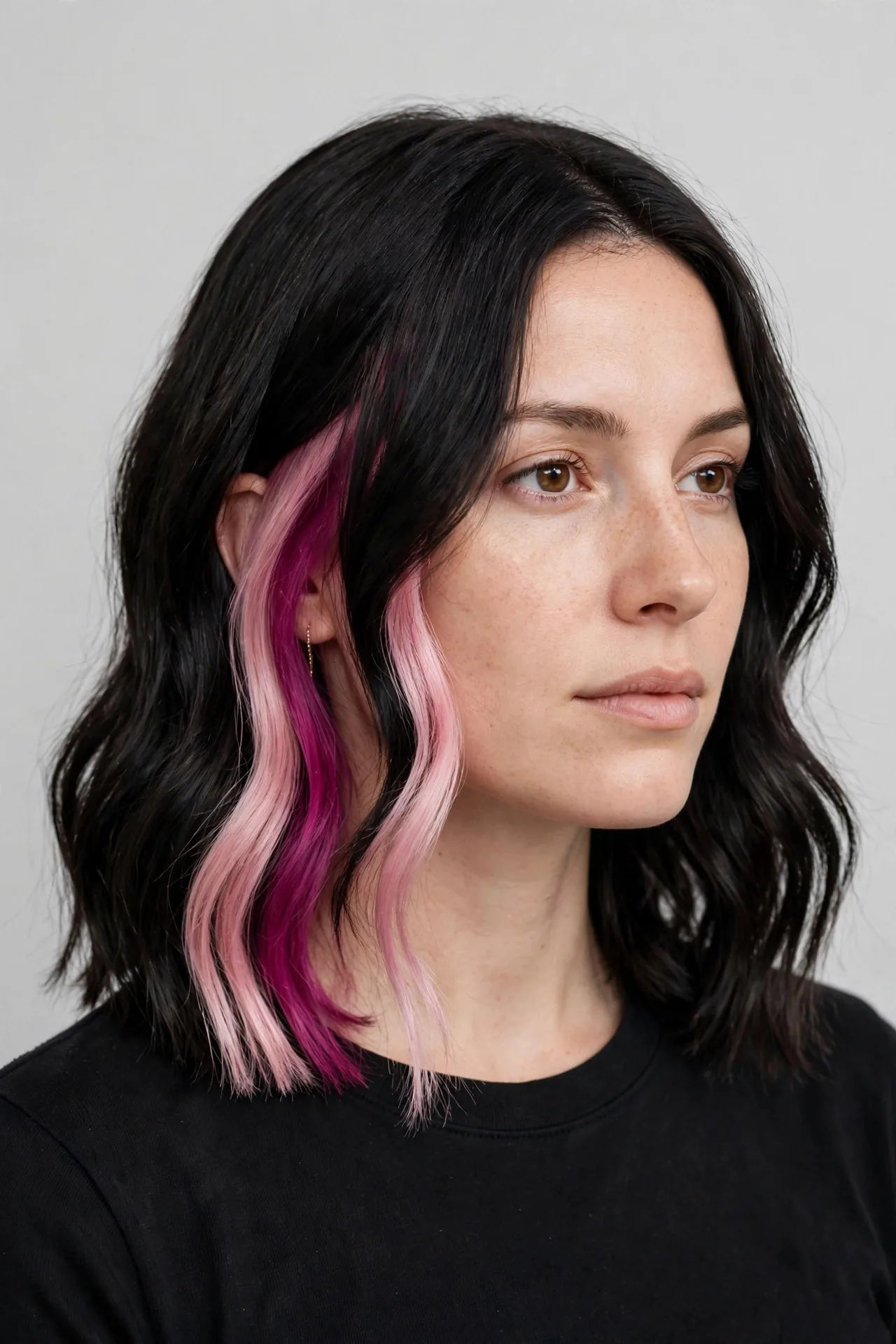
Two pinks beat one, with a pastel panel beside a vivid panel for depth. The softer shade sits closer to the face, while the brighter shade hides deeper underneath. The mix suits anyone who finds a single pink too flat or too loud.
Ask your colorist to keep the two shades in the same family, rose with magenta or blush with hot pink. Mixed families can clash once the colors start to fade. Gloss treatments keep both shades bright between visits. Fading happens evenly when both shades lift to the same level.
Peekaboo Bangs Fringe
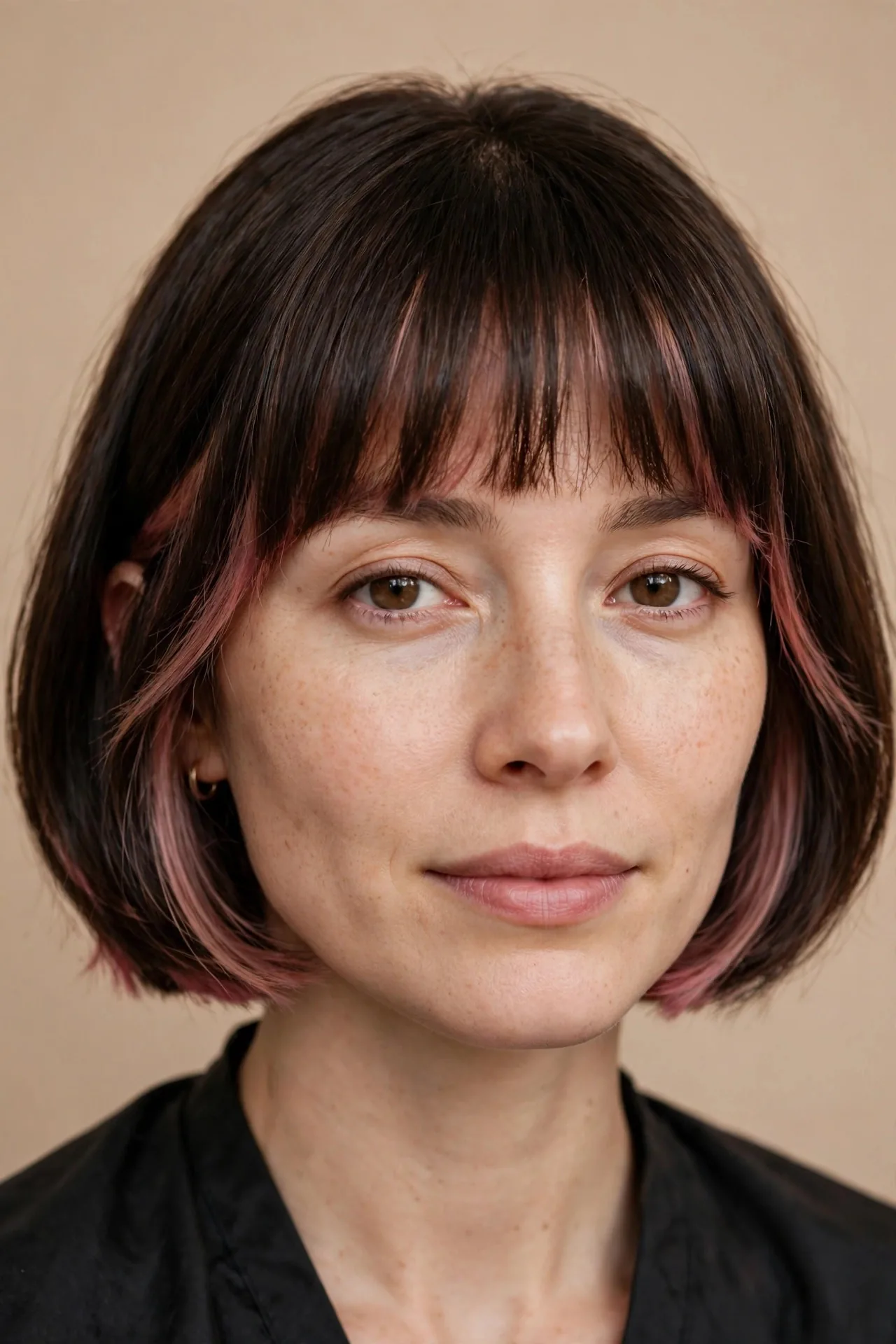
- Pink behind the fringe shows with every blink and head tilt, so a little color goes far.
- Keep the fringe itself natural, with pink only on the layer behind it.
- Soft rose suits this placement best, since neon can overwhelm the face.
- Bangs need trims every three weeks, and the pink can refresh at the same visit.
Fringe peekaboo suits bold personalities who love small surprises. The color frames the eyes without dyeing the most visible hair. It also grows out gracefully, since the fringe trims away the color over time. Ask for the pink panel to sit one inch behind the hairline for the cleanest reveal.
Bubble Braid Pink
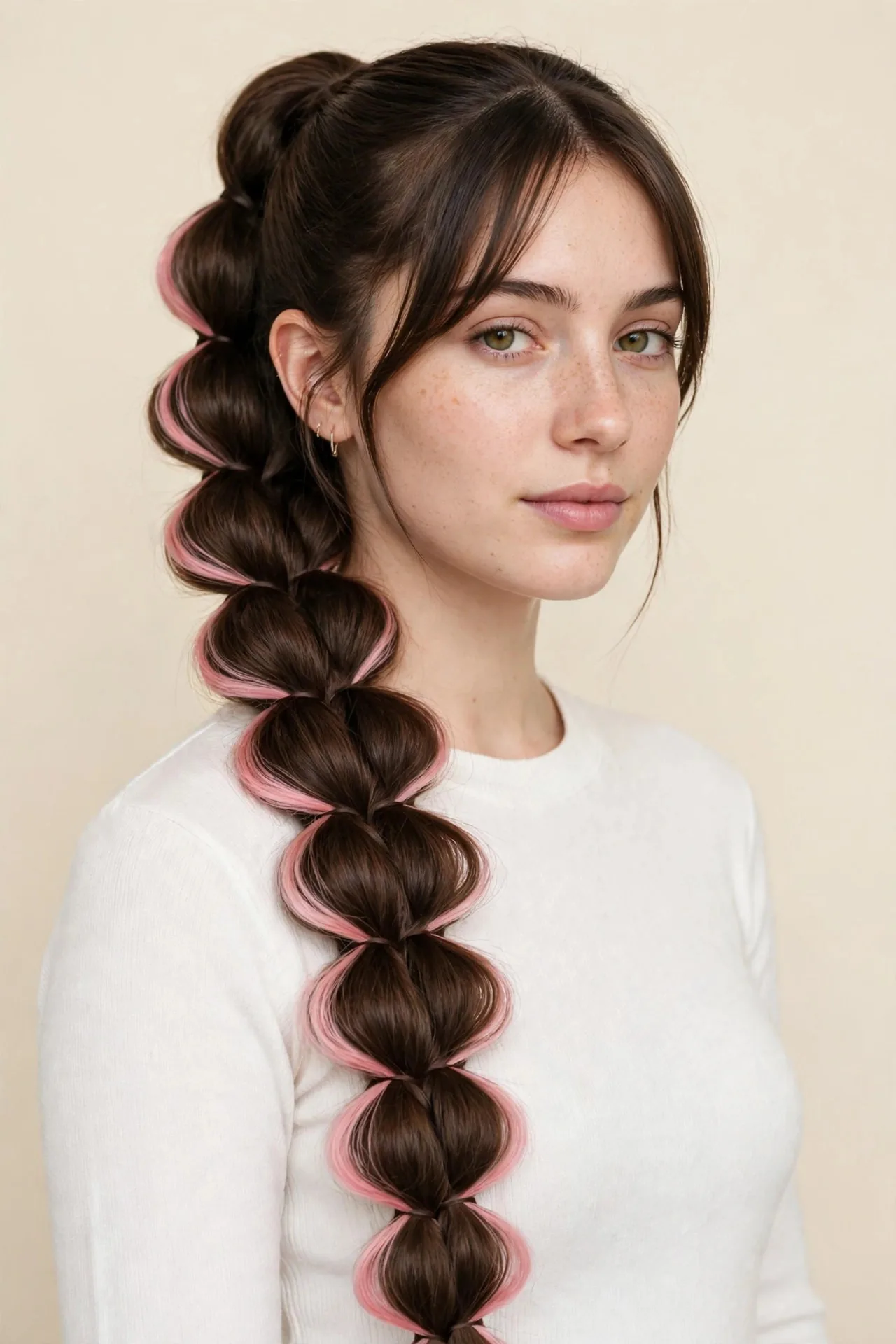
Quick Tip: Use small elastics spaced two inches apart to build even bubbles. Pink sections placed at the bubble edges show best, while pink buried inside the braid disappears. A light hairspray holds each bubble without stiffness.
Bubble braids turn hidden pink into a repeating pattern down the length. The style suits long hair and party days, since each bubble frames a flash of color. It needs no heat and no dye on the top layer, so the base stays completely untouched.
Pink Halo Underneath
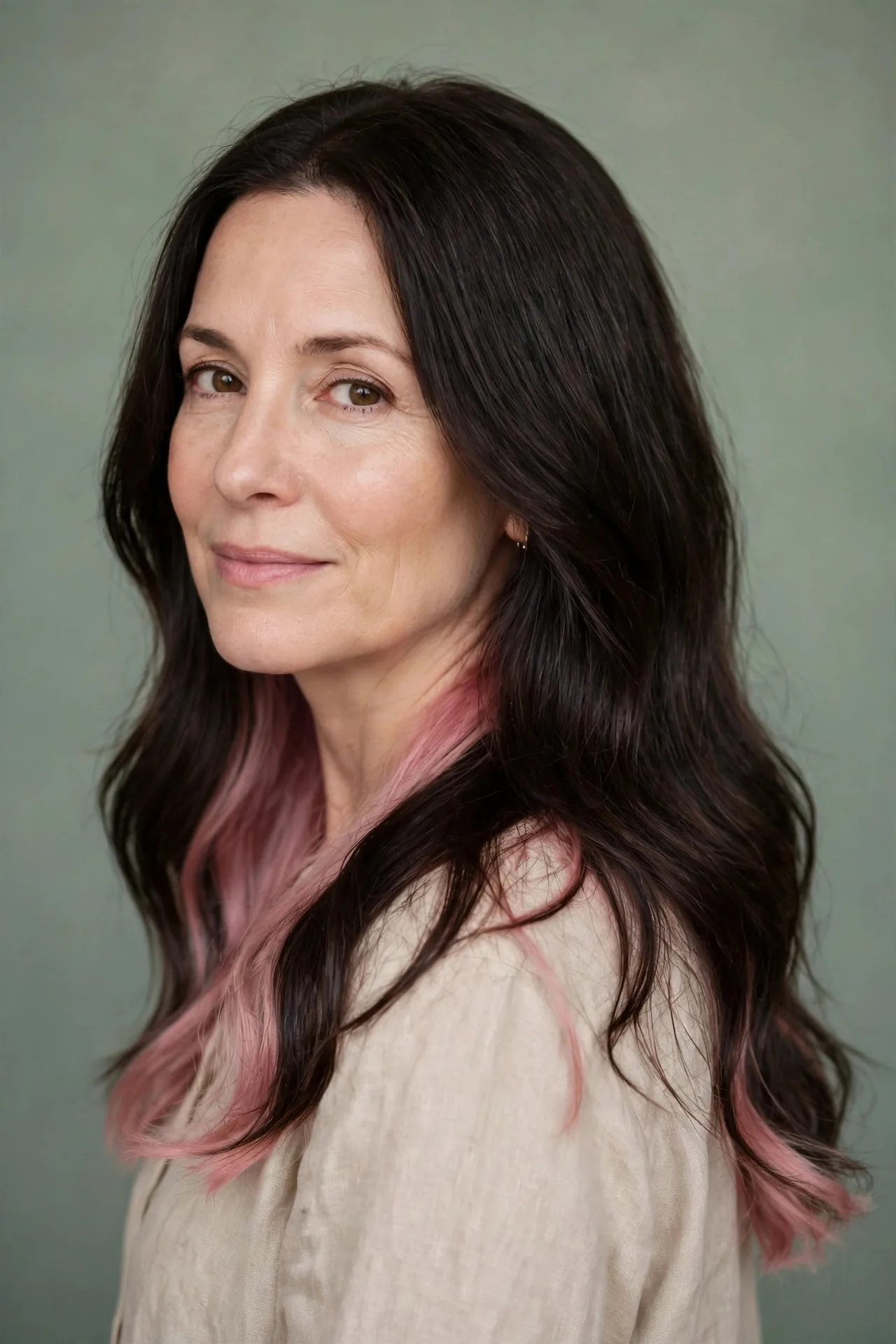
BEFORE: All over pink can feel like too much for a first color appointment. The commitment shows from every angle, and growing it out takes months of trims.
AFTER: A halo of pink around the lower layer gives the same glow with a hidden placement. The color rings the head softly, showing at the ends and the nape while the top stays natural.
A halo suits round faces, since the lower color draws the eye downward and lengthens the look. The placement also flatters fine hair, because the hidden panel adds the illusion of fullness. Refresh the halo every six weeks for an even glow. Waves show the halo best.
Subtle Blush Peekaboo
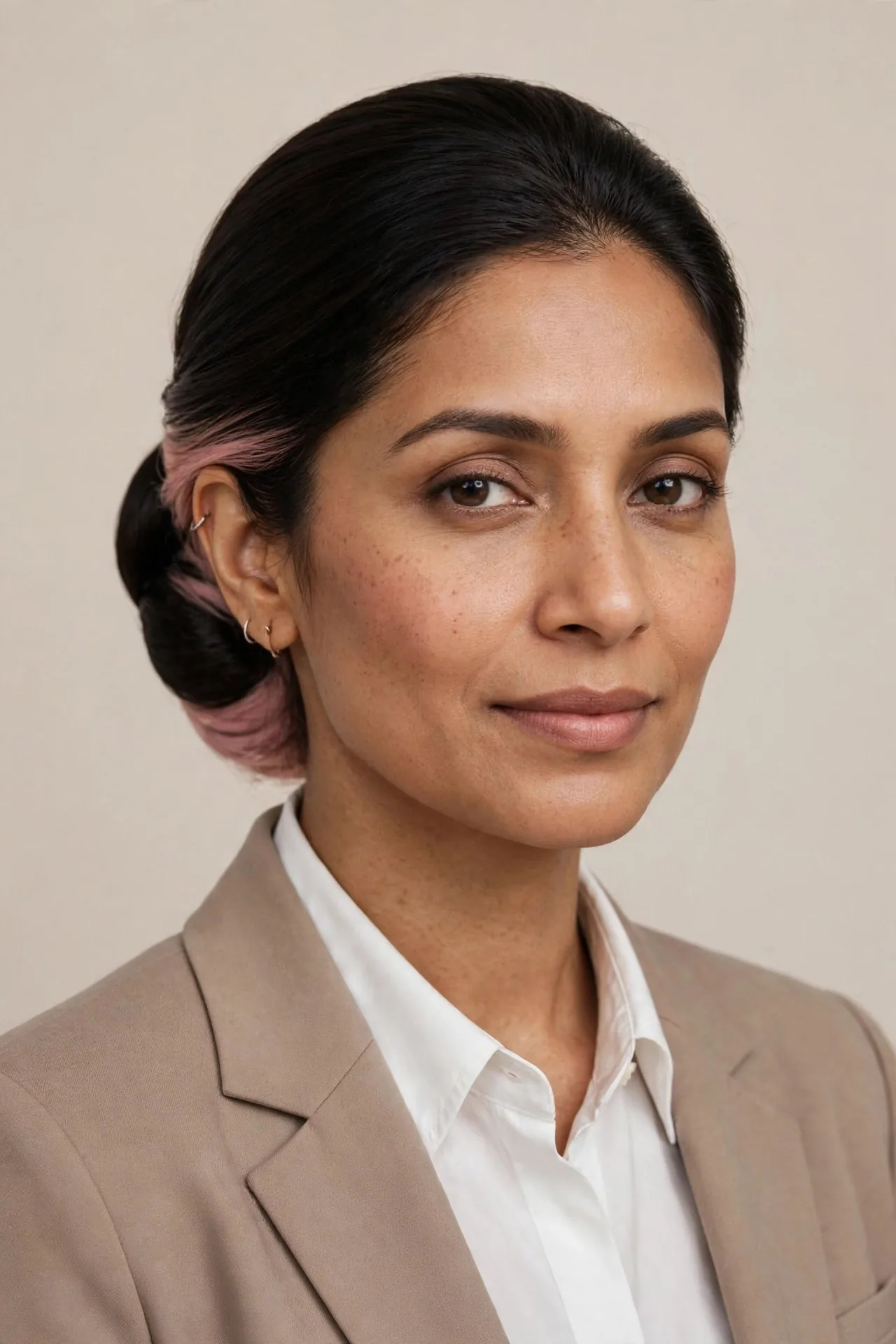
- Ask for a blush shade two levels lighter than your base, so the color whispers.
- Place the blush on the nape and behind the ears only.
- Keep the top layer one solid shade, with no highlights near the pink.
- Style straight for work, wavy for evenings, to change how much shows.
Blush peekaboo suits professionals who need color to stay office safe. The shade reads as a warm glow rather than a dye job, so it passes strict dress codes. It fades softly over eight weeks, with no harsh line at all as it grows out gracefully.
Neon Pink Flash
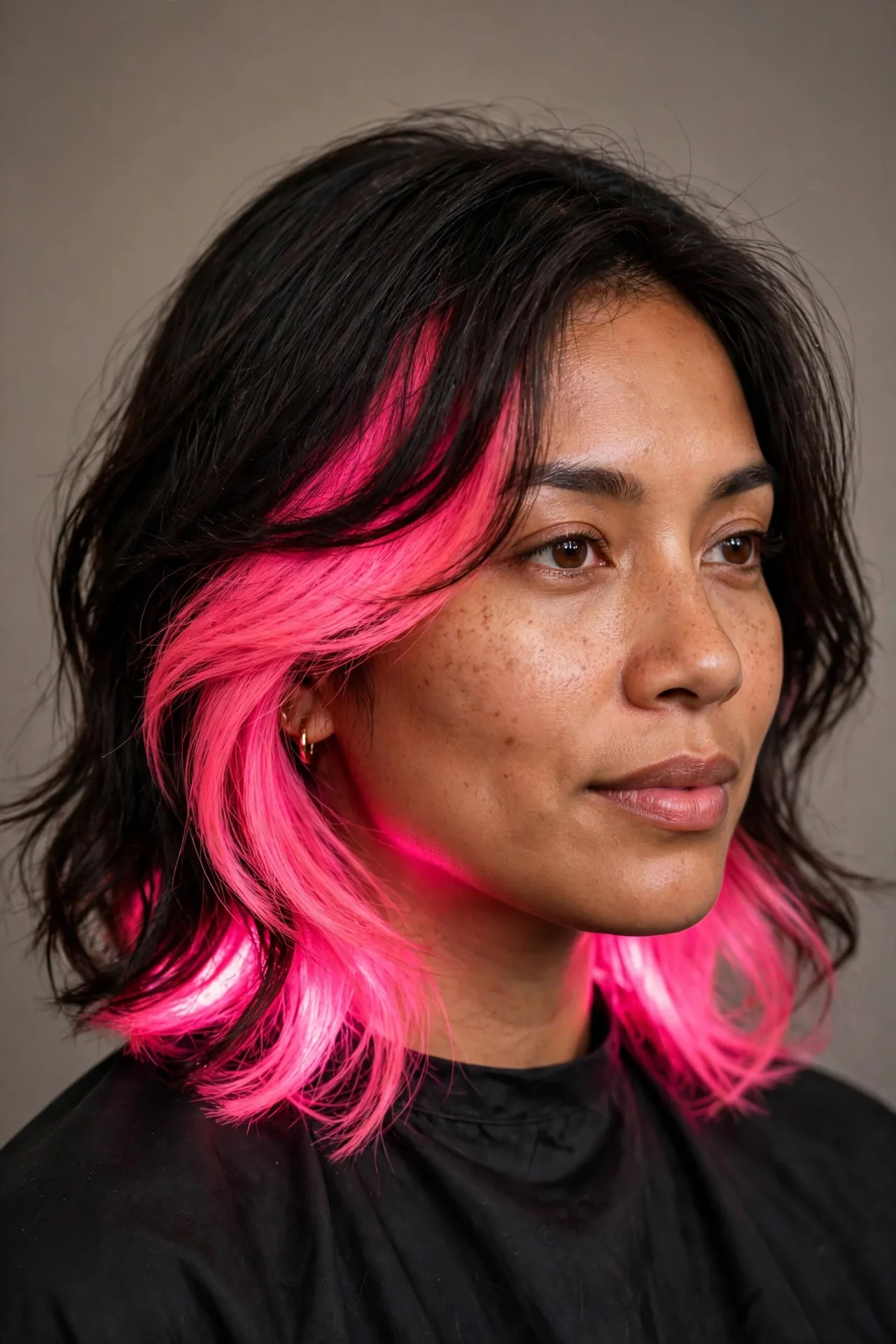
| Shade | Boldness | Best for |
|---|---|---|
| Neon pink | Maximum | Parties and photos |
| Hot magenta | High | Nights out |
| Electric rose | Medium high | Everyday edge |
Neon pink suits maximalists who want hidden color to hit hard when it shows. The shade needs a pale base underneath, so dark hair needs lightening on the panel first. Color safe shampoo and cold washes keep neon bright for four weeks. Avoid heat styling on the panel.
Pink Split Sections
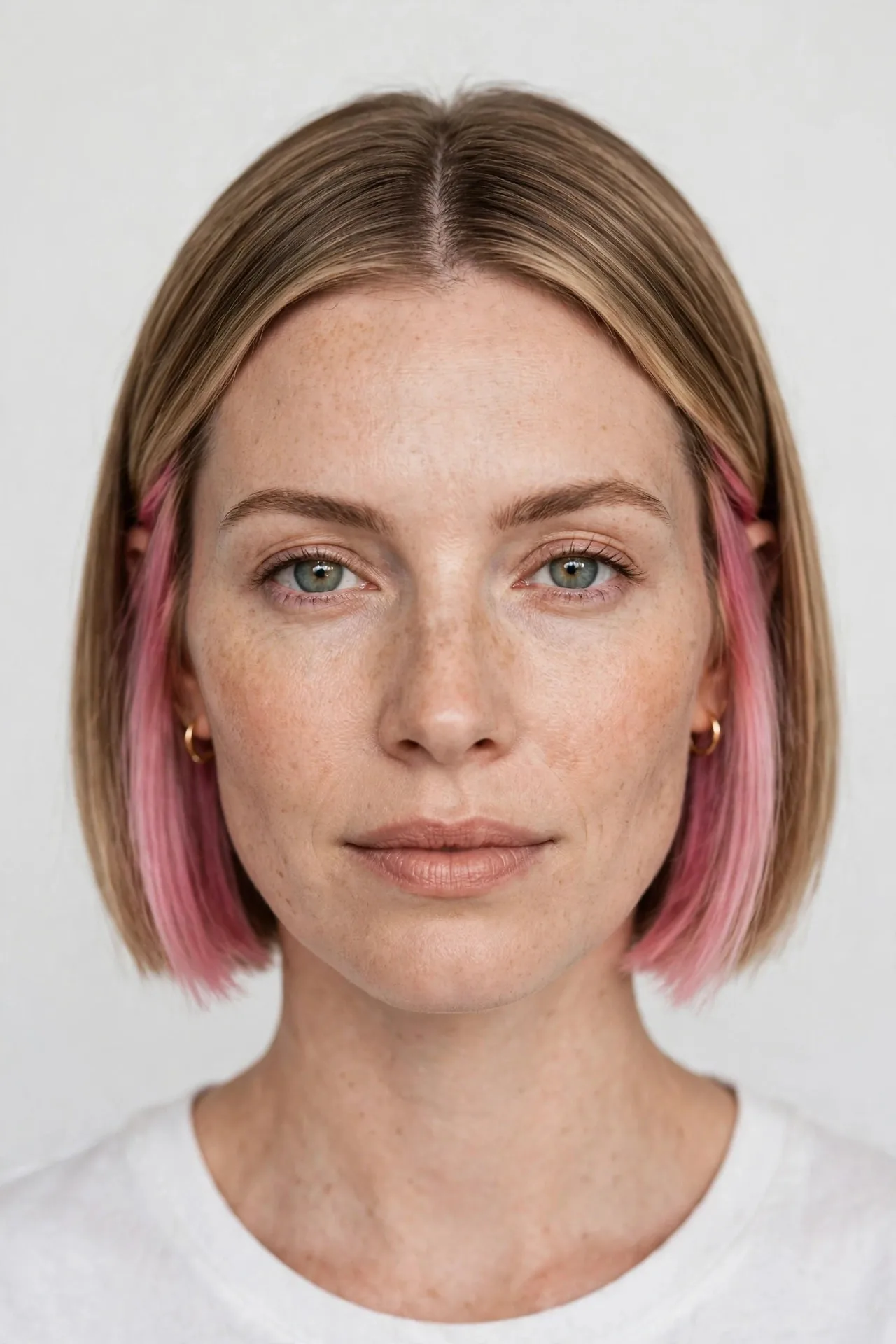
- Do split the pink between both sides evenly, so the reveal looks balanced.
- Do mirror the placement, with the same panels left and right.
- Do check the split in a mirror before leaving the salon.
- Don’t load all the pink on one side, or the look turns lopsided.
- Don’t forget the back panel, since the back shows in photos.
- Don’t mix neon and pastel in one split, or the colors fight each other.
Split sections suit symmetrical styles, with pink appearing evenly on both sides. I’ve seen this work best on straight bobs, where the clean lines frame each panel neatly. The balance also photographs well, which suits anyone who posts their hair often. Center parts show splits most clearly.
Wavy Pink Underlayer
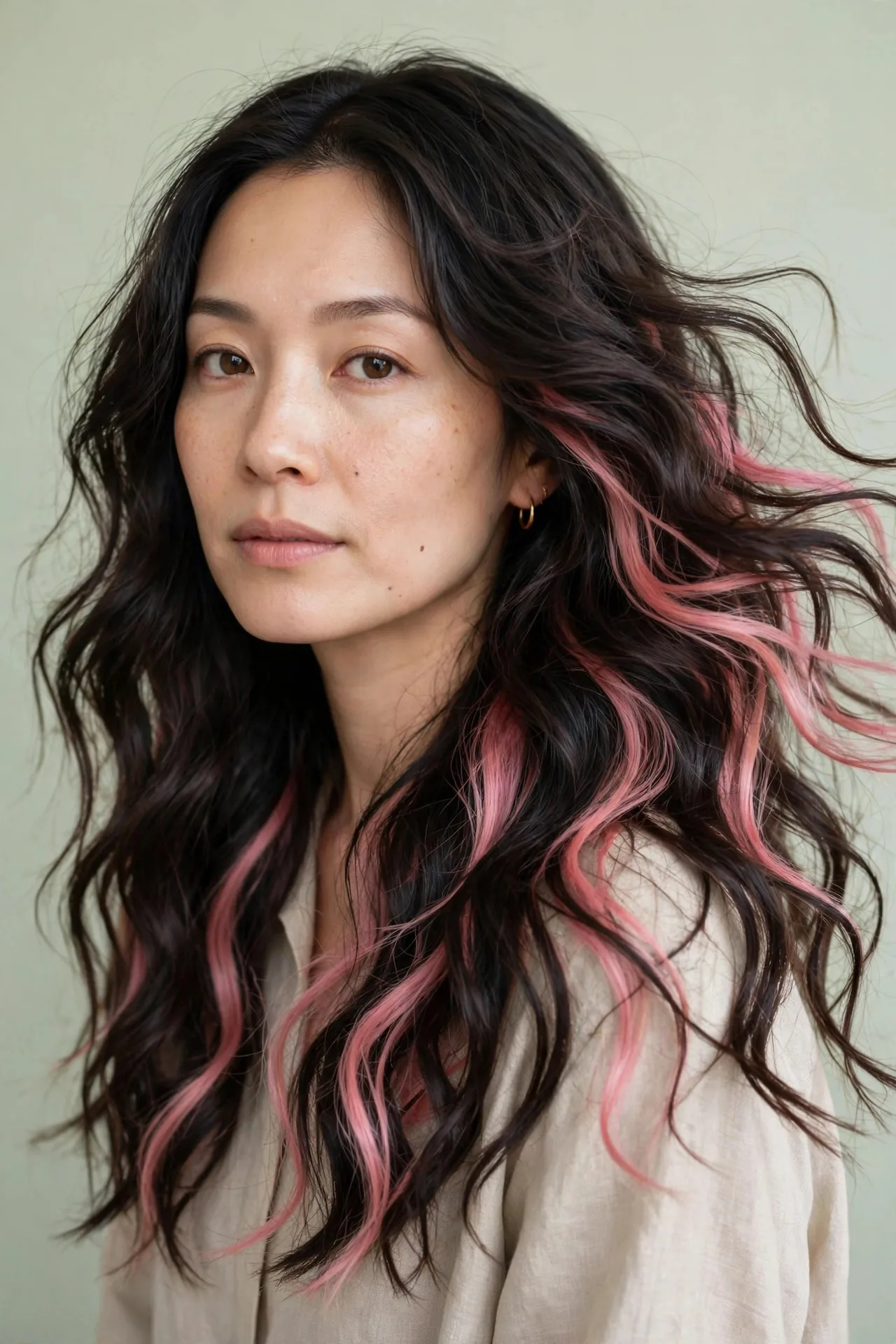
Best For: Naturally wavy hair | Time: Two hours | Upkeep: Mask weekly | Skill Level: Colorist only
Waves lift and drop the underlayer with every step, so pink flashes in rhythm. The movement suits wavy hair perfectly, since the texture does the revealing work. Scrunching with a light cream keeps waves defined and the pink visible all day long. Air drying beats diffusing for this look.
Everyday Hidden Pink
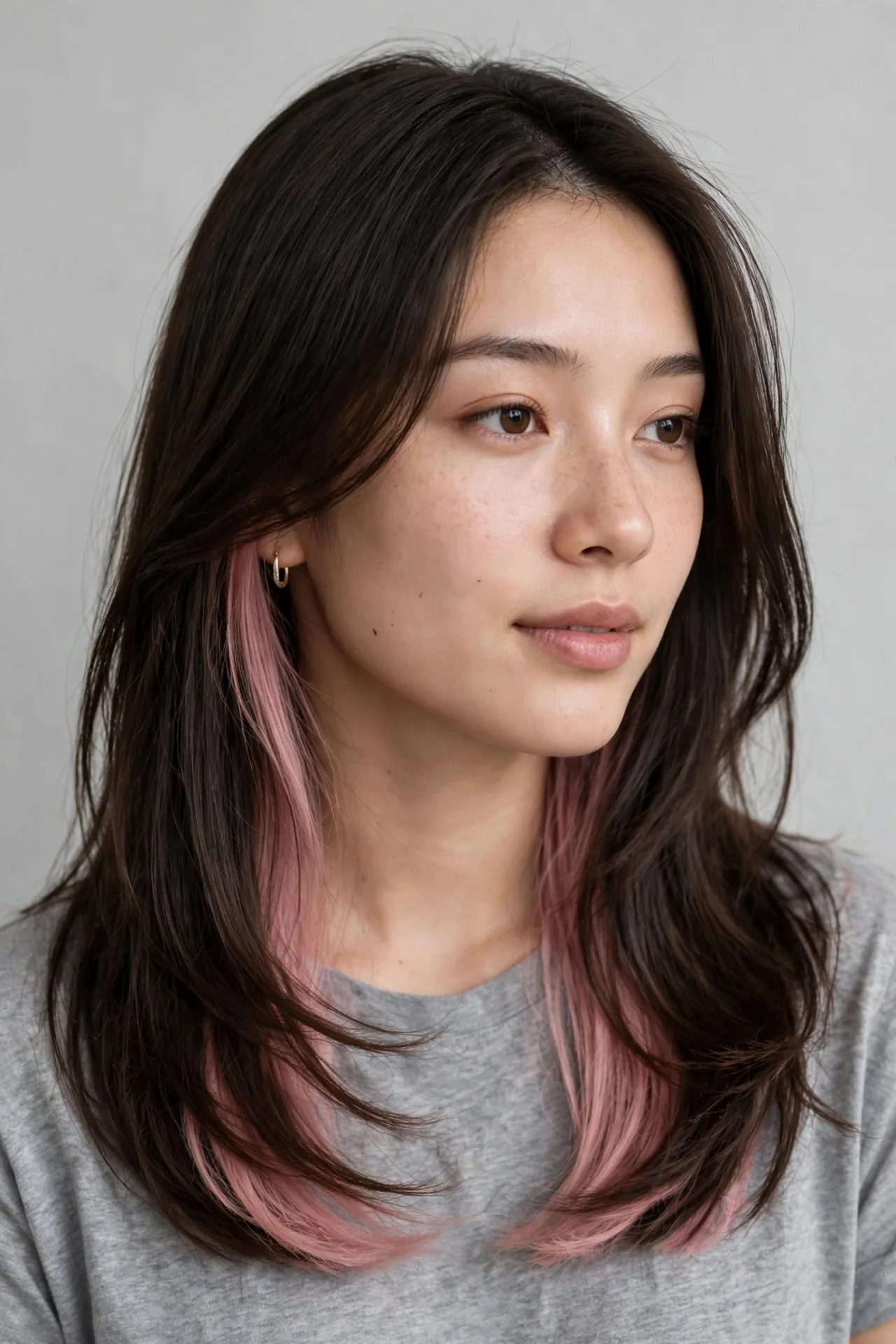
Everyday hidden pink fits normal life, with a soft rose panel that shows only when you want it. The top layer stays your natural shade, so mornings need no extra styling. It suits parents, professionals, and anyone who loves color quietly.
Ask for a rose that matches your skin warmth, cool rose for cool skin and warm rose for warm skin. The panel sits low enough that regrowth stays out of sight for months. One gloss visit every eight weeks keeps the rose fresh. The result looks intentional without demanding attention.
How to Ask Your Colorist
Bring three photos: one of the hidden placement, one of the shade, and one of your current hair in daylight. Photos beat words for color, since shade names mean different things to different people. Point to the exact panel you want, not just the color.
Ask how much lightening your base needs, since dark hair needs the panel lifted before pink goes on. Ask about upkeep too: how often the panel needs refreshing, and what shampoo keeps it bright. Agree on the maintenance schedule before the color starts, so the pink fits your budget and your routine.
Keeping Pink from Fading
Pink fades faster than any other fashion color, since the molecules are large and wash out quickly. Cold water helps more than any product, because heat opens the hair and lets color escape. Wash twice a week at most, and rinse with cool water every time.
Color safe shampoo matters, but sulfate free matters more: sulfates strip pink in a few washes. A color depositing conditioner once a week drops fresh pink back into the panel between salon visits. Sun also fades pink, so wear a hat on long outdoor days.
Frequently Asked Questions
Will hidden pink damage dark hair?
Only the panel gets lightened, so damage stays limited to a small section. The top layer keeps its natural strength, and bond treatments during lightening protect the panel further. Deep conditioning once a week keeps the lightened hair soft.
How long does hidden pink last?
Vivid shades hold four to six weeks, pastels six to eight, with cold washes and color safe shampoo. Sun, heat styling, and daily washing shorten that window fast. A color depositing conditioner stretches each shade by two weeks or more.
Can I hide pink completely for work?
Yes, when the panel sits under the top layer and behind the ears. Worn down and smooth, the top layer covers it fully, and only updos or tucking reveal the color. A nape only panel hides most reliably of all placements.
Does hidden pink suit short hair?
Short hair works with the right placement, since a nape panel or a fringe layer fits bobs and pixies. Very short crops leave less room to hide color, so ask your colorist about a smaller panel. The reveal still works, just in a tighter area.
What if I want the pink removed later?
Panels grow out cleanly, since trims remove the colored section over time. A colorist can also tone the panel toward your natural shade in one visit. Removal costs far less than a full color correction, because only a small section carries dye.
Pick the placement that matches your life, not just your mood: a nape flash for total control, a bold panel for brave days, or a soft blush for everyday wear. Pink peekaboo hair gives you color on your own terms, hidden until you choose to show it. Start subtle, then go bolder at your next visit if you love it. Save this post on Pinterest so your idea waits for appointment day, try one version first, and share it with a friend who wants color without commitment. The right hidden pink does not change your whole look. It adds a secret only you decide to share.


